
Baked Shoulder of Pork with Heirloom Beans and Celery Relish
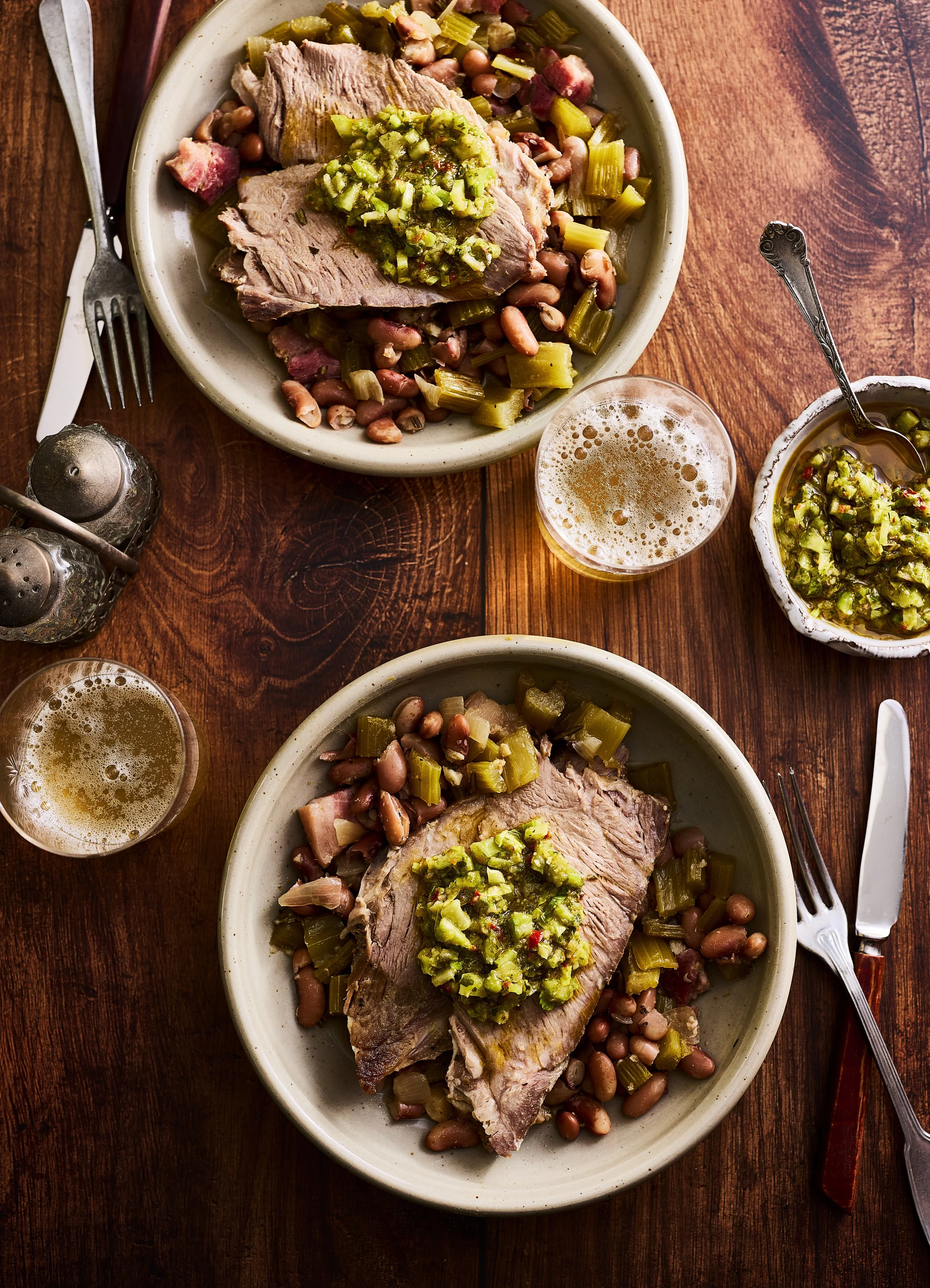
Photo by Michael Piazza / Styled by Catrine Kelty
Eschewing the Colonial Revival tradition of making baked beans more about the molasses and less a celebration of high-quality pork and properly cooked beans, you will find no sweetener in this recipe beyond a bit of the spring’s first maple syrup in the pork marinade.
I recommend searching out a great pork farmer for your pork shoulder roast, and I know no one better than David Sears at Clover Luck Farm in Pepperell. His heritage breed Berkshire and Ossabaw pigs live a life of luxury on his family’s grass-fed dairy, rooting through the woods, eating whatever they forage, leftover whey, apples and pumpkins. The meat is well marbled, bursting with flavor, with rich, nutty fat. His pigs truly are a representation of the hard work he and his team put into raising exceptional animals.
For your beans, look for heirloom baking varieties, such as Soldier, Jacob’s Cattle or Bumblebee. All can be found from Baer’s Best Beans in Berwick, Maine. All three are larger varieties that won’t easily overcook in the oven and will absorb the wonderfully rich broth.
You might ask, why celery? And I could answer that question all day long. But just know that there once was a time when celery was prized as highly as truffles or foie gras, due to its exotic nature and difficulty to grow well. Once varieties like Pascal Celery were developed in the 1880s, this cold-hardy varietal allowed New Englanders to more easily grow and eat celery in the Northeast. Pascal was known for its sweet, nutty and spicy flavor, making it a perfect choice to bring some vibrancy to your pork roast. Sadly, most modern celery has had the flavor bred out of it, but it will do until you meet a farmer who is as in love with heirloom celery as you are about to become.
Serves 6–8
FOR THE CELERY RELISH:
1 packed cup flat leaf Italian parsley leaves
¼ cup scallions, chopped
¼ Thai basil
2 cloves garlic, chopped
1 fresh cayenne or Anaheim chili pepper, chopped
¼ teaspoon cardamom, toasted and ground
1⁄8 teaspoon each red pepper flakes, ground celery seed and ground allspice
½ cup extra virgin olive oil
juice of 1 lemon
1 cup very finely diced celery
¼ cup celery leaves, chopped
2 oil-packed anchovies, chopped to a paste
1 teaspoon Salted Herbs (find this recipe below for instructions to make your own, or use a store bought version sometimes found in Northern New England, or leave them out altogether)
salt, to taste
FOR THE PORK SHOULDER:
1 (4-pound) boneless Boston Butt pork shoulder roast, ideally from Clover Luck Farm or another local farm
2 tablespoons salt
2 tablespoons finely chopped garlic
1 tablespoon finely chopped rosemary
3 oil-packed anchovies, crushed into a paste
1 tablespoon Worcestershire sauce
2 tablespoons Dijon mustard
¼ cup maple syrup
3 teaspoons black pepper
¼ cup plus 1 tablespoon rendered pork fat, bacon fat or olive oil
FOR THE BEANS:
1½ cups dried heirloom baking beans, such as Soldier, Jacob’s Cattle or Bumblebee beans soaked in water overnight in the refrigerator
1 onion, medium dice
5 cloves garlic, whole
8 stalks celery, cut into 1-inch dice
¾ pound salt pork, large dice
1 teaspoon dried mustard powder
1½ teaspoon salt
½ teaspoon black pepper
3 bay leaves
1 tablespoon Salted Herbs (find this recipe below for instructions to make your own, or use 2 tablespoons minced parsley and some added salt, to taste)
4 cups boiling rich chicken or pork stock
flakey sea salt, for serving
MAKE THE CELERY RELISH:
Place all herbs and spices in the bowl of a food processor and blitz to a paste. Drizzle in the olive oil until it forms a pesto-like consistency. Remove to a mixing bowl and add in the celery, celery leaf, anchovies and salted herbs, if using. Taste and adjust seasoning as necessary. Should be made at least 1 hour before using and can be stored tightly covered in the refrigerator for up to 1 week.
MAKE THE PORK SHOULDER:
Season the pork shoulder liberally with the salt. In a small bowl, combine all remaining ingredients and mix to a smooth paste. Spread the paste all over the pork to marinate and let rest in the refrigerator for at least 4 hours, up to 1 day.
Preheat oven to 425°F. Place the reserved 1 tablespoon of rendered pork fat (or oil) in a Dutch oven. Place the pork shoulder in the Dutch oven, fat side up. Place in the oven and roast for 15–20 minutes, until nicely caramelized. Remove the roast from the pan and let rest on a tray.
MAKE THE BEANS:
Drain the beans of their soaking liquid and place in a heavy-bottomed saucepot. Cover with cold water by about 2 inches above the beans. Season with a pinch of salt, and turn the heat on high. Once the beans come to a boil, reduce the heat to a simmer and let cook 15 minutes. Remove from heat and keep warm.
In the same Dutch oven you seared the pork shoulder in, place the onions, garlic, bay leaves, celery and salt pork evenly across the bottom. Drain the beans and add to the pan.
Combine the mustard powder, salted herbs, salt and pepper with the boiling stock and stir to combine.
Pour stock mix over the beans, then place the pork shoulder on top. Pour over any remaining pork glaze or resting juices, cover the pork with parchment paper, then the lid to the Dutch oven. Place in a 300°F oven and cook for 1 hour.
Take an internal temperature of the pork. Once the pork shoulder reaches 140°F, remove the pork from the Dutch oven and allow it to rest in a warm place on a tray. If it is still undercooked, leave it with the beans until it reaches 140°F.
Lower the oven temperature to 275°F and cook the beans 2–3 more hours, stirring occasionally until beans are fully cooked. If the liquid in the pot goes below the surface of the beans, add a little more stock or water to keep them covered.
Once the beans are cooked, return the pork shoulder to the pan. Pour over any accumulated juices and return the pan to the oven and bake, uncovered, for 15 more minutes, until the liquid thickens and darkens slightly. Don’t add any more water. Remove from the oven and rest for 5–10 minutes before serving.
To serve, remove the pork shoulder from the beans and slice it with a sharp knife. Taste and adjust the seasoning of the beans as needed. Pour any pork juices from your cutting board into your celery relish.
Spoon out the beans onto individual plates. Top with a generous helping of pork shoulder. Spoon over the celery relish and season with a bit of flakey sea salt.
SALTED HERBS
Hailing from the Acadian community in Maine, salted herbs (or Herbes salées) was a way of preserving one's herb garden at the end of the short New England growing season and to have a punch of umami as well as Vitamin C in your food during an uncertainly long winter. This is my basic recipe that has been with me for years, but you can feel free to mix and match your herbs and vegetables to your taste, or based on what your garden or local farmers market has in abundance. It is also a great way to use up any random bunches of herbs in your refrigerator that might be on their last leg.
I always have salted herbs on hand as it is easy to find a home for this savory, punchy condiment. Traditionally stirred into stews and broths in Acadian cuisine, it is delicious incorporated into vinaigrettes and used to dress grilled vegetables, plopped onto fresh lactic cheeses like ricotta or mozzarella, or on raw or cooked fish. Swap out the fleur de sel on a perfectly ripe sliced tomato for a few spoonfuls of salted herbs and you’ll be wondering where this New England ferment has been all your life.
¾ cup picked parsley, finely chopped
1¼ cups scallions, finely chopped
¼ cup carrot, peeled and cut into fine brunoise
½ cup celery branch and leaves, cut into fine brunoise
¼ cup chives, finely chopped
¼ cup fresh chervil, finely chopped
⅛ cup marjoram, finely chopped
1 ½ tablespoons fresh picked thyme leaves, finely chopped
1 tablespoon tarragon, finely chopped
1 medium sized cayenne pepper or small jalapeño pepper, deseeded and finely chopped
¼ cup fine sea salt
Sterilize a 16-ounce mason jar by boiling in water for 10 minutes. Remove the jar and lid from the water and allow to drain any excess water. Cool to room temperature.
Add all ingredients to a mixing bowl and mix until very well combined. Gently massage the herbs with your hands to bruise them a little and work the salt into the mixture. A small amount of moisture should begin to release from the herbs.
Once the herbs are sticking to your hands and you no longer see any visible grains of salt, transfer the herb mixture to the prepared mason jar, pressing all of the herbs down to the bottom as tightly as possible As you press down, a small amount of brine should begin to bubble up. Make sure the sides of the jar are clean of any stray pieces of the herb mixture and that the top of the herb mixture is as flat as possible. Place a small piece of plastic wrap on top of the herbs, pressing down lightly to make sure there isn’t a lot of air between the herb mixture and the plastic. Twist on the lid to the jar and place the jar in a dark place, like a cabinet or cellar, with an ambient temperature of 58°F–70°F and leave overnight.
Each day for the next seven days, give the herb mixture a stir, top to bottom with a clean sterilized spoon, pressing down and cleaning the sides each time. Place the plastic wrap back on top and close the lid as you did on day one each time you stir.
By the seventh day the amount of brine on your salted herbs should have increased and the aroma should be much more intense. At this point, your salted herbs can be refrigerated and will last three to six months. After each use, make sure to press down the herbs to prevent any air pockets in the mixture and seal the jar tightly. Conversely, you can seal the jar by boiling the closed jar for 10 minutes in water and then allowing it to cool for 24 hours at room temperature. At this point, your salted herbs can be kept at room temperature for six months to a year.
This recipe appeared in the Spring 2026 issue as part of a larger story: Don’t Spring So Quickly
