Don’t Spring So Quickly

Photos by Michael Piazza / Styled by Catrine Kelty
This all started with a large case of FOMO. As a teenager beginning to explore the larger food and restaurant world, I quickly latched on to the concept of terroir. A French term most commonly associated with wine, terroir explains how a region’s natural growing environment (soil type, climate, elevation, farming practices, varietal selection) informs the flavor of the final product produced. In essence, it means taste of place.
The more I studied, the more I saw how regionality and intense focus on local food traditions shaped cuisines around the world. Specific cheeses, charcuterie, vinegars or ferments varied from small mountain valley to seaside village based on what could grow there and why. But also, who lived there, who moved there and where they came from. The more I learned, the more I wondered why my home region, New England, felt like it lacked any true terroir.
Originally intending to go to culinary school after college and then disappear into mountain villages in the northeast of Italy to immerse myself in that region’s cuisine, I found myself pursuing a degree in Early American history at Holy Cross. At the same time, I was cooking in restaurants in my free time, reading every cookbook I could get my hands on and visiting local farmers markets in season.
At Central Massachusetts farmers markets, I was confused by what produce was available in the spring and early summer and what was not, and how many restaurants’ menus, even those claiming to cook seasonally and locally, didn’t reflect what the farmers were bringing to market. Why, in early April, could I go to a restaurant and eat a dish of asparagus, wild ramps, fava beans and sugar snap peas all on the same plate, but at the local market farmers only had greenhouse-grown lettuce, storage root vegetables and some potted herbs for sale?
It was through this experience that I finally stumbled on the answer to my question of why the New England food I’d grown up with felt less personal, less romantic—and, honestly, less delicious—than the traditional dishes I read about in cookbooks from around the world. To truly understand where New England has lost its way, one must first look at our region’s, if not our nation’s, foodways.
Foodways are the eating habits and culinary practices of a people, region or historical period, encompassing the social, religious, economic and cultural factors that, in the short term and the long, sculpt a community’s food. How that food is grown—how it is harvested, prepared, preserved, distributed and consumed— are all parts of a community’s foodways.
Foodways connect us to our history, to the climate and geography of our region, and also to what makes our region unique. Every food product, heirloom seed varietal, heritage breed of animal or regionally specific recipe came about because of a community’s foodways, and New England is no different. But unlike other areas of the world with strong regional cuisines, we decided in the Victorian era to enter into a food myth of our own creation from which we still struggle to remove ourselves.
The Colonial Revival was a direct response to the social upheaval during and immediately following the Civil War. It was an attempt by the victorious North, and Bostonians in particular, to position themselves and New England as the moral heart and soul of the newly re-unified United States. Common throughout history, victory on the battlefield gives one the power to shape how history is told, and the result was an effort to tell a story of a common United States origin with New England’s colonial, Puritan beginnings firmly at the center.
It would take too much space to fully flesh out all the cultural, economic, nativist and xenophobic factors that formed the Colonial Revival and its outcome. But the result is what most of us see as the tentpoles of New England food. We no longer celebrate multiple regional varieties of chowder. A place name was slapped on it, and now it is New England Clam Chowder. Baked beans must be Boston Baked Beans, and if they aren’t overly sweet you must not be from around here.
In their book Northern Hospitality: Cooking by the Book in New England, historians Keith Stavely and Catherine Fitzgerald described the Colonial Revival best:
“Despite its ostensible plainness, colonial revival cooking was motivated by ulterior social motives. What might seem like a backward-looking cuisine, New England cooking, was transformed by practitioners … into a sophisticated modern strategy. When so-called traditional dishes were prepared using the most upto- date scientific methods, enhanced with molasses, butter, and eggs, and evangelically promoted to eager middle-class audiences as well as to captive audiences of schoolchildren across the nation, they could hardly be seen as anything but a means to a social end. That end was the promotion of ‘Old New England’.”
One approach I have always taken to revive our lost culinary past, as well as celebrate the amazing work of our region’s dwindling population of farmers and food artisans, is to focus on ingredients and cooking with the seasons. Once I discovered that New Englanders loved eel, for instance, or grew vast backyard gardens full of bespoke culinary herbs to snip and use in their food, how could I then cook authentic New England food without finding farmers growing these products?
Using ingredients that are part of our foodways supports our local environment and regional biodiversity as well. These heirloom seeds, or fish species maligned by modern diners, or heritage breeds of domesticated animals are all the result of longstanding agricultural traditions that worked with the New England terroir. They evolved to grow and live in our environment and, as a result, require fewer external manipulations to flourish. Many of them even help build a greater biodiversity in our landscape, working symbiotically with the land around them to create healthier, more sustainable agricultural land. And frankly, they are delicious.
Below you will find recipes rooted in early spring in New England. The still-chilly, barely-any-flowerson- trees, your-allergies-might-just-be-beginning-tobother- you time of the year. Asparagus, favas, peas and ramps will not appear on the same plate, because they don’t all grow here at the same time, no matter what your local chain grocery store or pseudo-seasonal restaurant will tell you.
When the first farmers markets open in the spring, many local farmers will still have storage root crops for sale. You should buy them. They taste great, and it will help our agricultural community sell through storage inventory as they prepare for the short growing season ahead. Stop thinking asparagus should be on menus by the last week of March, and start falling in love with spring-dug parsnips and smoked eel. The sooner we stop asking for produce that isn’t growing here right now, the sooner we will start seeing more of these lost ingredients used more commonly throughout our region.
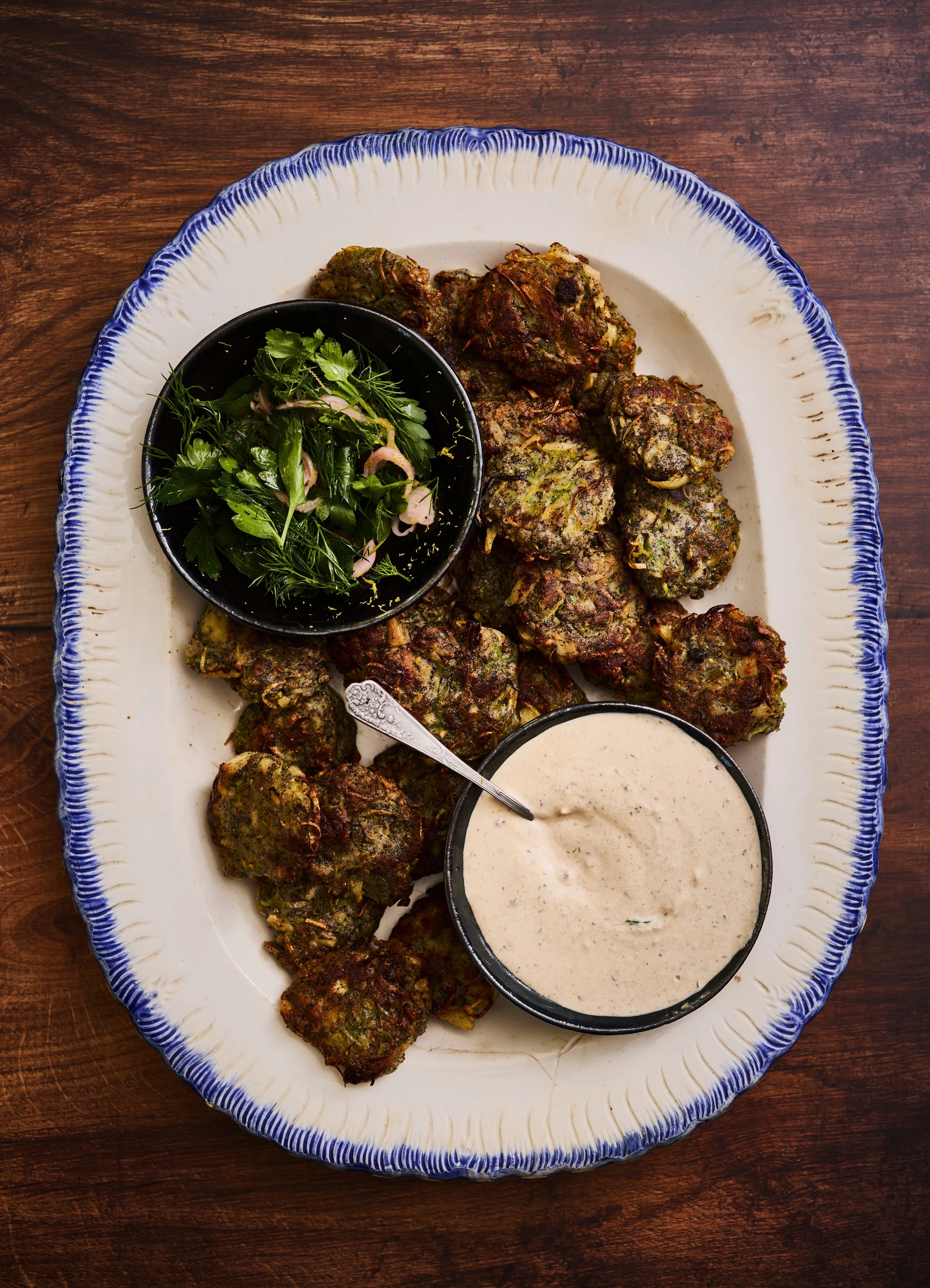
Traditionally, New Englanders prepared for winter by burying their root vegetables in cellars under dirt, or even under cornmeal, to keep them moist, away from light and prevent them from freezing in the field. In the same space, salted, smoked, pickled and preserved meat, vegetables and fish were stored to help get them through the cold dark months, before the first spring greens began popping through the soil. It is this space, underground, just emerging back into the spring sunshine, that informs the following recipes.
EDITOR’S NOTE: Two of Chef Sheehan’s three historical recipes call for an Acadian ferment called “Salted Herbs,” the recipe for which you’ll find in this story on our website and requires about a week to make. It’s simply done, and is a good way to use up any bunches of herbs that may be lurking in your crisper drawers, but it does take time for proper fermentation. As Sheehan tells it, this “savory, punchy condiment is traditionally stirred into stews and broths in Acadian cuisine, and it’s delicious incorporated into vinaigrettes or used to dress grilled vegetables, plopped onto fresh lactic cheeses like ricotta or mozzarella, or on raw or cooked fish.” Minced parsley and a bit more salt will substitute nicely in the recipes here, but I suggest following Sheehan’s advice and trying your hand at fermenting your own Salted Herbs.
This story appeared in the Spring 2026 issue.