
New England Fare: Dine On American History in Boston
Photos by Michael Piazza / Styled by Catrine Kelty
New England–style comfort food reads like its own chapter in American history. You could find yourself dining on shepherd’s pie at Charlestown’s Warren Tavern—a favorite hangout of Paul Revere—or slide into the “Kennedy Booth” at the Union Oyster House for a bowl of clam chowder. A stop at Henrietta’s Table in Harvard Square has you in the contemporary company of Barack Obama and Bill and Hillary Clinton, where the political heavyweights might have chosen the restaurant’s famous Yankee pot roast. But wherever you toss that rock, chances are you’ll hit something historic, because this is, after all, Boston. And as our 250th year comes to a close, here are some famous historical dishes to seek out in the restaurants where they’re made best, or you can try your hand at making them yourself.
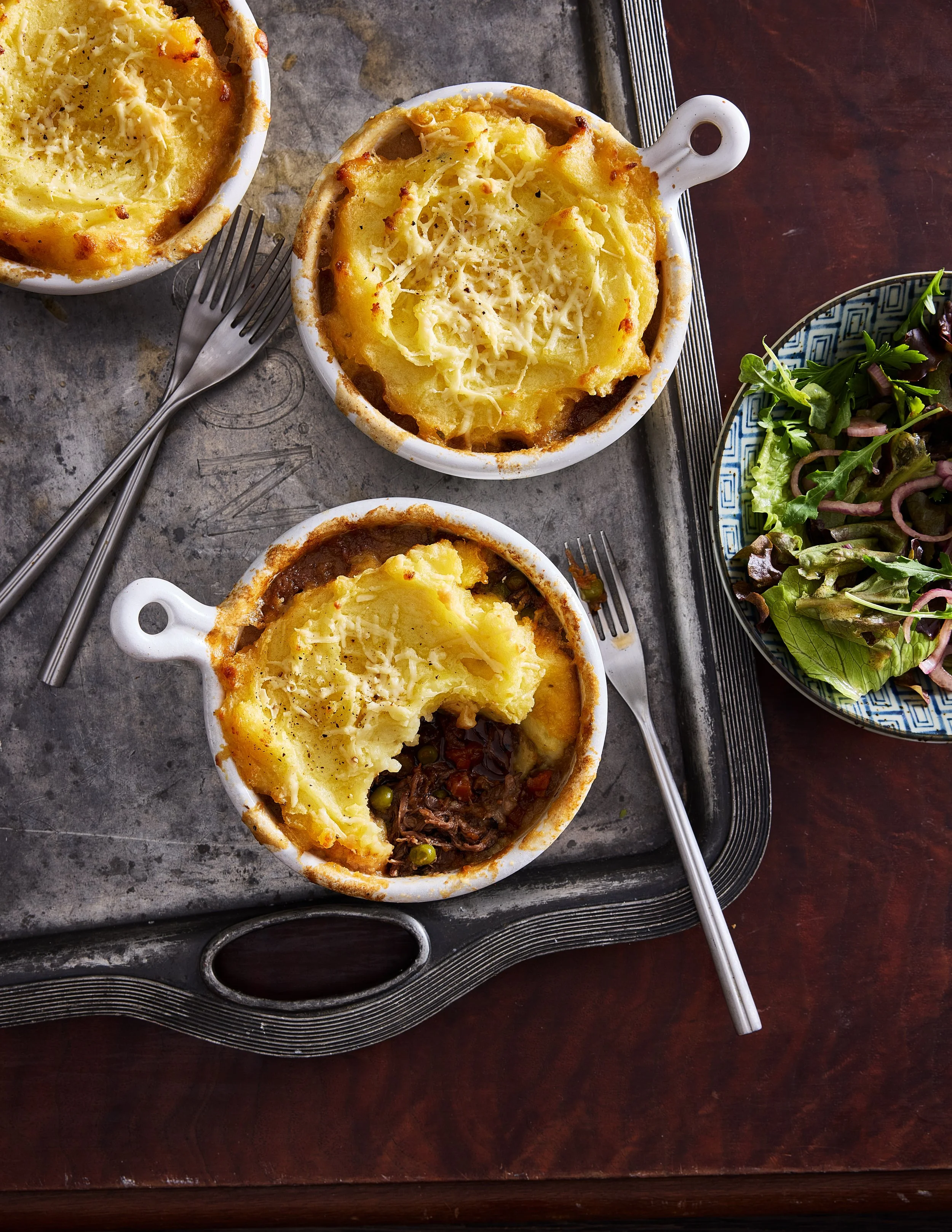
WARREN TAVERN’S SHEPHERD’S PIE
Established in 1780, the Warren Tavern is listed as the oldest tavern in Massachusetts, serving patrons such as George Washington and Paul Revere. Located in the heart of Charlestown, the tavern draws locals and visitors who are looking for that “authentic New England tavern experience,” says manager Kimberly Mahoney, listing shepherd’s pie as a menu mainstay among its comfort food classics.
“Its roots go back to traditional British and Irish cooking, with versions of meat-and-potato pies documented as far back as the late 1700s and early 1800s,” says Mahoney. “While we don’t claim our recipe dates back to 1780, it reflects the same hearty, uncomplicated cooking that has brought families and communities together for generations.”
Shepherd’s pie appeals to patrons because it’s “familiar, filling and comforting, particularly during the colder New England months,” explains Mahoney. “It’s not just about eating a meal; it’s about enjoying a little piece of Boston history,” she adds.
When Boston hosted the FIFA World Cup this past summer, Mahoney saw an influx of international visitors. “One of the great things about those crowds was seeing people from different countries come together over football, food and a pint,” she says. “Shepherd’s pie fits naturally into that atmosphere. It’s a recognizable pub classic, and a great hearty meal to enjoy while watching a match.”
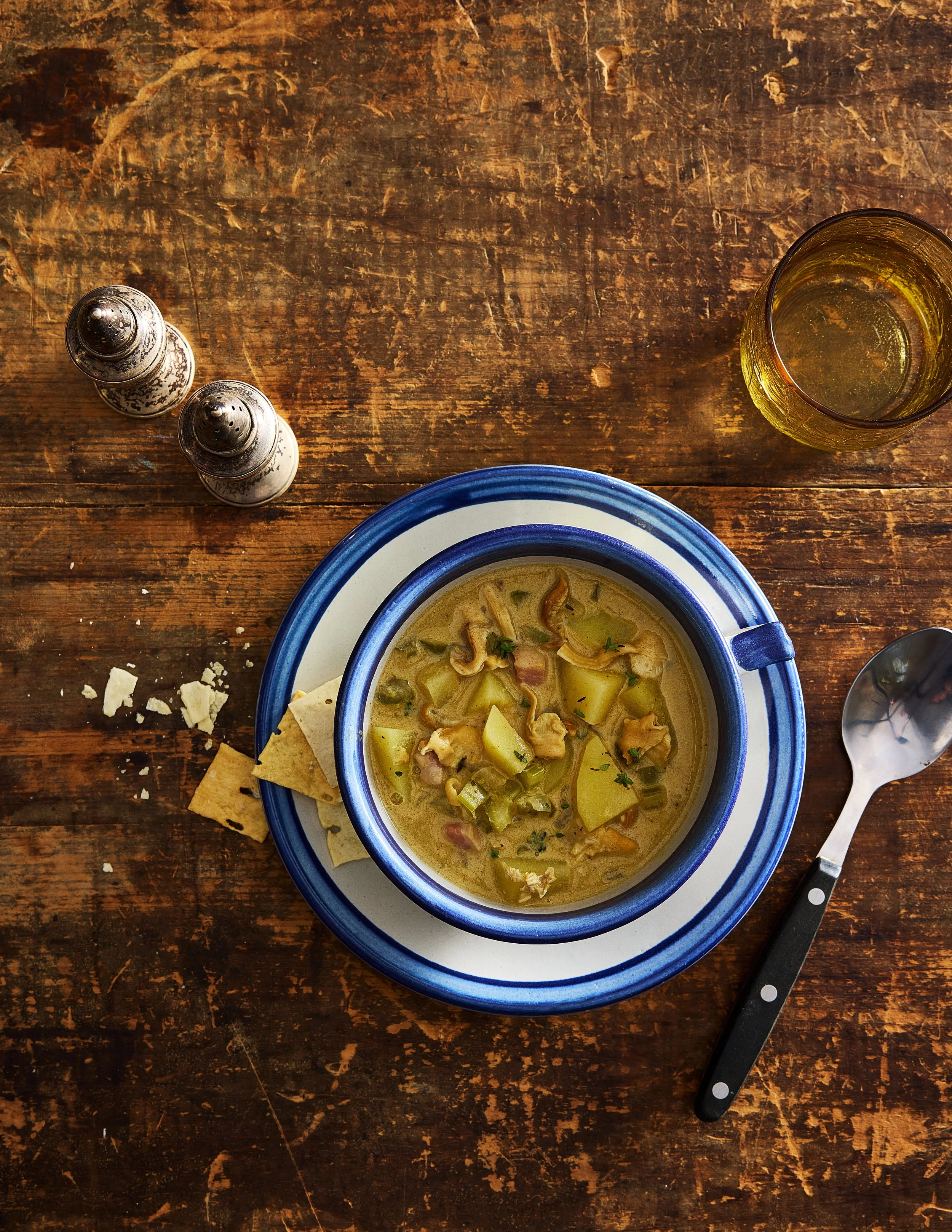
UNION OYSTER HOUSE’S CLAM CHOWDER
In a walk along the Freedom Trail, one inevitably lands at the Union Oyster House. Opened in 1826, it offers the unique distinction of being America’s oldest restaurant “in continuous service.” When in Boston, John F. Kennedy would dine there at noon on Sundays, in Booth 18, later christened the Kennedy Booth where we’re told he enjoyed the lobster stew. But it was their clam chowder we wanted to know more about.
“At the Union Oyster House, clam chowder is part of who we are and what we’ve been serving for generations,” says Union Chef Robert Warsheski. “This isn’t food being re-created to make people nostalgic for old New England. It’s food that Union has continued serving while the city changed around it. It’s simple ingredients, prepared consistently, that make the chowder what it is.”
While the foundation of the recipe remains traditional, like any recipe that has been made over generations, it has evolved slightly over time, Warsheski explains. Still, the heart of it has remained much the same: salt pork, potatoes, celery, onions, clams, seasonings and a rich dairy base.
Ladling up nearly 30 gallons of clam chowder daily speaks volumes about the dish’s popularity among locals and tourists alike. “It’s still very much a part of what people expect when they come to the Union Oyster House,” he said.
When the World Cup came to Boston it brought an international audience to the Union Oyster House. “For a lot of those visitors, experiencing Boston through its food was clearly part of the trip,” said Warsheski.
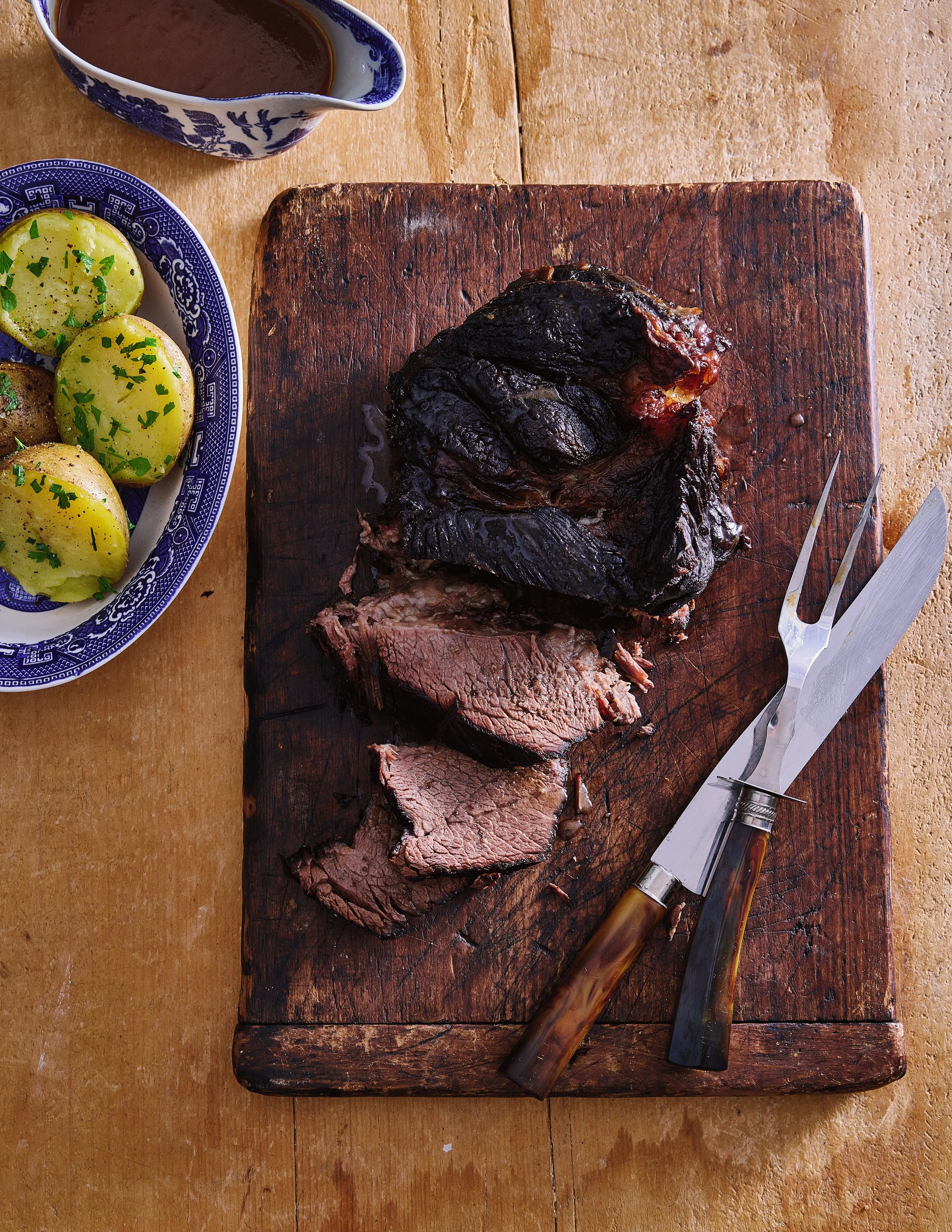
HENRIETTA’S TABLE’S YANKEE POT ROAST
Harvard Square’s Henrietta’s Table may have only been around for three decades, but its New England roots run deep. Located in the Charles Hotel, Henrietta’s executive chef, Sean Lizotte, has designed a menu of “honest-to-goodness New England cooking.”
Asked about his Yankee pot roast, Lizotte offered some history: The dish evolved from the European boiled dinner, a cooking tradition popular in colonial times. Meals were often prepared in a single pot or cauldron over a wood-burning fire, using affordable, tougher cuts of meat that became tender through slow cooking.
“Our Yankee pot roast has become a classic staple of the menu, reflecting our cooking philosophy of thoughtfully prepared dishes that use quality, locally sourced ingredients and honor the traditions of New England,” he says.
Leaning on New Englanders’ practicality and thrifty ways, the traditional Yankee pot roast’s first appearance offers up a variety of dates, with the American dish dating back at least 200 years.
Lizotte can trace their Yankee pot roast back to former executive chef Peter Davis, who brought his family’s recipe to Henrietta’s Table. “I think there’s a real sense of nostalgia around pot roast for a lot of people, especially for our locals. It’s the kind of dish that brings back memories of home, family and childhood.”
For the past 20 years, Henrietta’s Table has been writing its own culinary history as a pioneer in farm-totable dining. With its New England farmhouse–style approach, Henrietta’s Table has built its menu around the seasonal availability of local produce, seafood, meat and more.
“From late fall through early spring, our guests gravitate toward heartier dishes that are rich, warming and full of flavor,” notes Lizotte.
warrentavern.com
unionoysterhouse.com
henriettastable.com
RECIPES
This story appeared in the Winter 2027 issue.
