
Mutual Aid Grows From a Community Garden in East Boston
Photos by Michael Piazza
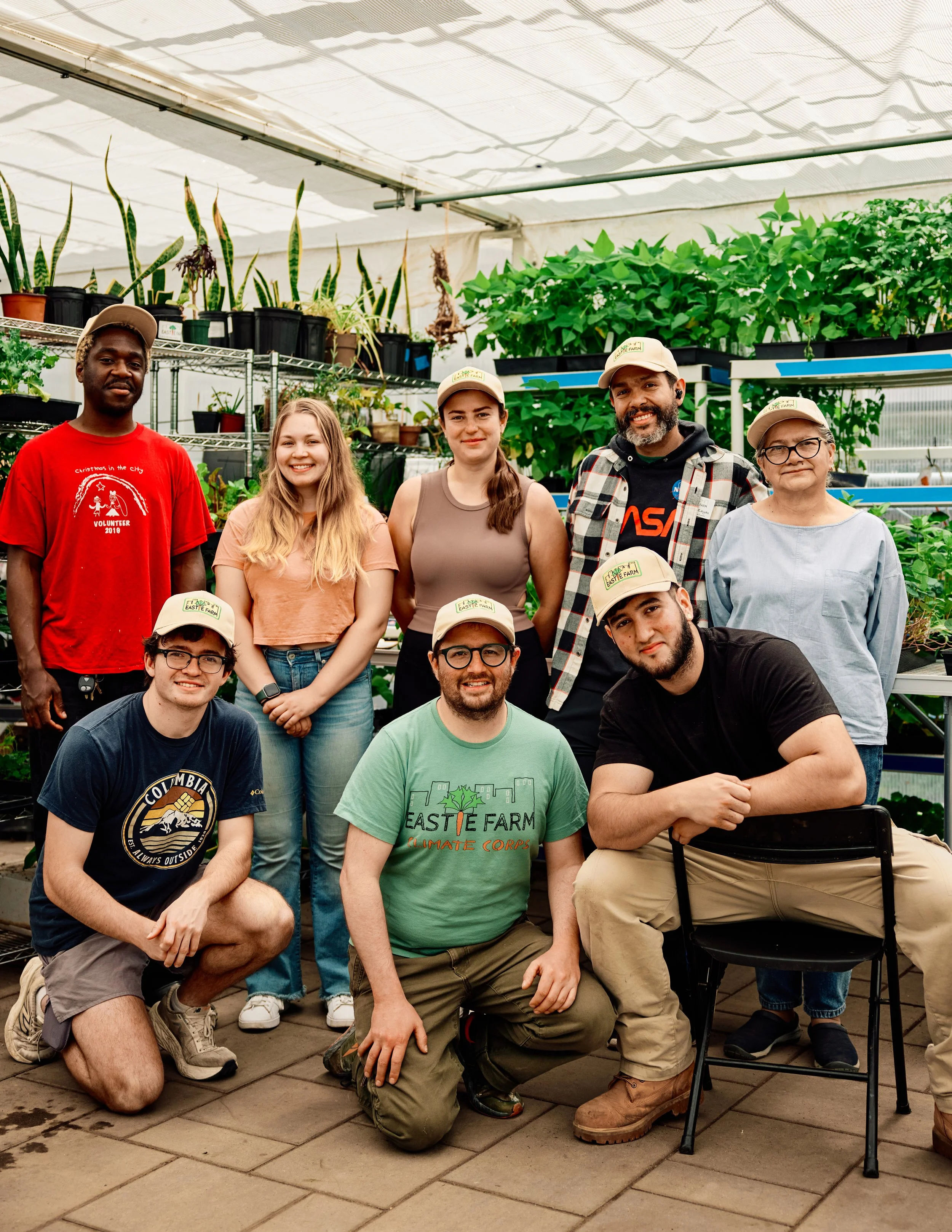
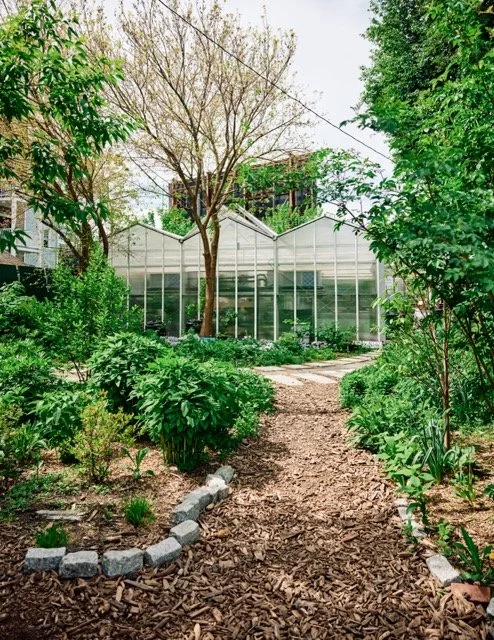
On a chilly but sunny early April evening, it was a pleasant 65° inside the geothermal greenhouse at 6 Chelsea Terrace, where Joel Seidner was welcoming a handful of volunteers in for the weekly “work party” at Eastie Farm.
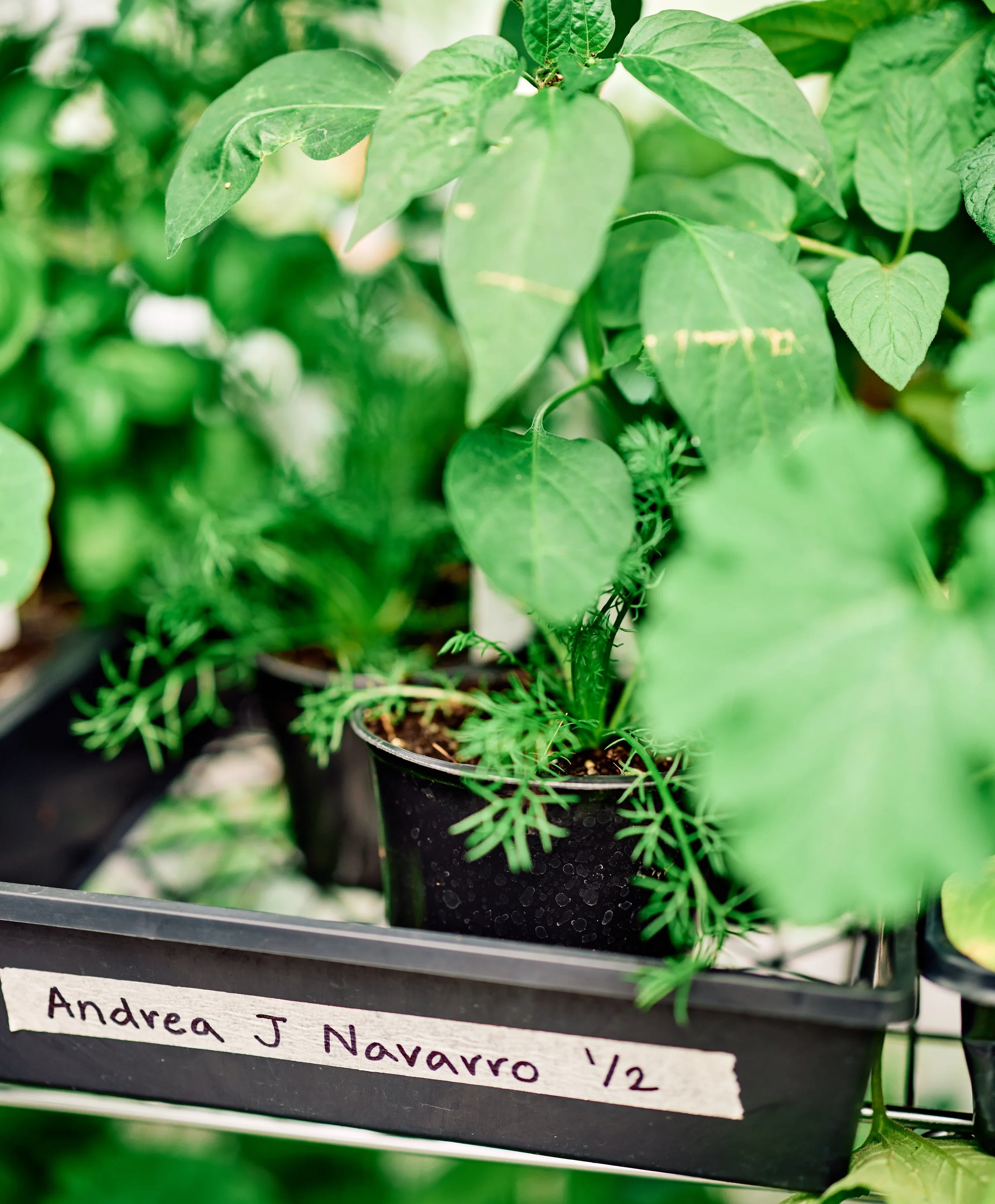
Seidner, food and farming program manager with the East Boston nonprofit, had just explained that night’s tasks—which would include planting kabocha squash seeds, repotting citrus trees and putting together a metal utility shelf—when a group of undergrad students entered the greenhouse with their professor. Studying sustainable agriculture and food systems at Boston College, the class had been outside with Eastie Farm Executive Director Kannan Thiruvengadam, learning about the plot’s raised beds and hydroponic container garden.
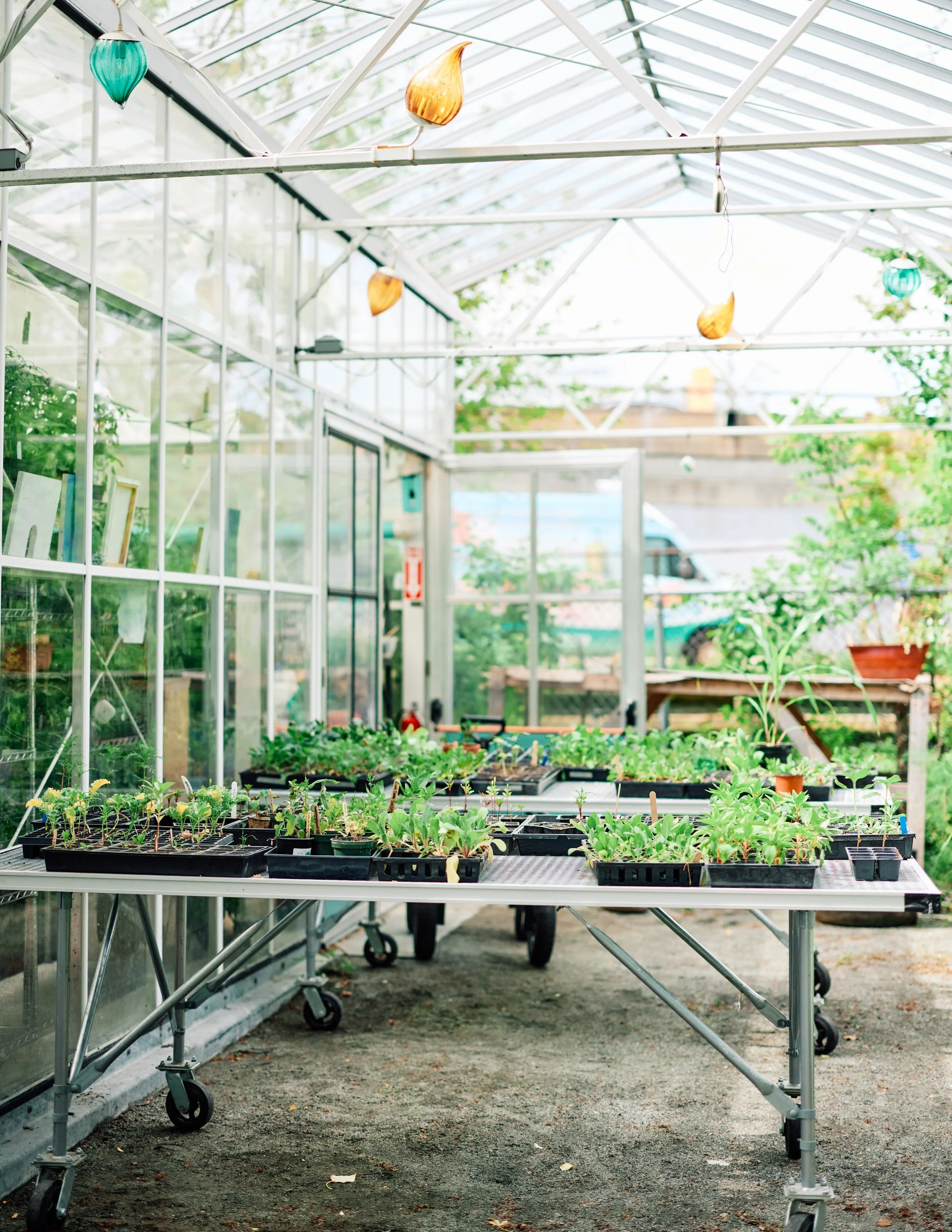
As the students congregated inside the greenhouse, Seidner and Thiruvengadam made introductions, then asked a volunteer to tell the visitors about how the building models climate solutions. The students had many questions about how the greenhouse harnesses renewable energy from deep below ground and converts it into year-round heating and cooling; and how it feeds plants with stormwater management infrastructure. The young people were also curious about the diverse plant life growing throughout the greenhouse.
Before boarding their bus back to Chestnut Hill, three students sent Thiruvengadam a few bucks through a mobile payment app to purchase new-to-them houseplants. Selling cuttings, they had learned, is a small but consequential revenue stream that helps to sustain Eastie Farm.
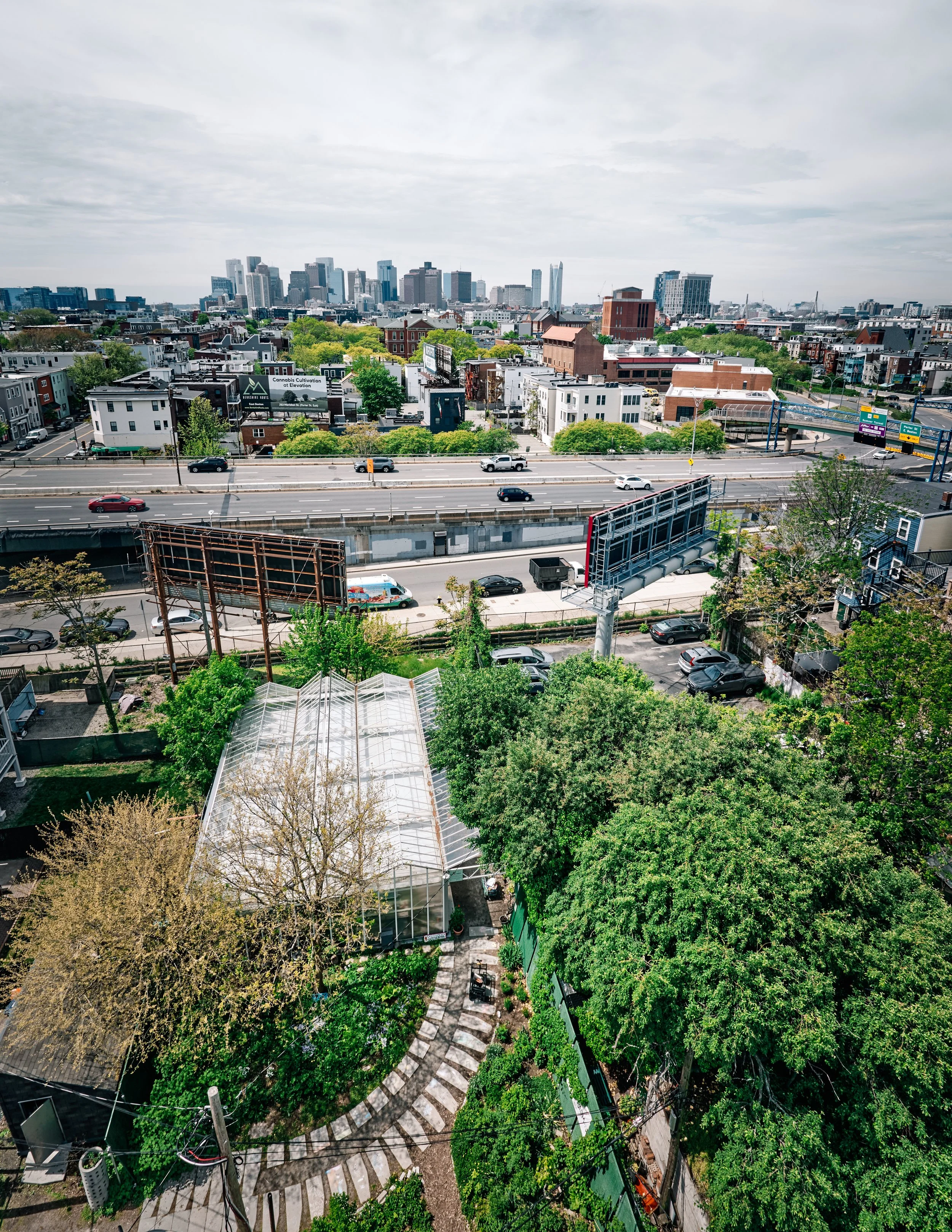
This scene, spanning about half an hour, is but a glimpse at the workings of the organization. Now encompassing three sites, including its Chelsea Terrace headquarters, Eastie Farm sprang from community action to protect East Boston’s multigenerational and multicultural diversity in the midst of relentless gentrification. A decade later, it’s grown to be a crucial resource for neighborhood resiliency, created for—and cultivated by—local residents.
In addition to hands-on planting opportunities, Eastie Farm works to alleviate food insecurity, and—as the opening vignette illustrates—it is an essential educational tool for students of all ages in Greater Boston.

PRODUCE TO THE PEOPLE
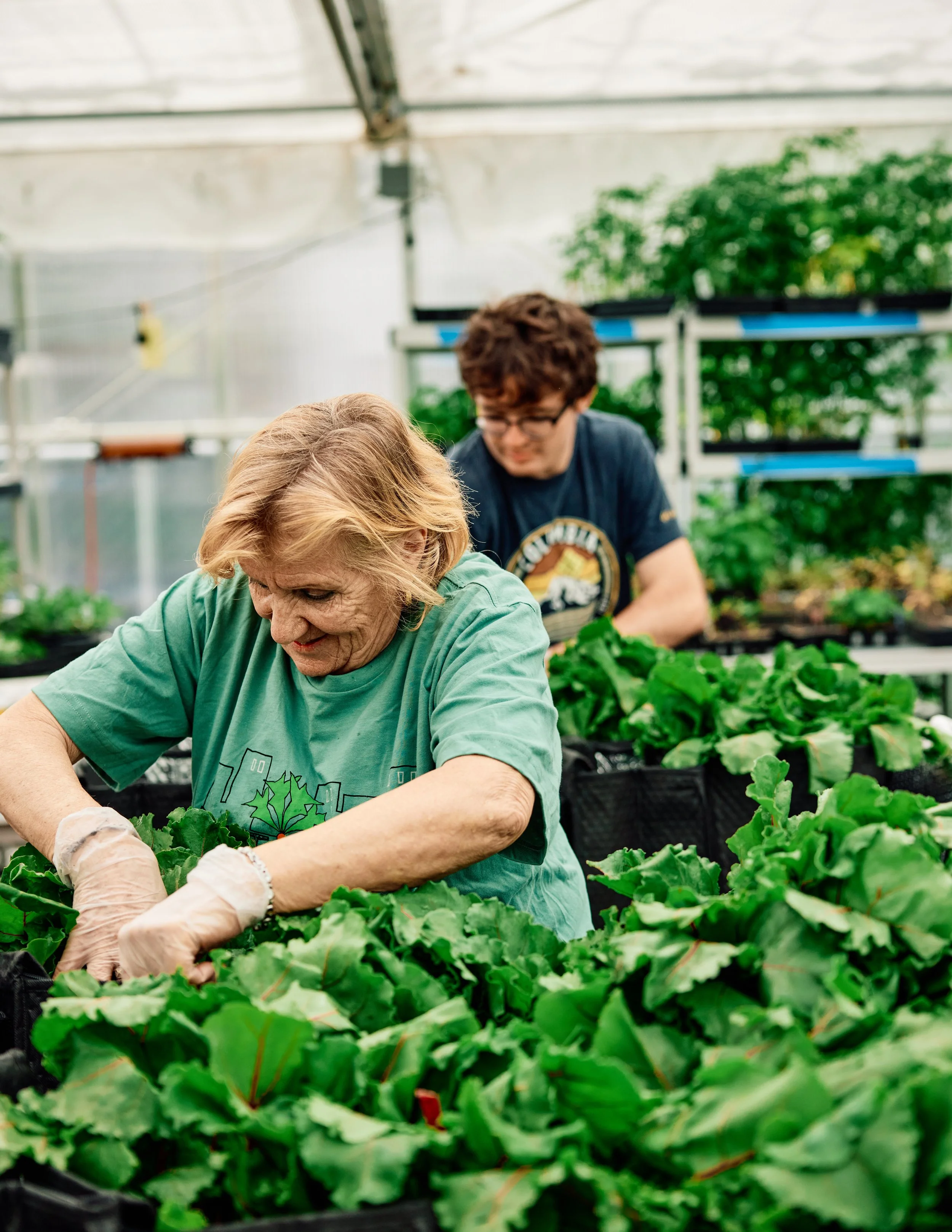
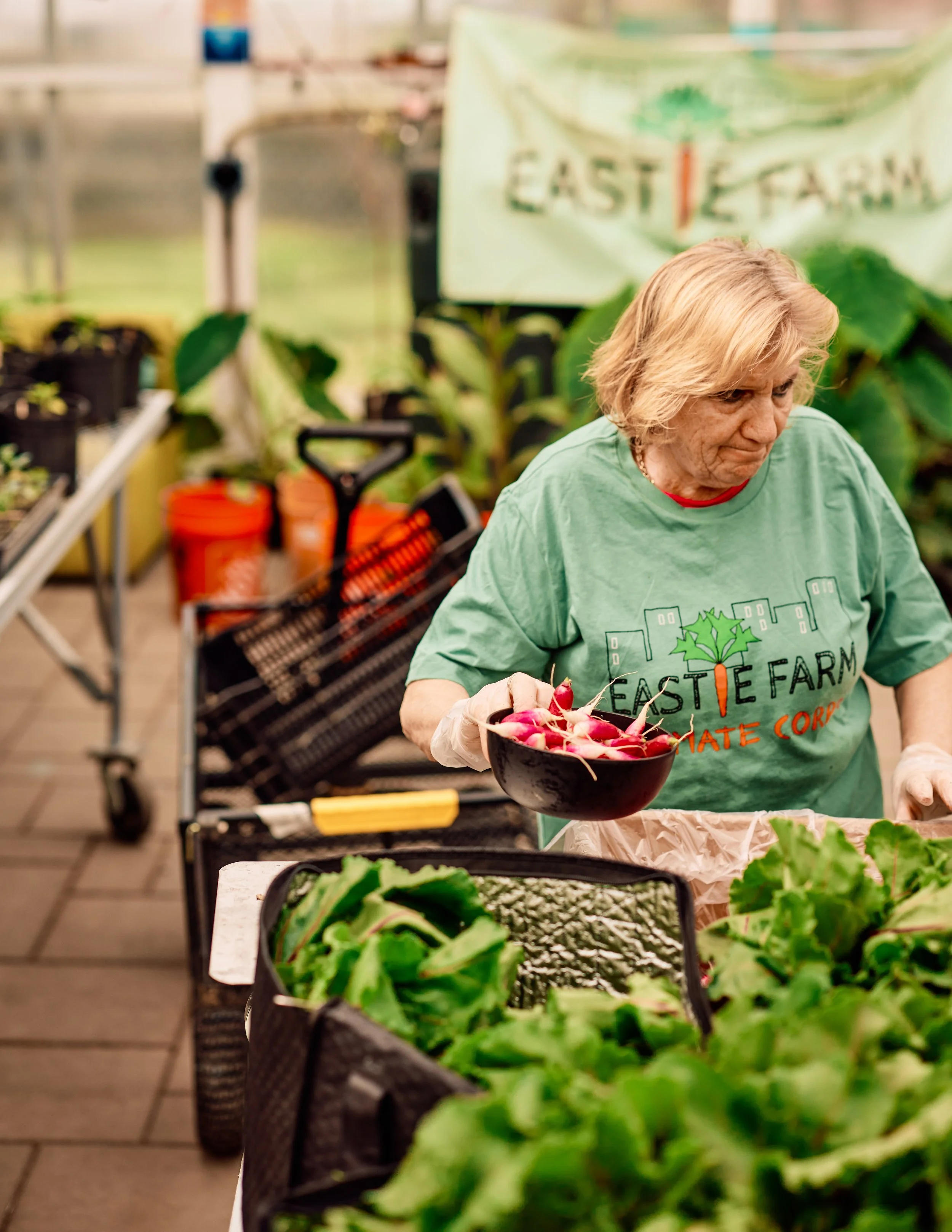
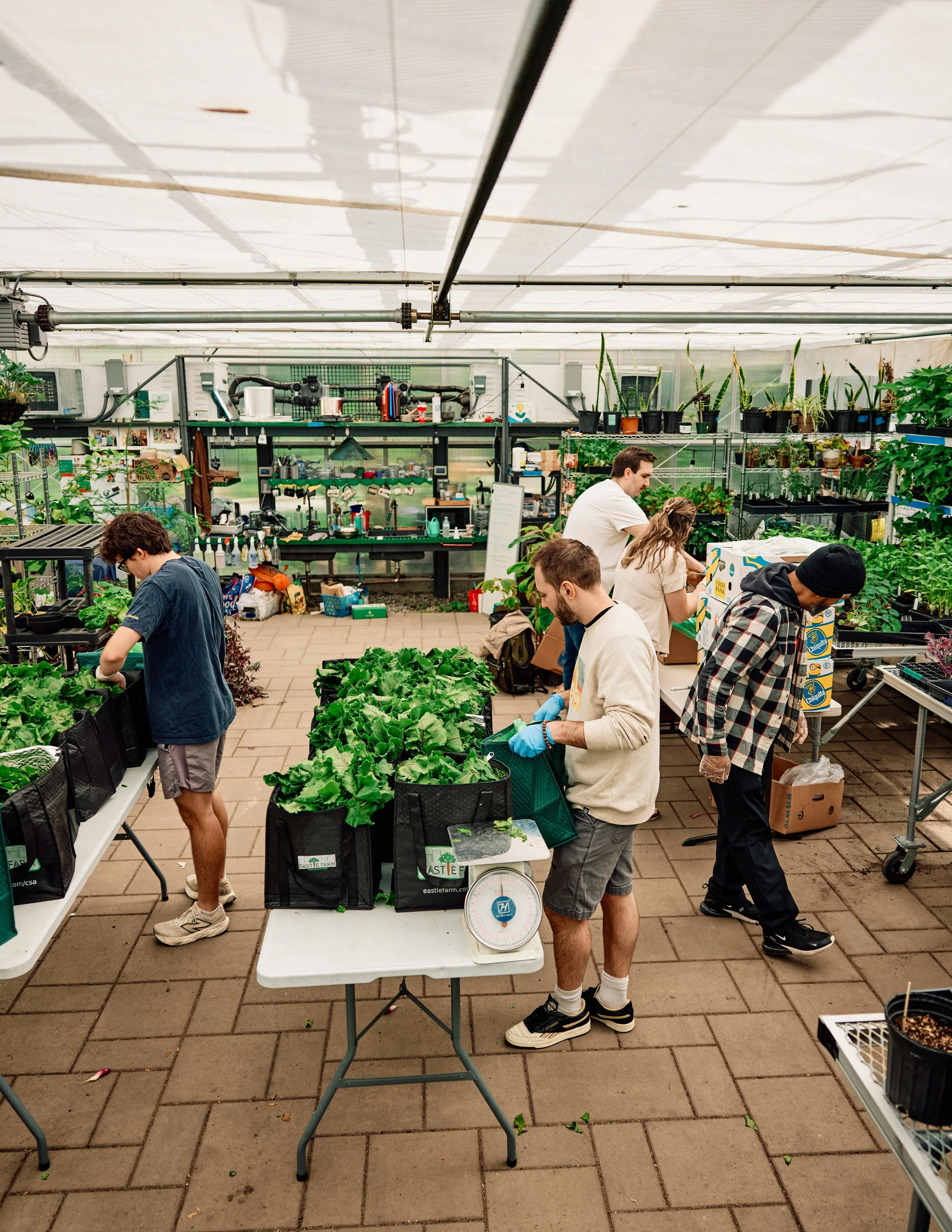
This summer begins the third season of Eastie Farm’s community-supported agriculture (CSA) program, which sources shares from nearly 50 partner farms across Massachusetts and one each in New Hampshire and Rhode Island. According to Food Distribution Coordinator Michael Zayas, Eastie Farm kept roughly $60,000 in the state in 2023 by buying directly from local vendors, while giving upwards of 400 families better access to fresh, healthy food.
East Boston is home to more than 46,000 people but it only has one supermarket, Zayas notes. The Shaw’s is not centrally located in the neighborhood, but on the Border Street waterfront—which means it’s also vulnerable to coastal flooding. “Older people in East Boston oftentimes will struggle to get there and get back,” Zayas says. “And because there's only one grocery store, there's no competition, [so] they can set the prices.” Eastie Farm’s CSA runs from the end of May into mid-November, with weekly or biweekly options. The packages of produce are supplemented with value-added items like eggs and spices, “so that folks don’t have to go out to the grocery store to add things,” Zayas says.
Shares are available at a market rate, as well as on a sliding scale based on financial eligibility for the state’s nutrition assistance programs. The tiered pricing model helps sustain the program, with full-price CSA subscribers helping to cover the discounts. “As we increase the market-rate [customers], eventually we won’t need as much government funding to keep this going, because community members will support community members,” Thiruvengadam says.
It’s also the unofficial fifth season of free food distribution from Eastie Farm. Now in partnership with nonprofits like Gaining Ground, an organic farm in Concord; and Boston Area Gleaners, Eastie Farm gives away food weekly during the growing season. The program is another effort to increase access to fresh produce in the neighborhood. It began directly in response to the Covid pandemic. The fledgling Eastie Farm had already established relationships with local children and their families through its educational outreach programs. During lockdown, parents who had Thiruvengadam’s cell phone number began leaving him messages about being hungry.
“One time, one of the kids called me. ‘Mr. Kannan, I haven't had anything to eat since yesterday.’ How do you hear that and go on as a person?” Thiruvengadam recalls. With that voicemail, he realized Eastie Farm’s mission needed to look not only long-term, but at immediate solutions to repair the food system. “I realized how large and deep this problem really was,” he says.
Zayas, who joined Eastie Farm in 2023, agrees that the pandemic “shined a light” on food insecurity in Massachusetts. But since it’s “behind us now, the sentiment is that there isn’t a need for funding anymore,” he says. “Which, sadly, is not the case. We’re trying to address that issue through our CSA and through free food distribution.”
STUDENT STEWARDS
In 2020, Eastie Farm secured a Food Security Infrastructure Grant from the Commonwealth of Massachusetts, which enabled, in part, the construction of the geothermal greenhouse at 6 Chelsea Terrace. Then a City-owned lot, Eastie Farm had been tending to raised beds there since 2018, and the organization had recently applied to take over ownership through the same City land acquisition process that yielded its first site on Sumner Street. The City of Boston had also tapped Eastie Farm to manage gardens on a Border Street parcel, across from Mario Umana Academy.
It was students visiting the sites who raised the idea of building a heated, year-round structure. “They were demanding that we figure out a way to have gardening in the wintertime,” says Seidner, the food and farming program manager. “They loved gardening and being able to go outside of school and be within nature.”
Thiruvengadam believes his group’s Food Security Infrastructure Grant application was successful because it “built food security into a pitch that’s mostly about creating jobs, supporting farmers and creating a sustainable business for ourselves.”
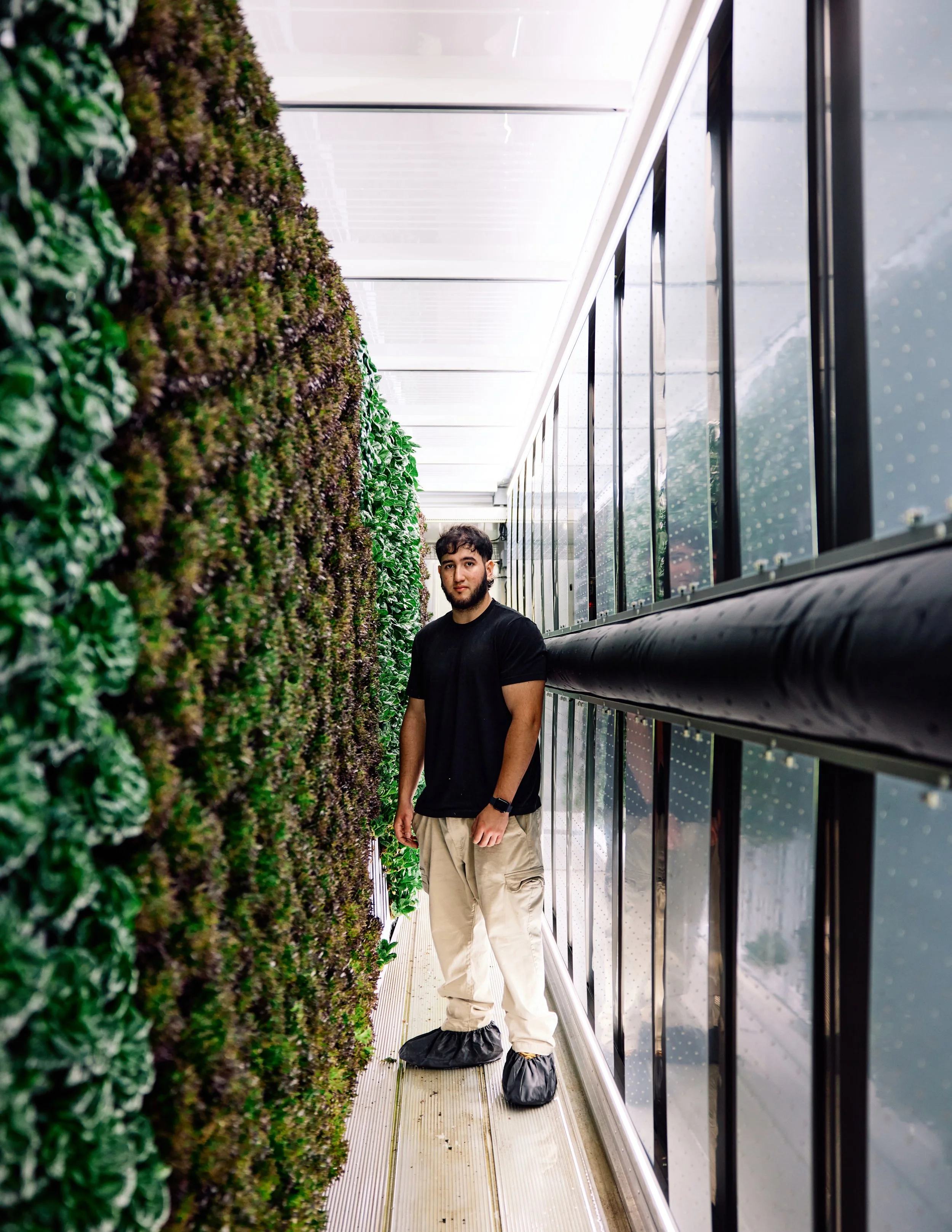
The greenhouse construction project was finally completed in 2022. In 2024, Eastie Farm also secured funding to install a hydroponic container garden at Chelsea Terrace. Now, that unit is growing leafy greens and root vegetables, and is being managed by paid contractor José Manuel Zapata Gallego, an 18-year-old who found Eastie Farm through its youth education programs.
The greenhouse and hydroponic garden are contributing to the sustainability of Eastie Farm in myriad ways: by enabling year-round programming, serving as a hub for CSA pickup, housing the farm’s revenue-driving houseplant and annual seedling sales—and soon, Seidner hopes, producing enough food to lower CSA costs for consumers.
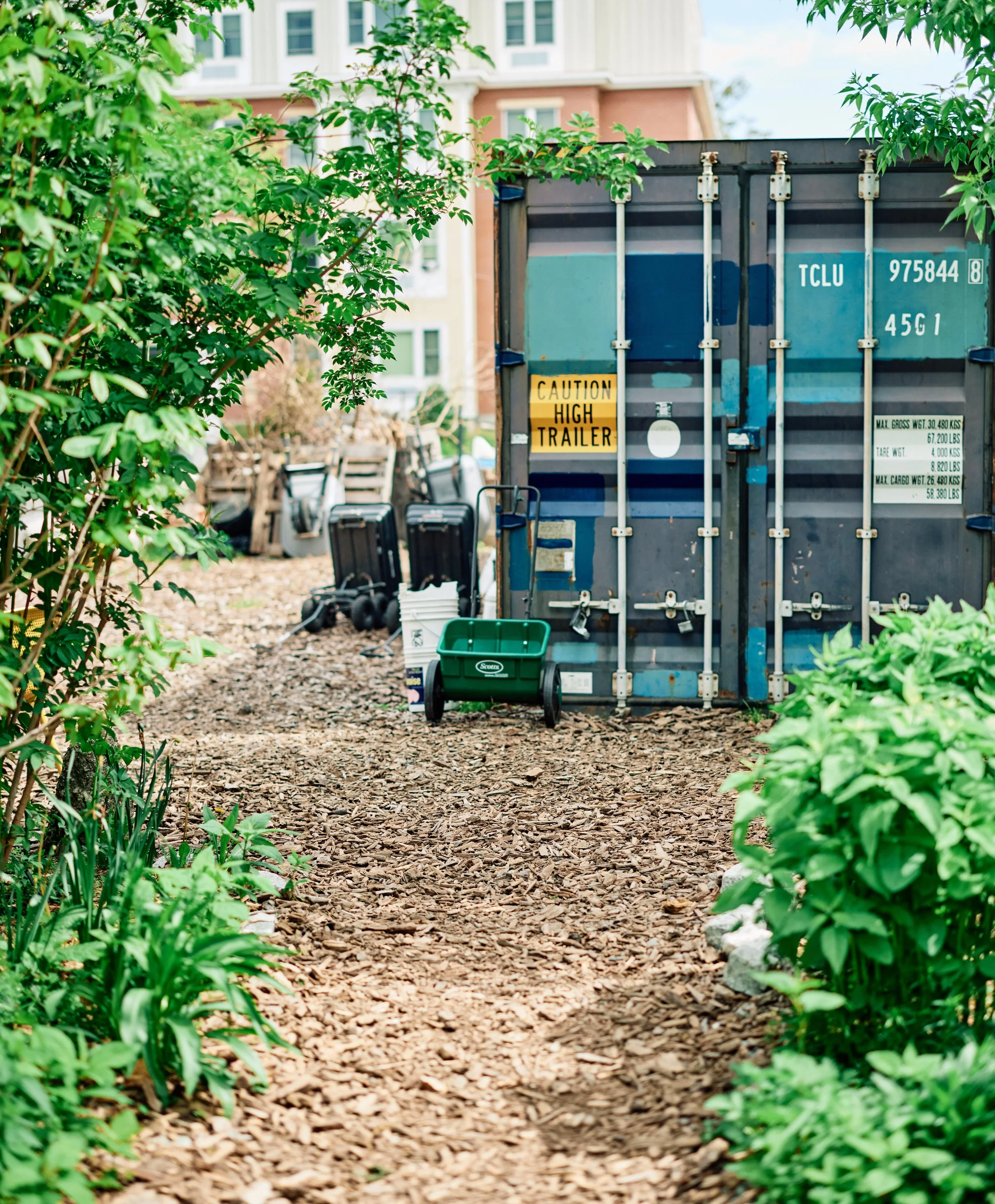
Even the shipping container in which the greenhouse was delivered is being put to good use. Seidner and volunteers are currently working to turn the massive case into another enclosed garden, this one growing mushrooms. Homegrown fungi will add even more value to Eastie Farm’s CSA options, Seidner says. He is also building up wholesale business with local restaurants and food service providers.
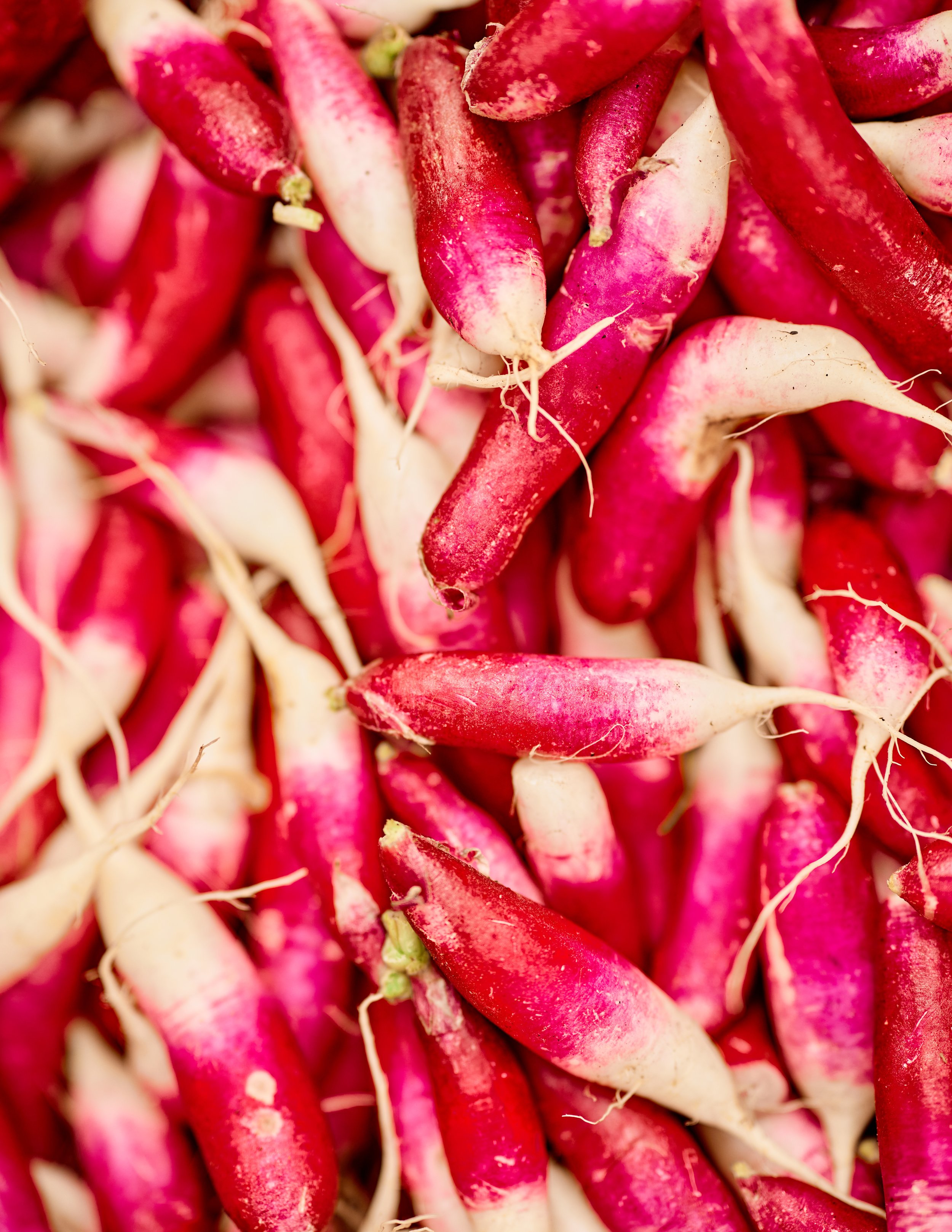
“To have the Central American and Mexican restaurants around here serve our radishes,” for example, is “another way that we try to demonstrate models of living in the future that are more beneficial for everyone,” Seidner says.
The Chelsea Terrace site has bees that produce honey, and Seidner hopes to eventually raise chickens there, too. “If you live in a city, you can get super isolated and not know how food gets produced,” he says. “Between [the hydroponic garden], the mushroom farm, [and] the bees, we can not only produce food, but also educate folks and expand their vision of what jobs could be.”
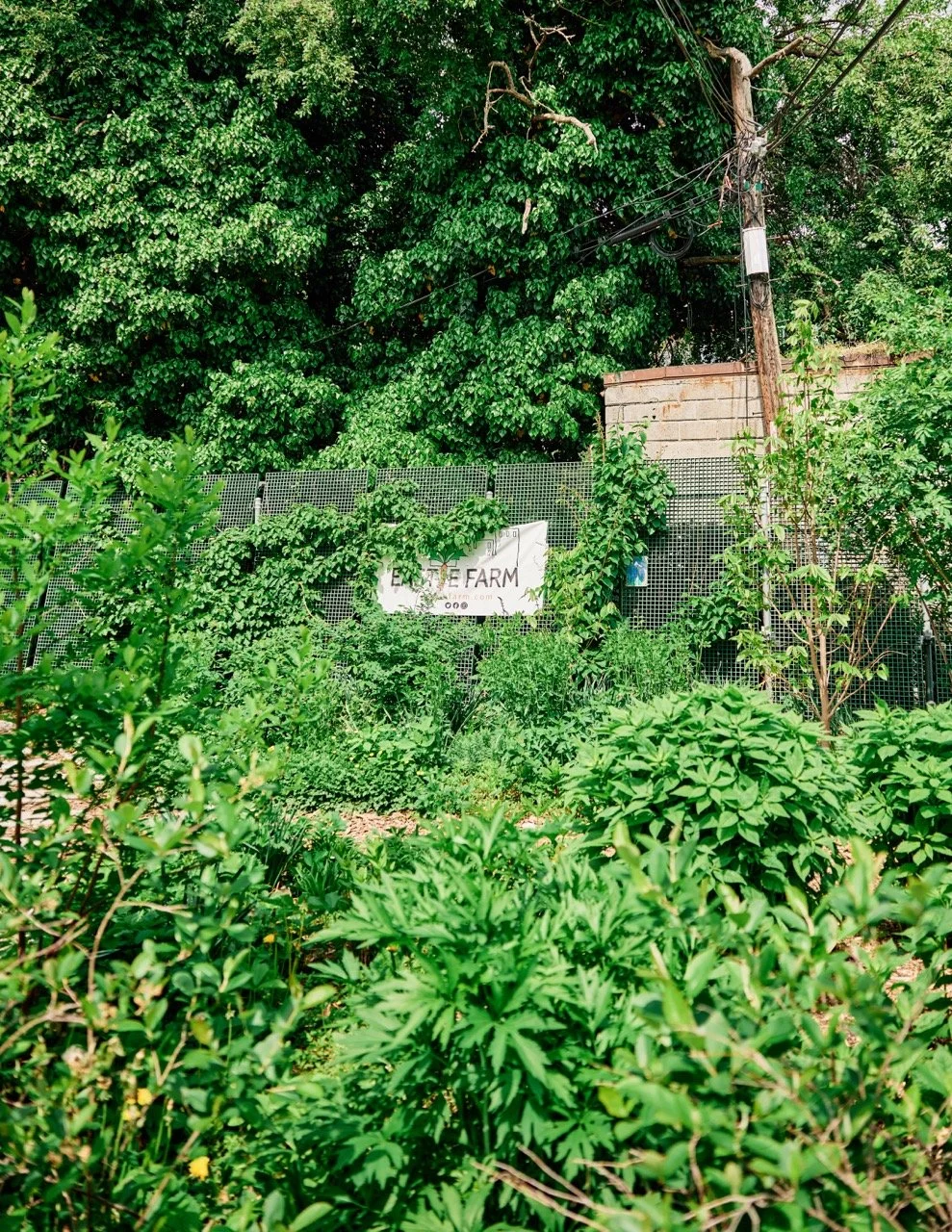
FARMING FOCUSED ON THE FUTURE
Thiruvengadam, who now oversees eight employees, is a neighbor of Eastie Farm’s original lot at 294 Sumner Street. He is also a climate activist who was feeling burnt out by the effects of the Citizens United ruling “that gives power to people with money, so much so that all the little voices get drowned out,” he says. “I was on the lookout to get involved in a more tangible way.” Thiruvengadam sums up Eastie Farm’s community-driven work as “giving [people] a sense of agency that we can be the solution to climate-change problems.”
He hired Seidner a few years ago, after meeting him through the Climate Leaders Program for Professional Students at Harvard. Seidner was a graduate student at the time in the Department of Landscape Architecture, and Thiruvengadam was impressed by the creative, people-centered approach he took to design. How the landscape works for the community has informed everything Eastie Farm has built.
“If you create infrastructure to address food security instead of just buying resources to bring to the folks who need it,” Thiruvengadam says, “you're empowering the community to grow for itself.”
This story appeared in the Summer 2025 issue.
