
Edible Drinks: Local Amari Are Nothing to be Bitter About
Photos by Michael Piazza / Styled by Catrine Kelty
Modern cocktail trends have drinkers reaching for bitter liqueurs like Aperol for Spritzes, Campari for Negronis, Fernet for Torontos and more. Appreciation for bitter drinks dates back to the ancient Greeks and Romans, who mixed herbs and other botanicals into alcohol for medicinal purposes, but it was the monasteries and abbeys that honed in on bitter concoctions’ success at stimulating the appetite and aiding in digestion. Soon these drinks—ranging from delicate vermouths to the most bitter of amari—were imbibed for pleasure, too, either alone or in various mixtures. One of the earliest cocktail books to include bitter liqueurs was William Schmidt’s 1892 The Flowing Bowl, with recipes like the Appetizer L’Italienne using Fernet Branca. Massachusetts was not too far behind with the Fernet Cocktail in Boston bartender Louis Muckensturm’s 1906 book Louis’ Mixed Drinks.
Amaro (plural amari) has been defined as a class of (originally) Italian-made aromatic, herbal, bitter-sweet liqueurs created through macerating and distilling botanicals like barks, herbs, seeds, flowers, roots and citrus peels in alcohol, followed by sweetening with sugar—and sometimes honey. The flavor profiles range from citrusy to floral, from woodsy to medicinal. Originally amari were made with local ingredients that speak to a region’s terroir, but as the spice trade granted access to diverse raw materials, amari became hybrids of flavors from near and far. While amari are classically Italian in origin, bitter liqueurs are made across Europe: kräuterlikör in Germany and amer in France. Most American producers have adopted the Italian term amaro for their contributions to this style.
With current talk of tariffs and worries of soaring prices—or dwindling supplies due to export boycotts—many folks are wondering what the effect could be on bars, restaurants and home drinkers reliant on Italian amari. So I looked around at what Massachusetts has to offer that can either fill in the gaps for the imported bottles or scratch similar itches with something new. I spoke with three distillers in the Commonwealth with years of product development under their belts, then tasted most of their products and mixed up the cocktail recipes to follow.
At Bully Boy, the first distillery in 2011 to open in Boston proper since Prohibition, I sat down with co-founder David Willis who showcased their three bitter liqueurs. Their original Amaro launched in 2016 guided by the desire to craft a medium-sweet, balanced and approachable liqueur that would fall somewhere between Amaro Montenegro and Nonino. To that end, they conjured notes of orange blossom and grapefruit, accented with Sichuan peppercorns, gentian, cinchona bark and hops. It’s excellent in a Paper Plane subbing for the (traditional) Nonino, or in a margarita in place of the curaçao. Their second offering is a Rabarbaro, featuring earthy, bitter, roasty and smoky rhubarb root—which is distinct from the fruitier stalk above ground. They added black cardamom, chamomile, yarrow and other floral-herbal botanicals, and the result works great with whiskeys; it has a root beer quality similar to the famous Italian Zucca Amaro, with a touch of Amaro Ramazzotti. Last came their Amaro Rosso, made as a substitute for Campari, but with a more rounded bitterness so it’s easier to drink on its own. In addition to the orange and bitter herbal elements, two of the stars are besobela, a fruity Ethiopian basil, and damiana from Mexico with a pineapple note that helps to elevate Negronis to new levels.
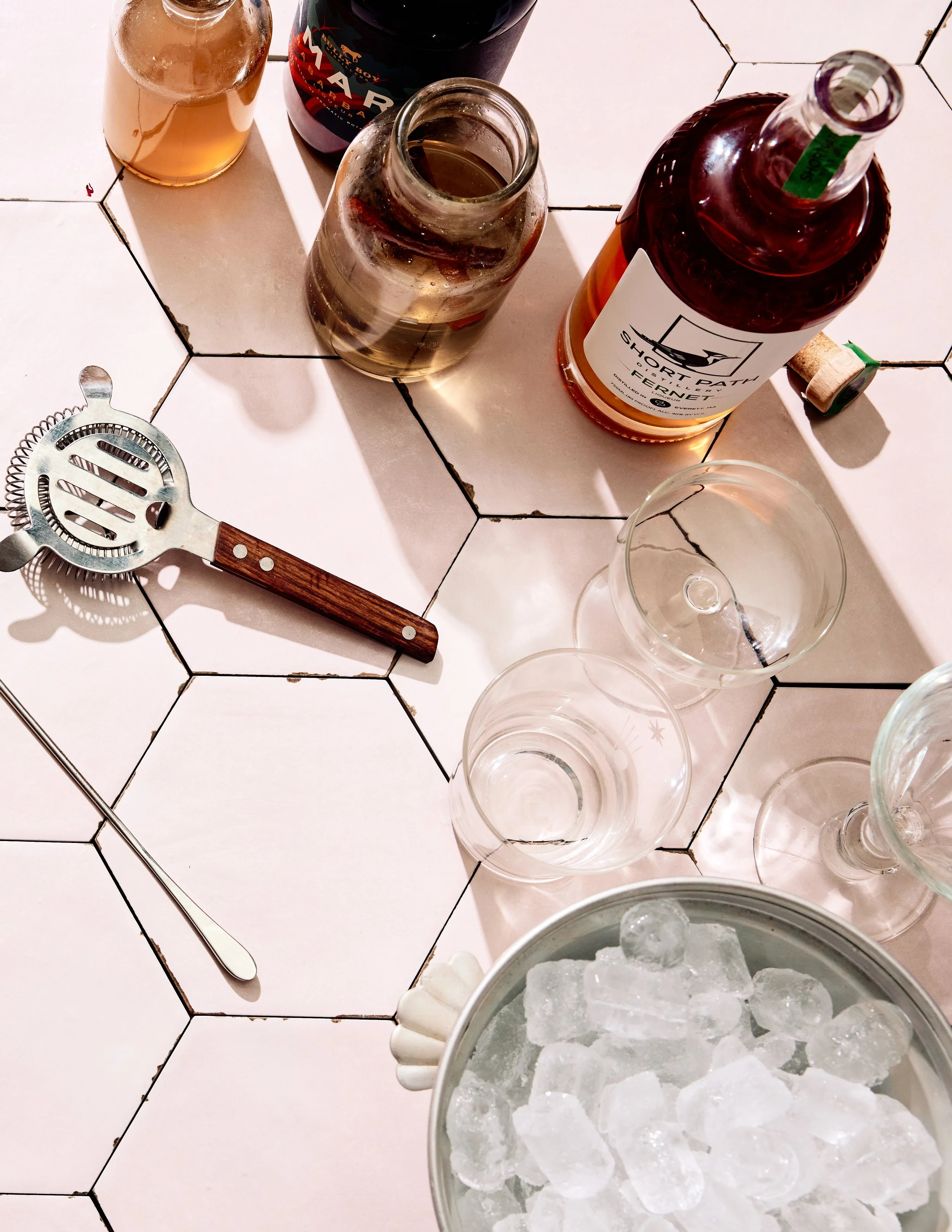
At Short Path Distillery in Everett, opened in 2015, I spoke with distiller Zachary Robinson and chief operating officer Alycia Rovner about their two amari. The Short Path Amaro starts with local strawberries and rhubarb with a mix of orange, woody spice and bittering agents like gentian and wormwood, with flavors similar to Campari and Aperol. The end result is a rounder and more complex bitter note than Campari’s, so it can function as both an aperitivo (before meals) and a digestivo (after). They mix it with apple spirits, fruitier gins and in drinks like Negronis and Spritzes. The Fernet is more complex: To Fernet Branca’s signature minty-menthol notes (derived from peppermint and aloe), Short Path added winter warming spices like clove and cardamom to provide depth, and went for a balance that was not overly minty, bitter or sweet. They mix this one with their single-malt whiskey, their Old Tom–style gin and in drinks like the Black Manhattan (substituting amaro for the vermouth) and the classic Fernet & Coke.
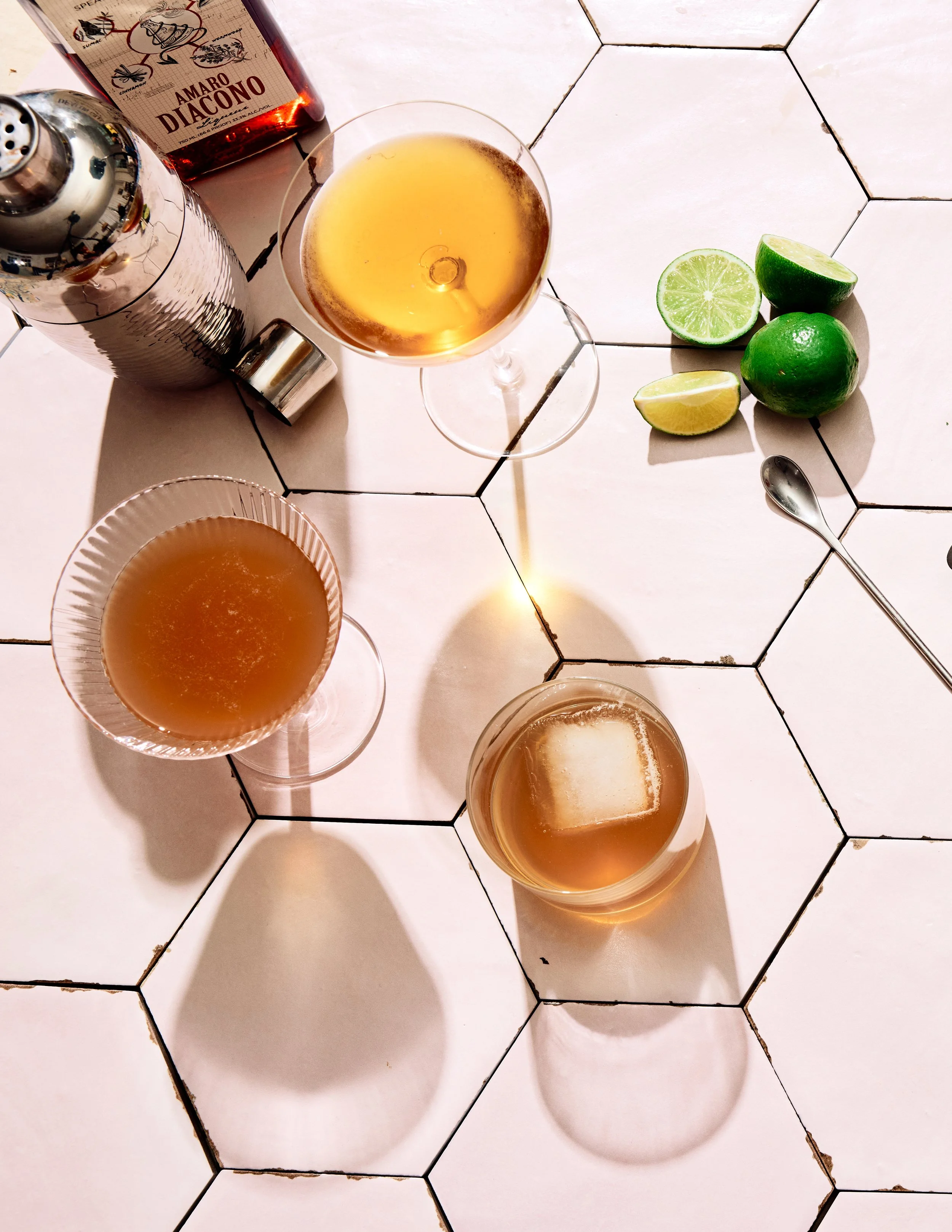
At Deacon Giles in Salem, also opened in 2015, I spoke with co-founder Ian Hunter who let me try their Amaro Diacono. They originally created it to serve in their Speakeasy Lab tasting room, since, due to their license, they can only use alcohol products that they make in-house. The goal was a northern Italian style amaro with orange peel, cinnamon and wormwood falling somewhere in the realm of Amaro Nonino, Montenegro and dell’Etna. They foraged local sumac to complement the citrus notes (which they now buy as they’ve scaled up production). Though it is more caramel-driven and less sweet than Campari, it can still prosper in a Negroni; Hunter likes to pair it with brown spirits, especially rums.
Between these offerings alone there are some pretty solid options for substituting common Italian amari in various modern recipes. All stand rather solidly on their own for sipping and would go well with soda water or in a Spritz. Below are three cocktail recipes that I created with these liqueurs. Trade issues or no, these liqueurs would certainly make fine additions to a home bar cart this summer.
RECIPES
Woodpecker Old Fashioned
I based this recipe on the Toronto, a delightful combination of rye whiskey, Fernet Branca, simple syrup and bitters that was created around 1920 in honor of the Italian immigrants to the Ontario city. Short Path’s New England Single Malt Whiskey (or a decent Scotch) seemed like a good fit for the softer feel of their Fernet, opposed to the more abrasive Branca in the classic, and the honey syrup complements the honey notes in their whiskey.
For the name, I dubbed this after the bird on their Fernet label, the pileated woodpecker. Short Path’s website describes, “This large, loud, energetic woodpecker represents the strong, daring taste of fernet… Our fernet is made using 21 botanicals, many of which offer earthy, herbal notes, making it an appropriate mascot for this feisty forest bird.”
Makes 1 cocktail
2 ounces single-malt whiskey (such as Short Path’s) or Scotch
½ ounce Short Path Fernet
½ ounce honey syrup (*)
Build in a rocks glass, add ice (a large cube if you have one), and stir 15–20 seconds to mix and chill.
(*) Honey syrup is 1 part honey dissolved in 1 part boiling water (by volume). Stir to incorporate, transfer to a bottle with a cap, and refrigerate. Each batch should be good for at least a month.
Demon Pilot
After tasting the herbal complexity of Deacon Giles’ amaro and hearing how they use it in rum drinks, I thought of mid-century tiki and tropical drinks. The distillery is named after a Temperance tract written by Salem pastor Reverend George B. Cheever called The Dream, or The True History of Deacon Giles’ Distillery and Deacon Jones’ Brewery. In this dream that he transcribed, demons were running the deacon’s distillery to manufacture “liquid damnation.” The story’s Deacon Amos Giles was a thinly veiled attack on local rum producer John Stone. Stone sued for the slander, and Cheever was imprisoned for a short while. And in honor of the workers at Cheever’s dream distillery, I named this one the Demon Pilot.
Makes 1 cocktail
1½ ounces aged rum
½ ounce Deacon Giles Amaro Diacono
½ ounce cinnamon syrup (*)
½ ounce lime juice
1 dash Angostura Bitters
Shake with ice for 12–15 seconds and strain into a cocktail or coupe glass.
(*) Break up a cinnamon stick in a measuring cup or similar, add ½ cup boiling water and let steep for 10 minutes. Add in ½ cup sugar, stir to dissolve, cover and let steep overnight. Strain, transfer to a bottle with a cap and refrigerate.
Bully Pulpit
The elegance of Bully Boy’s Rabarbaro made me want to use it in a slow-sipping straight spirits-style drink, and I based this on the Black Manhattan (substituting amaro in place of vermouth) and a few cocktails that pair darker amari with curaçao and how the smoky, roasty and vegetal notes of rabarbaros work well with agave spirits like tequila—and especially mezcal. For the name, I thought of the term coined by President Teddy Roosevelt, the bully pulpit, a conspicuous position that provides an opportunity to speak out and be listened to. Roosevelt used the word ‘bully’ to mean ‘superb’ or ‘wonderful,’ and the bully pulpit became a terrific platform from which to advocate his agenda.
Makes 1 cocktail
2 ounces tequila or mezcal
¾ ounce Bully Boy Rabarbaro
¼ ounce orange liqueur (like Curaçao or Triple Sec)
Optional: 2 dashes chocolate or molé bitters
Stir with ice for 30 seconds and strain into a cocktail or coupe glass.
These recipes appeared in the Summer 2025 issue.
