
Daily Table Closure Leaves ‘Food Desert’ Communities Out to Dry
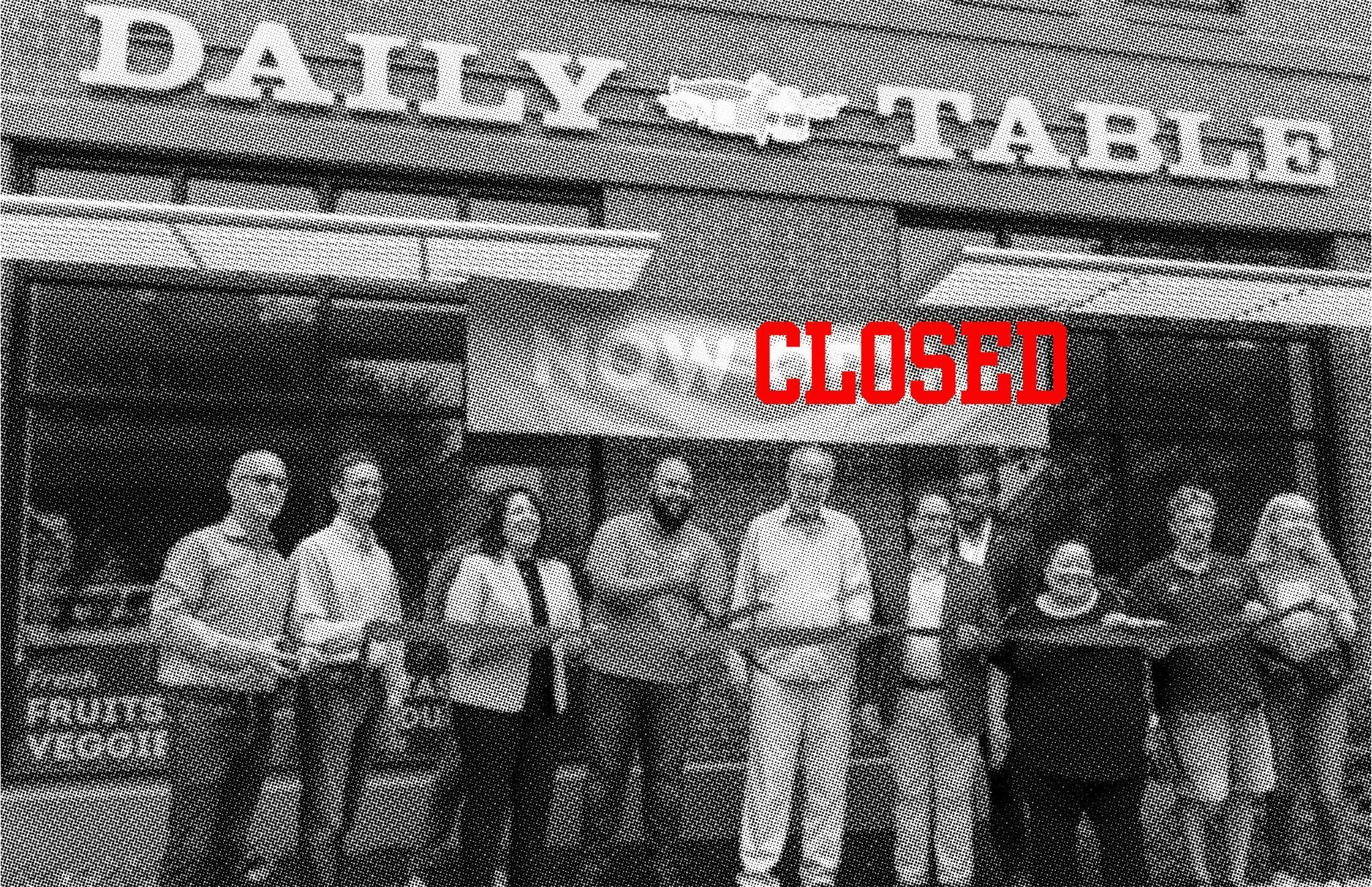
Linda Palmer stopped in at the Daily Table on a recent Friday, as she was in the habit of doing. As someone who strives to eat a vegan diet, lives on the Roxbury/Dorchester line and works in Mattapan, Palmer has shopped regularly at the affordable grocery store for things like produce, almond milk and hummus. She’s frequented four out of five Daily Table locations, she says, and is familiar with the chain’s broad selection of products, which constantly rotated but was always abundant.
So Palmer was surprised to find the shelves in the Nubian Square store more barren than usual. Just as she began to wonder why, “I overheard one of the staff say, ‘Yeah, all of the stores are closing,’” Palmer recalls. “And I could hear people in the store: They were, like, ‘What are we going to do now? Food is so expensive. What are we going to do now?’”
Daily Table unexpectedly closed all of its stores as of May 12, 2025. The Boston-based grocer began more than 10 years ago as a novel idea from industry executive Doug Rauch. Retired as the president of Trader Joe’s, Rauch’s experience and connections with suppliers enabled Daily Table to source high-quality food at a discount and pass savings on to its customers.
In 2015, the first brick-and-mortar store opened in Codman Square, Dorchester, soon followed by one in Nubian Square, Roxbury. As a mission-driven nonprofit grocer, Daily Table chose to place its stores in historic “food deserts,” or areas that lacked fresh food options. The brand eventually expanded into Mattapan Square, Central Square in Cambridge and, most recently, the Point neighborhood of Salem—the lowest-income, most densely populated area of that seaside city.
In January, the Mattapan location closed after less than two years in business. It was an underperforming outlet, the organization said at the time. Daily Table had received some private philanthropy over the years, and also benefited from certain tax breaks and subsidies from municipal and federal sources. But income generated by the stores covered 70% of business costs.
In a statement published Friday, May 9—which Palmer had yet to see when she visited the store that day—Daily Table’s board of directors announced that all stores would close imminently. “The past several years have been particularly hard,” the statement read. “After careful consideration, we have come to the heartbreaking conclusion that we can no longer continue operations.”
Rauch told the Boston Globe that Daily Table was still awaiting payout of a pandemic-era $1.4 million tax credit from the IRS. Meanwhile, the USDA has cut funding for food assistance programs that subsidized Daily Table’s efforts to keep prices low for consumers, while private donations have also slowed down. Food inflation made the financial picture even more unwieldy.
The economic contributors to the stores’ demise are also reasons why its loss is being felt so deeply in the community. Palmer is the special projects manager at Urban Farming Institute, a Mattapan-based nonprofit that engages the same communities in Boston’s most barren food deserts. She cited a recent conversation with an elderly resident on a fixed income who uses UFI services. The woman’s monthly SNAP benefits have been cut so drastically that she could only afford the most basic of staples on a recent trip to the grocery store, Palmer recalls. “She said, ‘I had to look to my children to be able to buy food for me.’ So, it's difficult.”
Jamaica Plain resident Deb Dutcher says she “was shocked and a bit angry, actually, when I saw that the Daily Table was closing.” Dutcher has worked in communications focused on healthy aging and nutrition research and is very aware of the need for affordable, wholesome food options for all demographics in Boston, she says. “That’s when I first became aware of Daily Table and just what it was giving to the community, which was huge, huge, as far as pricing and quality and locations, in what I thought were very strong food deserts within Boston,” Dutcher says. “It’s clearly needed.”
Salem City Councilor Jeff Cohen, whose district abuts the Point, says Daily Table closing is “really sad for the neighborhood and the city at large. We have so much food insecurity,” and Daily Table was one way to address it. Salem then-Mayor Kim Driscoll said during the 2023 ribbon cutting that she had been working to bring the Daily Table to Salem for nearly a decade, Cohen recalls. “Now, the gap that we were trying to fill is open again.”
It remains to be seen what can be done to restore access to affordable groceries in Salem. Since the closure, Cohen has had conversations with local business owners and food justice advocates to learn more about the store’s operations. “It’s reliant on having infrastructure,” he says.
The Salem Pantry, a food security organization headquartered in the Point that dovetailed with Daily Table as a resource for Salem’s neediest people, said in a May 13 statement, “We remain committed to meeting this moment with care, flexibility, and collaboration, working closely with the City of Salem and our partners to remain a reliable source of food for our community.”
In Boston, City officials are aware of the important role Daily Table played in preventing food insecurity in Boston’s inner city, says Aliza Wasserman, director of the Mayor’s Office of Food Justice. Her department had partnered with Daily Table on the Double Up Food Bucks program, an incentive program for SNAP shoppers that provides a 50% discount on fresh produce. Double Up Food Bucks continues to be available at six additional stores in Roxbury, Dorchester and East Boston.
The Neighborhood Food Action Collaborative (NFAC) is a network of residents, nonprofit leaders, local healthcare and government institutions that formed at the height of Covid lockdowns to address food insecurity in Boston. During a meeting held just after the Daily Table closed, Palmer says, an official on the committee reported that the City is actively working to find new grocery tenants to fill the stores.
For now, city shoppers are price-checking and brand-hunting at the food stores that are available to them. Longtime Daily Table customer Christine Rose of Mattapan plans to check out the local Star Market, she says, and has become a member of the Dorchester Food Co-Op. “It will affect my budget.”
This story appeared in the Summer 2025 issue.
