
Edible Food Find: Fallow Kin
Photos by Michael Piazza
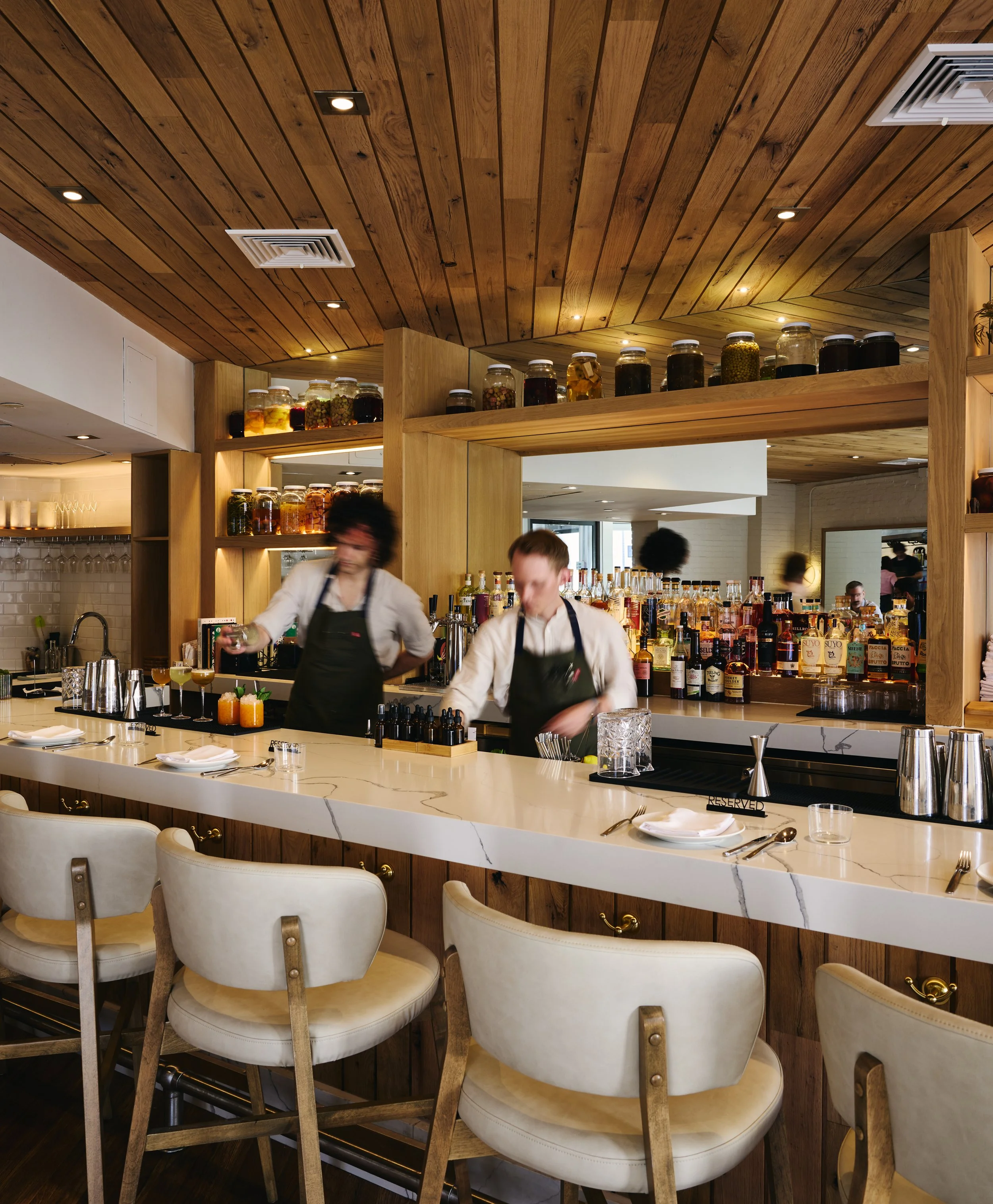
Before you even reach your table at Fallow Kin, you’ll see rows of glass jars filled with pickles, preserves and ferments, glittering like jewels. They’re a colorful preview of the philosophy that runs through everything this restaurant does.
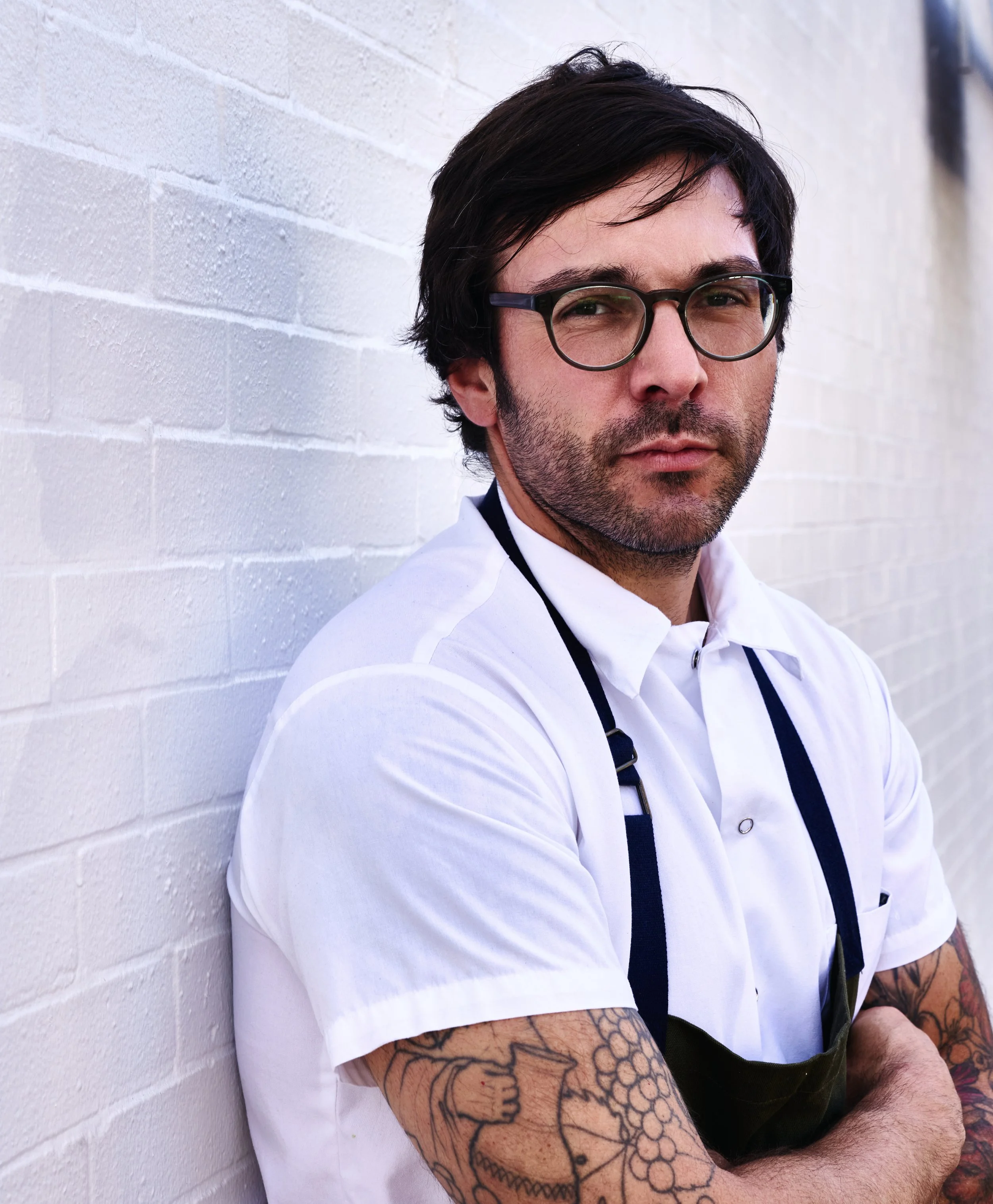
From the get-go, that mission was clear: Work with local farms, capture the freshness of New England’s seasonal produce and use fermentation as a way to reduce food waste. “It could be pickled, dried, preserved, smoked—you name it,” says Connor Dennehy, who co-owns Fallow Kin with his wife, Danielle Ayer, and chef Marcos Sanchez. After running Talulla, their acclaimed Cambridge restaurant, for eight years, Dennehy and Ayer knew they wanted to grow. So they opened their second venture, Fallow Kin, in the former Craigie on Main space in October 2025.
While dreaming up a name that reflected their commitment to working with farmers and winemakers who practice ethical farming, the team landed on the word fallow, which refers to a piece of land that’s intentionally left untouched so it can regenerate back to health. “A lot of farms we work with actually use that practice in their farming,” Ayer says. Kin, meanwhile, refers to the partnership among the three.
That ethos shows up in how the kitchen buys and uses produce. When any one vegetable is in peak season, the team buys upwards of 100 pounds of it: 20 pounds could be roasted and served immediately, while another 20 pounds might be pickled for the next season. “We have this diverse utilization of the products that we can play with as the seasons change,” Dennehy says.
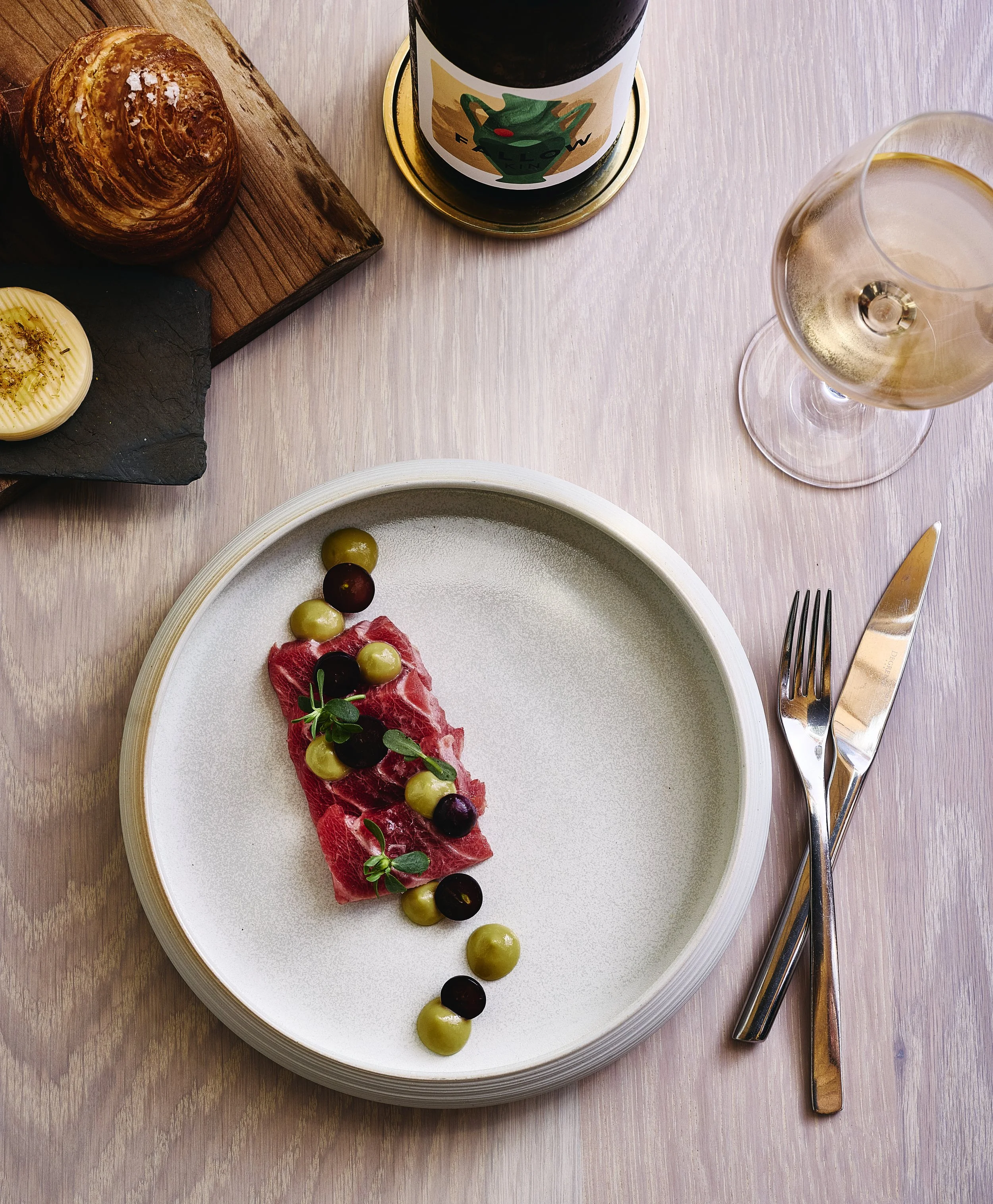
A beet terrine on a recent menu, for example, uses every part of the vegetable. The team roasts and peels the beets, then dehydrates the skins and turns them into a powder that’s dusted on the plate.
The stems are pickled into a relish that adds acidity to the dish, while the leaves are juiced into a sauce. The roasted beets themselves are sliced and layered into a terrine with salt and aromatics. The goal for almost everything they buy, Dennehy says, is 100% utilization.
That same resourcefulness drives the menu’s seasonal mainstays. For fall, Dennehy and Sanchez came up with a pumpkin raclette. “Usually it’s done with potatoes, but we really wanted everything to be representative of New England,” Dennehy explains. They opted for sugar pumpkins from Verrill Farm in Concord instead, cutting them and brushing them with confit garlic oil and salt before roasting. The pumpkin is then seared on a plancha, plated, drizzled with alpine-style cheese from Vermont, then topped with mustard seeds, toasted hazelnuts and a savory pumpkin foam made with shiokoji and miso.
Ferments, pickles and preserves extend into the cocktail program, too—the drinks are food-focused by design, Ayer says. A cocktail called Manner of Speaking features a sherry with nutty, appley notes, paired with Macvin du Jura, an aromatized wine from eastern France, and finished with house-made leek shōchū that adds a savory onion kick. Pumpkin seeds scooped out of those roasted pumpkins, meanwhile, might make their way into cocktails this fall.
Beyond reducing their carbon footprint, Dennehy and Ayer see the restaurant as a way to support the local economy—something that’s grown increasingly harder for restaurants to do. Dennehy points to the average 10% profit margin most restaurants operate on: “That means in a really small local restaurant, 90 cents on every dollar goes back into the local economy, whether that’s sourcing ingredients from local farms or paying people who live locally… as opposed to some restaurant group that uses national chains for their food supply.”
It’s a challenging, albeit rewarding, way to run a kitchen. “We’re depending on the farms to provide us with products to use, and that means we have more work, because we’re constantly developing the menu,” Dennehy says. “But it means we get to really truly support the farms and the local economy.”
So far, diners have been hungry for exactly that. And if the brightly colored jars lining every shelf are any indication, Fallow Kin is stocked for whatever season comes next.
fallowkin.com // 853 Main St., Cambridge
This story appeared in the Fall 2026 issue.
