
Effie’s Homemade: A Beloved After-School Snack Grows Up
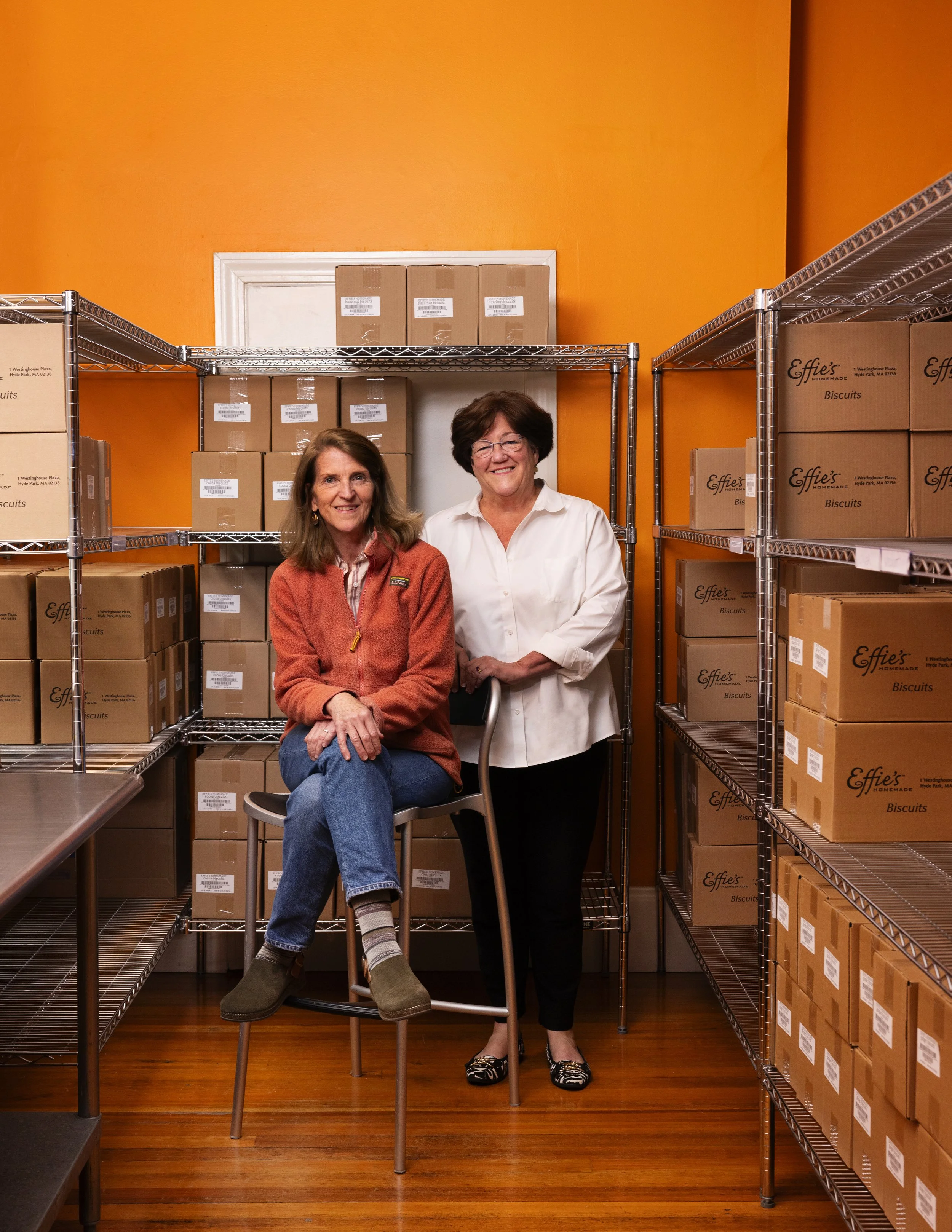
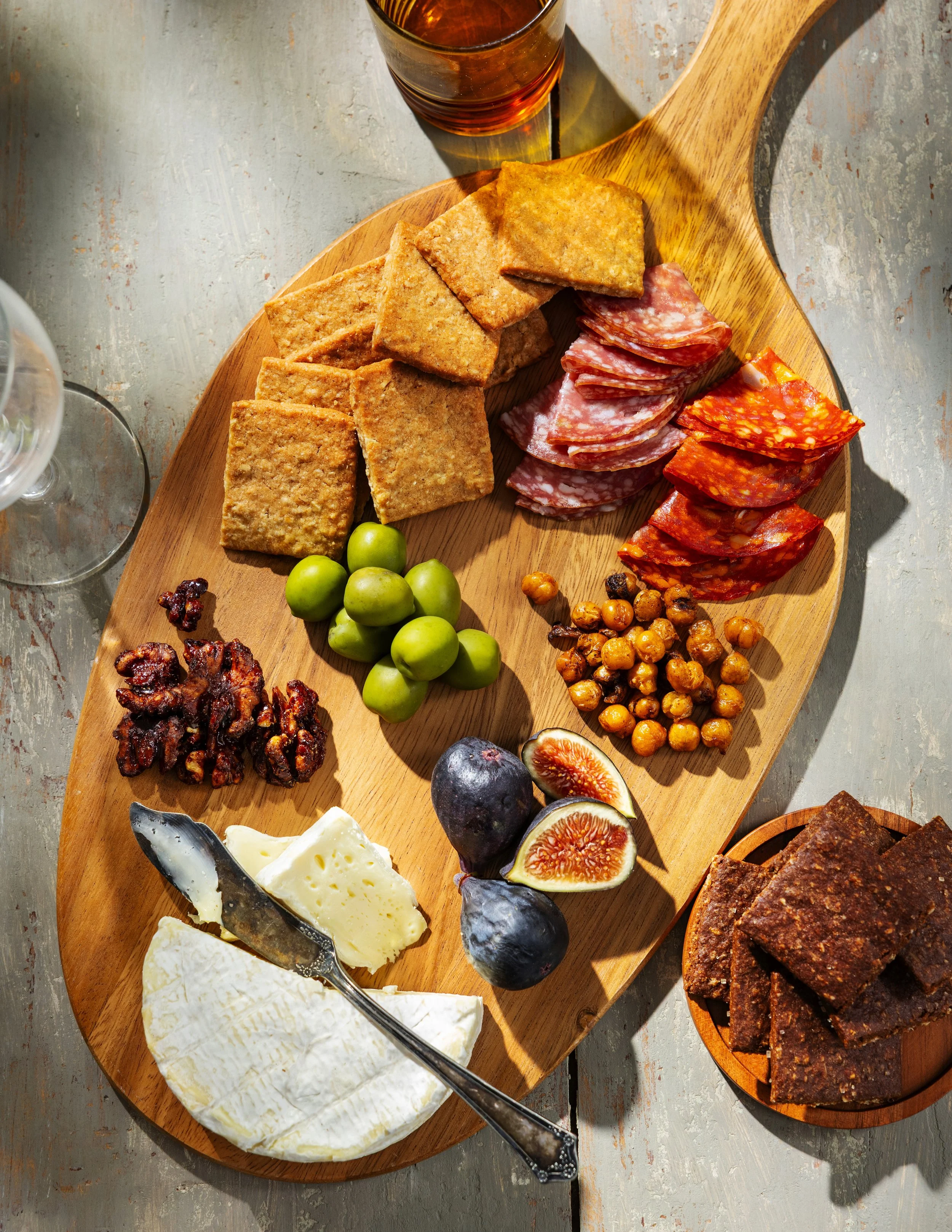
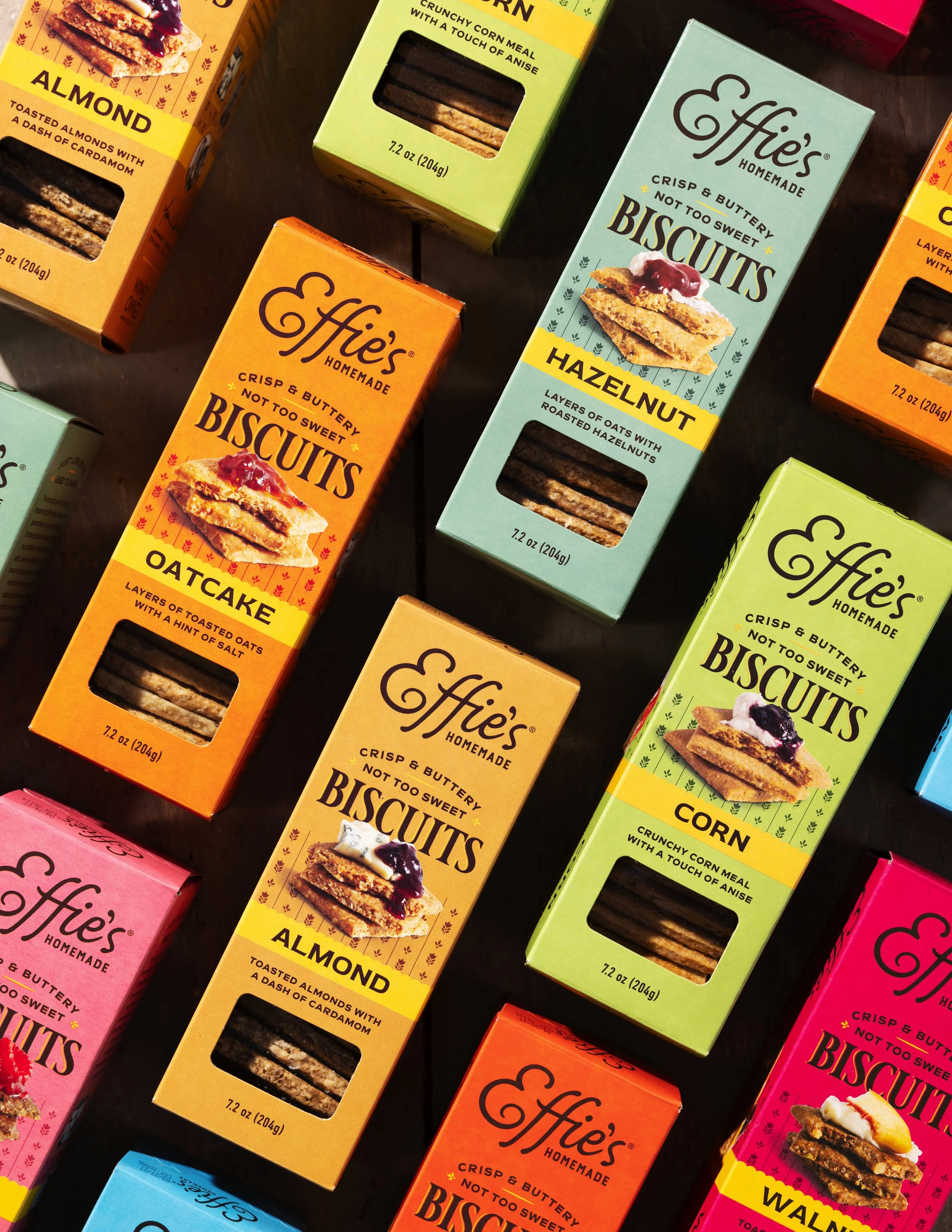
Photos by Adam DeTour / Styled by Dave Becker
Long before Effie’s Homemade oatcake biscuits lined thousands of specialty food shelves nationwide, they lived quietly in a 1950s family kitchen in Dorchester—a farmhouse recipe baked weekly and handed out to hungry youngsters as an after- school snack.
The distinctive crumbly crunch was met with delight, and the hearty ingredients satiated appetites of even the hungriest of neighborhood kids.
“These were almost always in the house. I never had them anywhere else,” says the company’s co-founder Joan MacIsaac of the staple snacks her mom, Effie McLellan, baked to savor with a cold glass of milk. “My dad used to eat them with cheese and raisins on top. I’ll never forget that image of him. This was always my favorite food.”
The family recipe for Effie’s stretches back at least four generations, tracing its roots to MacIsaac’s heritage in Nova Scotia, and further still to Scotland, where her mother’s family lived on the Isle of Skye. But these types of biscuits boast quite a cultural history well beyond that one bloodline. Served to soldiers and Highlanders for centuries as the “national bread,” traditional Scottish oatcakes were simple, hearty and unsweetened, made from oats, water and fat and cooked on a griddle.
Though they’re MacIsaac’s connection to her roots, like many recipes carried across oceans, these crispy biscuits adapted to their surroundings. In Nova Scotia, where butter, sugar and different grains were more accessible than in Scotland, the oatcake evolved into something richer and more nuanced.
“When the Scots settled Nova Scotia, it was just a different source of ingredients,” explains MacIsaac, noting also the Scottish steel-cut oats were also replaced with rolled. “They evolved in a different way. That’s the version we grew up on—a Nova Scotia oatcake.”
During MacIsaac’s time building a career in the food world through restaurant kitchen work, and eventually her own catering business, her family’s oatcakes remained a personal favorite, not yet a product for the masses. That changed almost by accident, thanks to her move to Seattle and time working at Grand Central Bakery.
“I brought oatcakes to a party, and they all loved them,” MacIsaac remembers. “It just put a little spark in my brain and reaffirmed how much I love them.”
Around the same time, MacIsaac’s childhood friend from high school in Milton, Irene Costello, was making her own pivot into food from 20 years in the corporate financial services world. Completing the same program as MacIsaac—Boston University’s Professional Culinary Arts program, founded by Julia Child and Jacques Pépin—Costello also earned a Master of Liberal Arts in Gastronomy. Once MacIsaac returned to the Boston area in 1995, the two reconnected through mutual friends. What began as a conversation quickly turned into something more deliberate.
Costello’s academic work on multi-functional food businesses eventually was the pivot needed to create the family recipe’s business plan. Bit by bit, the oatcakes were slowly introduced to the public, including successful sales through the duo’s time working at Ruby Chard Catering in West Roxbury.
Effie’s Homemade Biscuits was officially born in 2008— aptly named after MacIsaac’s mom, the inspiration behind it all. The one issue? The financial crisis was beginning to unfold. It was hardly ideal timing, but it forced the founders into a disciplined, scrappy approach from the start.
“Joan and I were spinning around in our new office chairs on the eve of the crash in 2008, like, ‘What are we doing? We don’t know anything about retail,’” laughs Costello. “Joan was, like, ‘Don’t worry about it. We’re smart.’”
With limited access to funding, they bootstrapped everything. What could have been a setback, Costello credits as a defining advantage. “That made us a lot more careful than we would have been if we had a lot of money thrown at us,” she remembers.
The earliest production runs of Effie’s were modest, using the shared Nuestra commercial kitchen in Jamaica Plain to produce small batches. This proved just enough to get into a handful of local stores, but demand quickly outpaced what they could physically make.
“We got into 13 stores,” says MacIsaac, “but we needed to make more product. We couldn’t keep up.”
The stepping stone came when MacIsaac and Costello were introduced to a piece of restaurant equipment— an industrial extruder—that just so happened to be in Canton.
“People came from all over the world to use this machinery, and it was in our backyard,” explains MacIsaac. Allowing them to produce consistent, high-quality biscuits at scale without compromising the integrity of the recipe, this game-changing equipment let them find local bakeries to house their product.
Soon the 13 accounts in early 2008 expanded to 200 by the end of the year, thanks to another move to embrace co-manufacturing with Aunt Gussie’s in Garfield, NJ, where Effie’s has been for 18 years. The decision to co-manufacture rather than build a production facility freed up the team to focus on growth and relationships.
“Co-manufacturing is very common,” says Costello. “We didn’t have to worry about building out a kitchen, employment issues or equipment breaking down. So we focused on sales, marketing, product development and more R and D.”
In the years since, growth has remained steady and organic, with the company now producing up to 185,000 biscuits a day for its single-serve and 18-biscuit boxes. They are in more than 4,000 stories throughout the country.
Part of the brand’s staying power lies in its versatility on both shelves and plates. Effie’s biscuits don’t fit neatly into just one category. They’re neither fully sweet nor entirely savory. They’re both cookie and biscuit. Occupying that space in between has worked to their advantage, as they rack up Sofi awards from the Specialty Food Association in a variety of categories, from cookie to cracker to snack bars. The biscuits have even earned personal kudos from James Beard Award–winning local chef Jody Adams, who, after being introduced to the treats, sent the team a note of praise.
New flavor profiles were quick to become favorites, including a unique corn biscuit with a touch of anise introduced in July 2009, which Costello describes as “if a corn muffin could be a cookie,” followed by flavors like ginger, cocoa, almond, pecan, walnut, and, most recently, hazelnut and Gruyère. Pairings run the gamut, from brie to red pepper jam, prosciutto to squares of dark chocolate.
The family legacy has been as meaningful to MacIsaac personally as it has been professionally.
“To say it’s special is probably not enough,” she says. “It’s nice to be able to introduce something that means so much to me, to my family. It brings a lot of pride. It’s validating.”
Thankful for the advice they received from others in the industry at their company’s launch, MacIsaac and Costello now pay it forward by mentoring other small food businesses. They also support organizations focused on food security, sustainability and local agriculture, such as The Food Project, Greater Boston Food Bank, Brookwood Community Farm, Food for Free and Commonwealth Kitchen.
Looking back, Effie’s Homemade’s success is rooted in more than just a good product. It’s also about a family tradition carried across continents, adapted over time, and shared more widely than its humble origins ever suggested.
“Prior to launching, I went to a Chef’s Collaborative event and [Boston] Chef Susan Regis was there. She said that the products that make it on the market are items that mean something to people, that have a history, that connect,” remembers MacIsaac. “You can build a brand off of that. That’s pretty much what we did.”
“When we started, people didn’t know what an oatcake was,” she continues. “After 18 years, there are a lot more people who know. That’s pretty special.”
This story appeared in the Summer 2026 issue.
