
A Brewery Reborn: Jack’s Abby Gives Wormtown Brewery Its Next Act
Photos by Michael Piazza
Hours before the soft opening for Wormtown Brewery’s new taproom, Sam Hendler points out where workers demolished the original bar and bulldozed through a wall, clearing a path forward for this riff on a German beer hall. His family did not apply the same force on Wormtown the business after acquiring it in 2024, to the relief of everyone who traces the start of their courtship with craft beer to Worcester’s oldest brewery.
Anxiety over Wormtown’s future persisted in those early days after the sale. The move at once shook up the state’s craft beer market and made the Hendler family the largest Massachusetts brewery owners outside of Boston. Among its first acts as owner, Hendler Family Brewing Co.—the parent company for Jack’s Abby, which the family founded 15 years ago—shuttered Wormtown’s first Shrewsbury Street brewery, moving all production to its Framingham brewhouse. Hendler, the CEO, would acknowledge fears, real or imagined, over Wormtown losing its quintessentially Worcester identity amid the change of scenery and the company’s other brands. When the taproom at 72 Shrewsbury Street went dark last summer, it would remain so for eight months, an absence that fueled more speculation than anticipation.
But now Wormtown returns with an outsize presence in Worcester. And the 16-year-old brewery isn’t going anywhere—and never was.
If you look closely, you see only signs of hope for Wormtown’s future under the leadership of the Hendlers. The family retained nearly all of Wormtown’s employees—the taproom staff, even the quality control chemist—separating with only the executive team and a small number of production roles. Two years after the sale more than half of those people still work at Wormtown, says spokeswoman Jessica Alario; in fact, the brewery now employs 46 people—the largest team it has ever had in Worcester.
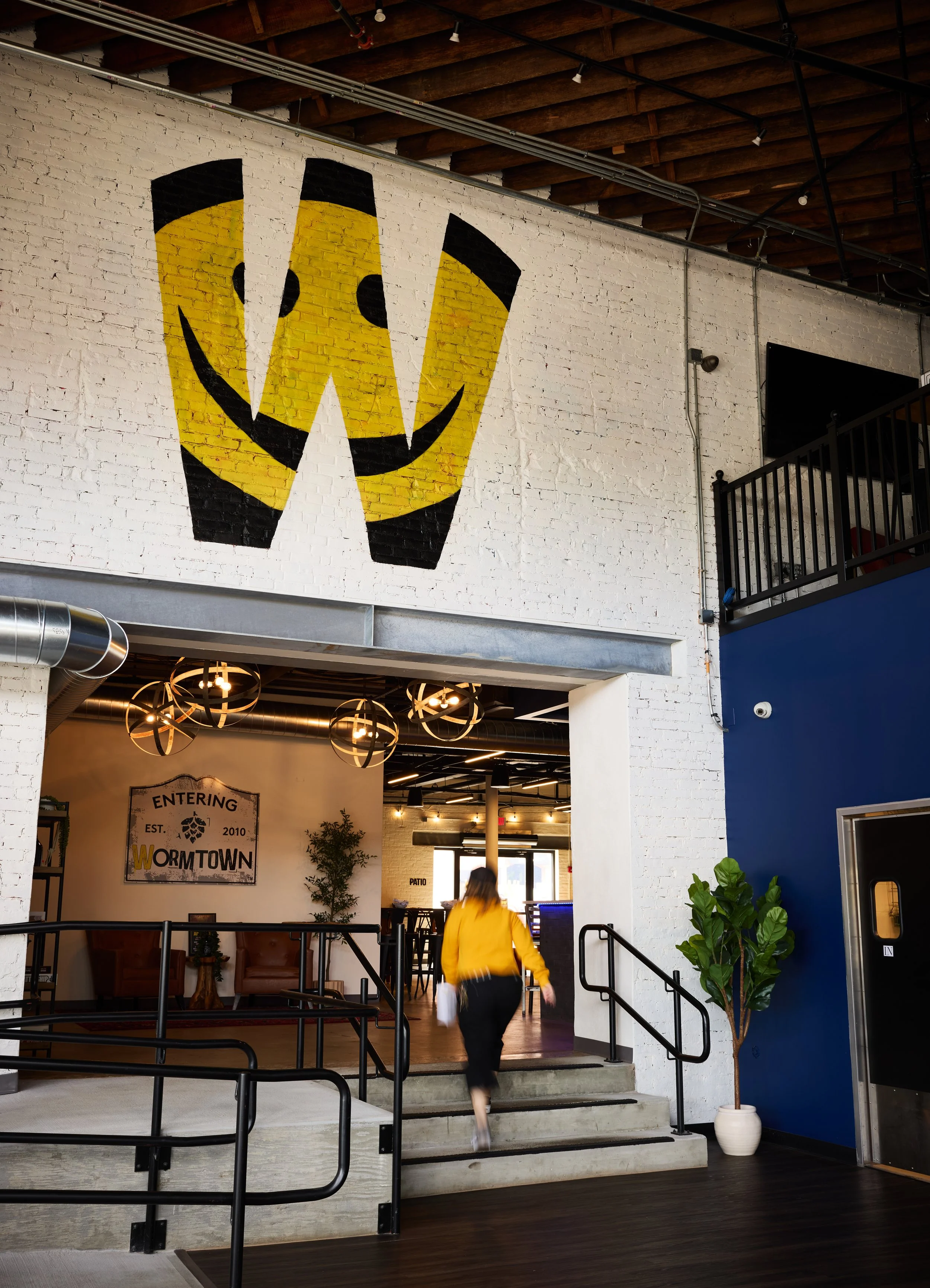
The taproom renovation has drawn the most attention. All told, the Hendler family says it invested hundreds of thousands of dollars in the expansion, which nearly doubled the size of the taproom, growing it from 4,500 square feet to 8,609 square feet, while increasing overall capacity to accommodate 300 guests. At the same time, the Hendler family signed a lease to keep Wormtown in Worcester for at least the next decade.
“We’re committed,” Hendler says, seated at a high-top table on the night of the opening, munching on a plate of tater tot poutine, consisting of potato gnocchi with a lamb ragu, one of the many dishes from Wormtown’s new menu. “We’re here for a long, long time.”
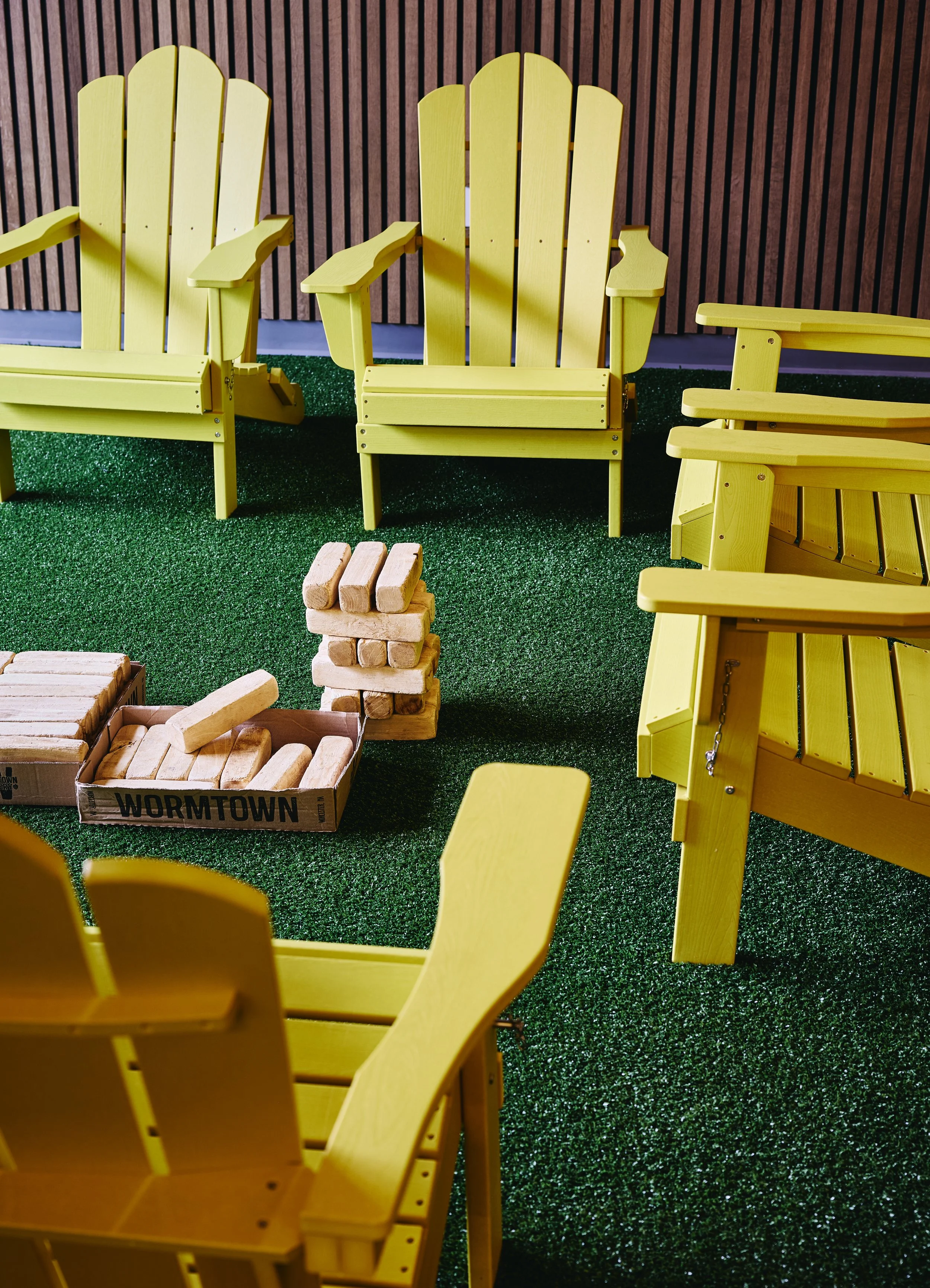
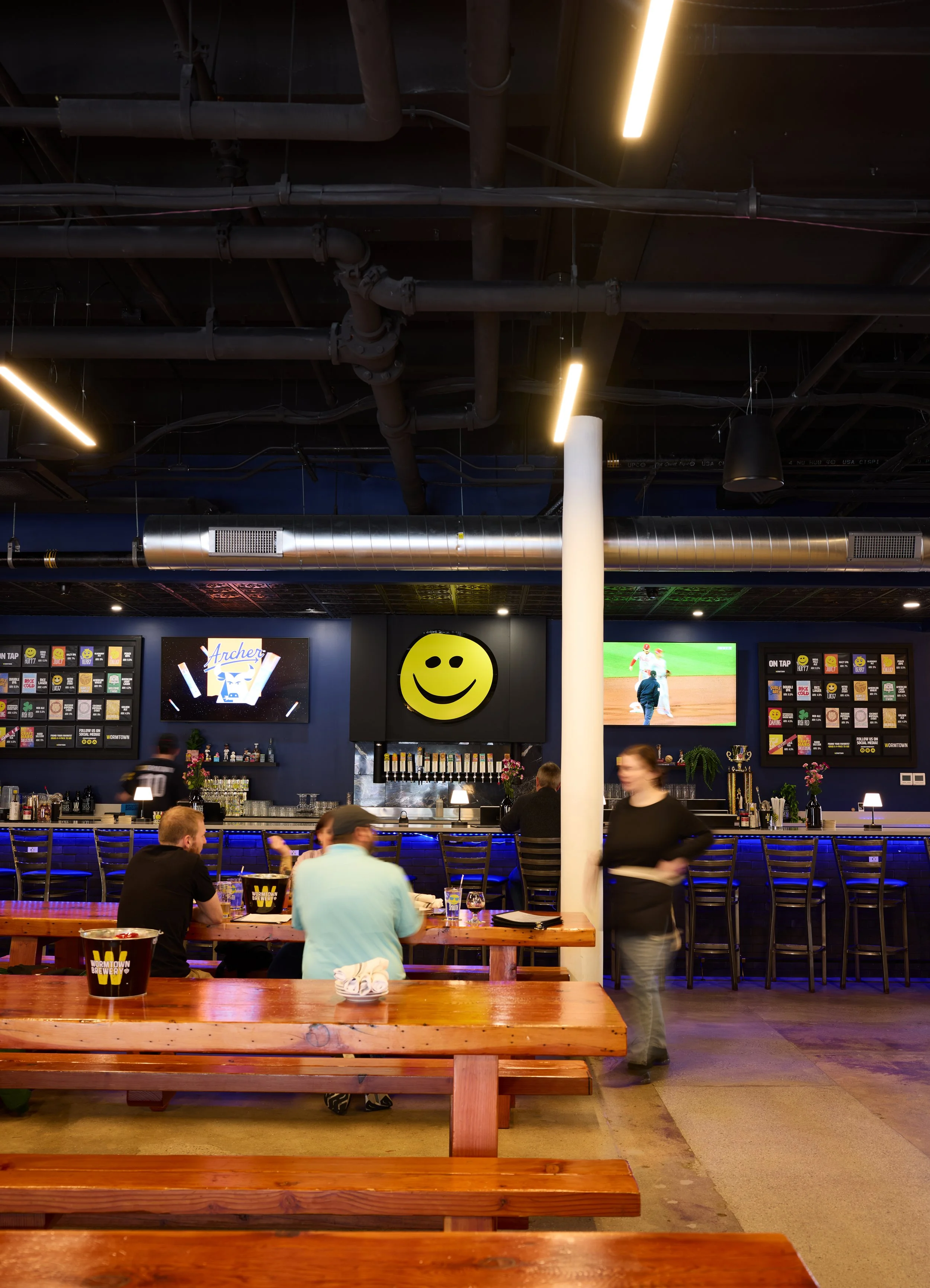
The taproom is abuzz as the team readies itself for the big reveal. Similar to the beer hall at Jack’s Abby in Framingham, long picnic tables line the middle of the room; two gargantuan pizza boxes from I Love Frankie’s sit atop one of the tables, the staff’s lunch to power them through their frantic preparations. The communal vibe in the room gives way to a semi-private, turf-covered area with small privacy fences and a handful of tables set beneath bistro lights. A patio area outside will be open by summer, a beer garden shielded from busy Shrewsbury Street. Hendler, a grinning bundle of nerves, says nothing about the new taproom is more satisfying than getting to serve people “Be Hoppy” again in Worcester.
“My favorite part of the buildout is going to be tonight,” he says. “As an anxious, neurotic person generally, the buildout is not fun.”
It has become clear since the acquisition that the story of a bigger, stronger brewery buying one gasping for life doesn’t ring true. Both breweries needed one another to grow and, in the tough years for craft beer ahead, survive, Hendler notes.
“I think there was a certain narrative around that with me and my brothers taking over Wormtown, we would be walking away from Worcester,” he says.
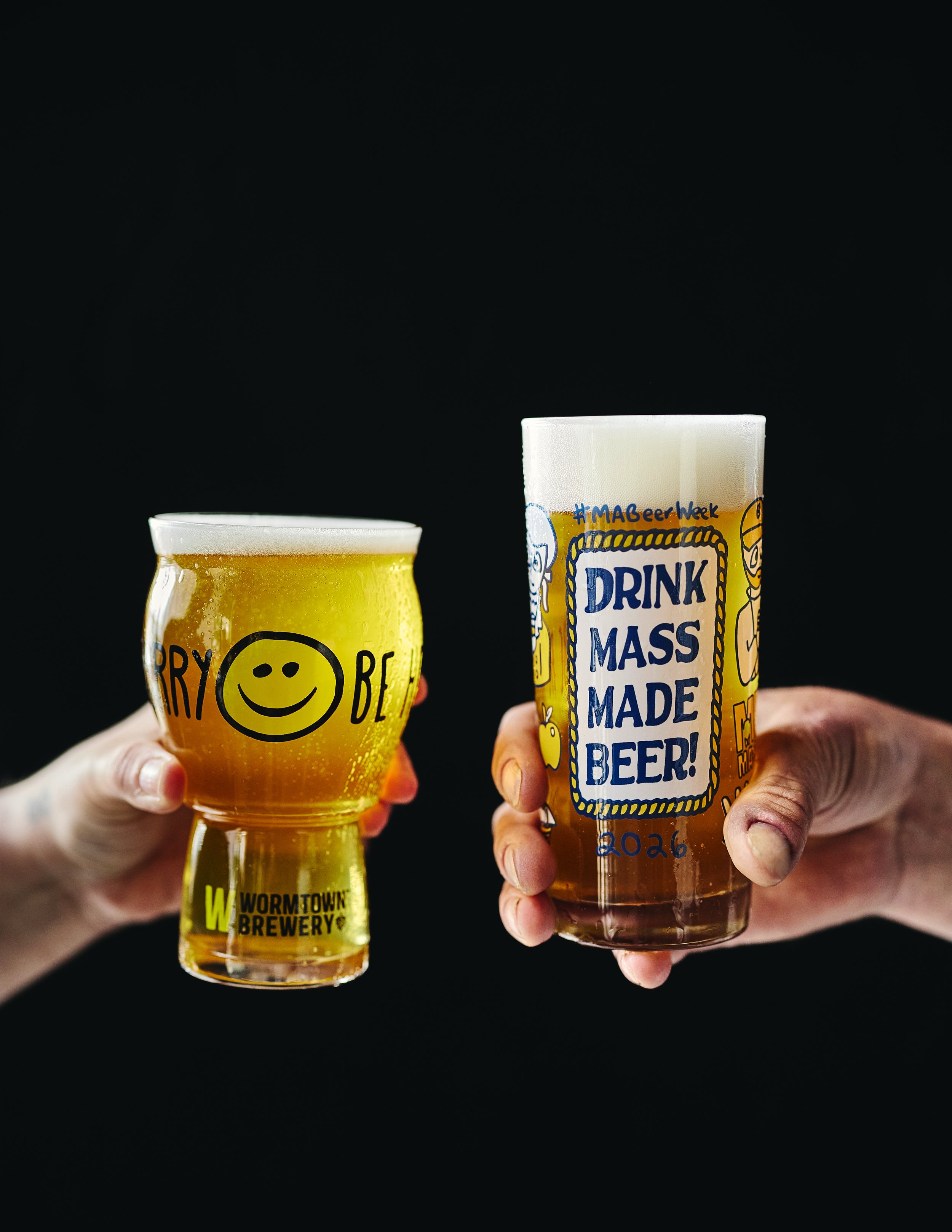
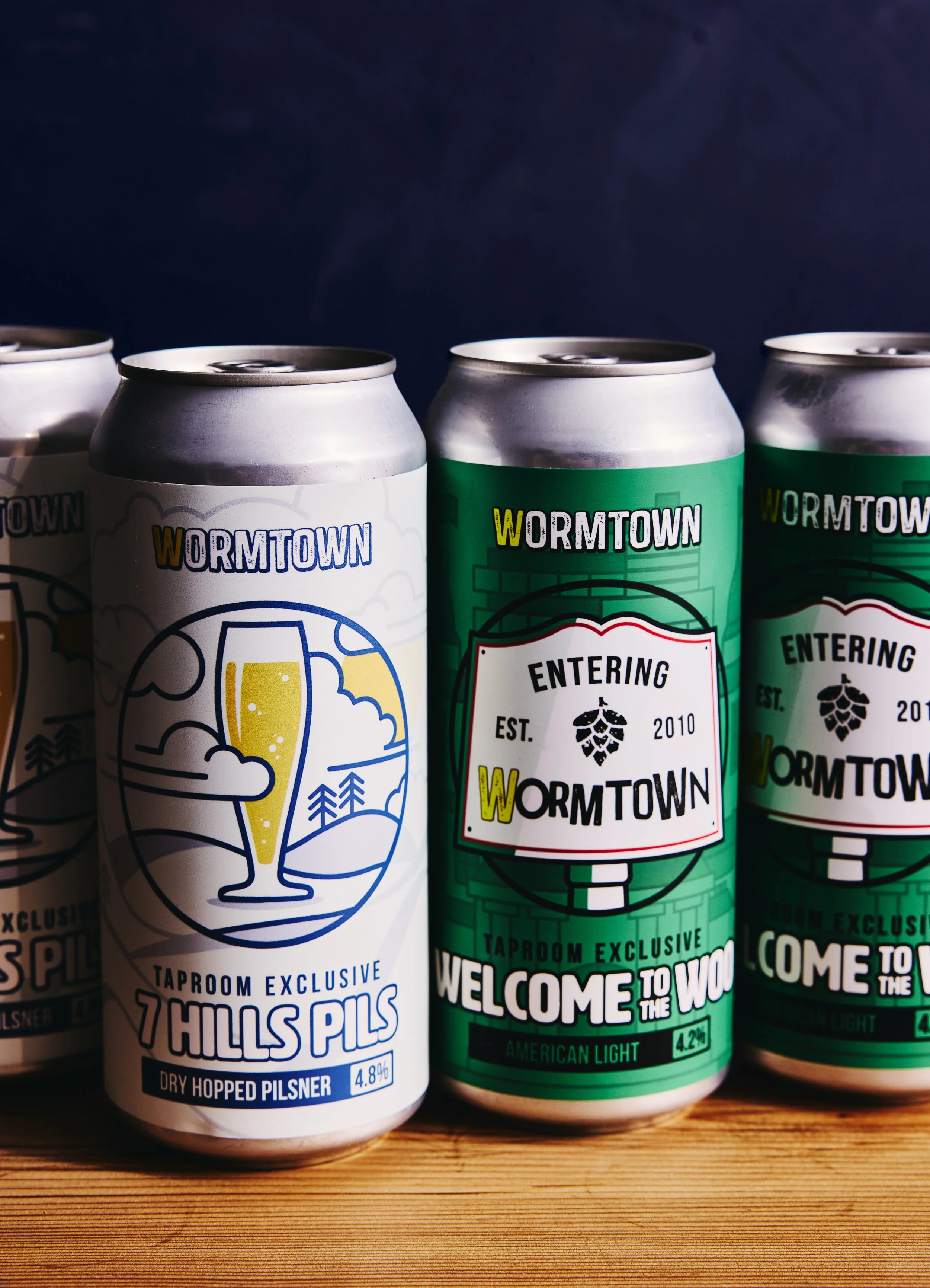
For Hendler Family Brewing Co., Wormtown’s flagship IPA has become an asset, outselling any other beer in its portfolio. And Hendler calls the success of Be Hoppy “one of the really bright spots in the industry over the last few years.”
“For Wormtown, the partnership has unlocked new capabilities and investment,” he says. “That includes innovation like the launch of Be Hoppy 12-packs, but just as importantly, it’s allowed us to reinvest in the Worcester taproom—the heart and soul of the brand. Wormtown was founded in Worcester, and the taproom is where that identity comes to life.”
Perhaps the two breweries were destined to join forces. The history of Bay State craft beer cannot be written without Wormtown and Jack’s Abby, which emerged in 2010 and 2011, respectively, during the biggest wave of brewery openings in the state. They’re responsible for two of the local industry’s most important brews: House Lager and Be Hoppy. And they carried the torch for craft beer in their cities. Of the 16 breweries that opened alongside Wormtown and Jack’s Abby, just six still operate today.
With Wormtown under its umbrella, Hendler Family Brewing Co. has transformed into a brewing behemoth (it also acquired Boston’s Night Shift Brewing). Indeed, the U.S. Brewers Association lists Hendler Family Brewing Co. as the 27th-largest craft brewery in the nation.
Hendler maintains that, alone, both breweries were facing varying hardships. Wormtown, he says, faced the greater struggle of the two. Though still a successful brewery on paper, aspects of its business carried the stench of stale beer; it thirsted for fresh ideas and renewed focus, coming off the opening of a distillery operation that had fallen flat and the departure of one of its founders and its longtime brewmaster, Ben Roesch. Post-Covid shutdowns Wormtown could not recapture the momentum of its early years, despite the distillery and expanding its footprint on Shrewsbury Street by moving into a former car dealership in 2020.
“More broadly, both businesses were navigating a rapidly changing, post-Covid craft beer landscape,” Hendler says, several days after the taproom’s opening. “Bringing the companies together created a stronger, more stable organization with the scale and resources needed to adapt—while continuing to invest in and grow these iconic brands for the long term.”
At the time of the sale, one of Wormtown’s longtime leaders, David Fields, explained that the brewery he had devoted his life to for so many years had reached the limits of its growth—on its own. But the sale offered the chance for both breweries to ascend to heights they’d never reach alone.
Fields, who spends his post-brewery life sport fishing, noted at the time, “It’s a powerful combination that creates the economies of scale at exactly the right time, to guarantee long term success and meaningful growth not only for both brands, but for the people behind these two great breweries.”
The Hendlers did not set out to fundamentally change Worcester’s most important brewery. They have accentuated the best parts of Wormtown, like those newer versions and package sizes of Be Hoppy, and built the city’s largest taproom.
“Reopening it in a more intentional, elevated way is about reconnecting the brand to its roots and creating a space that truly reflects the energy, creativity and pride of the Worcester community,” Hendler says.
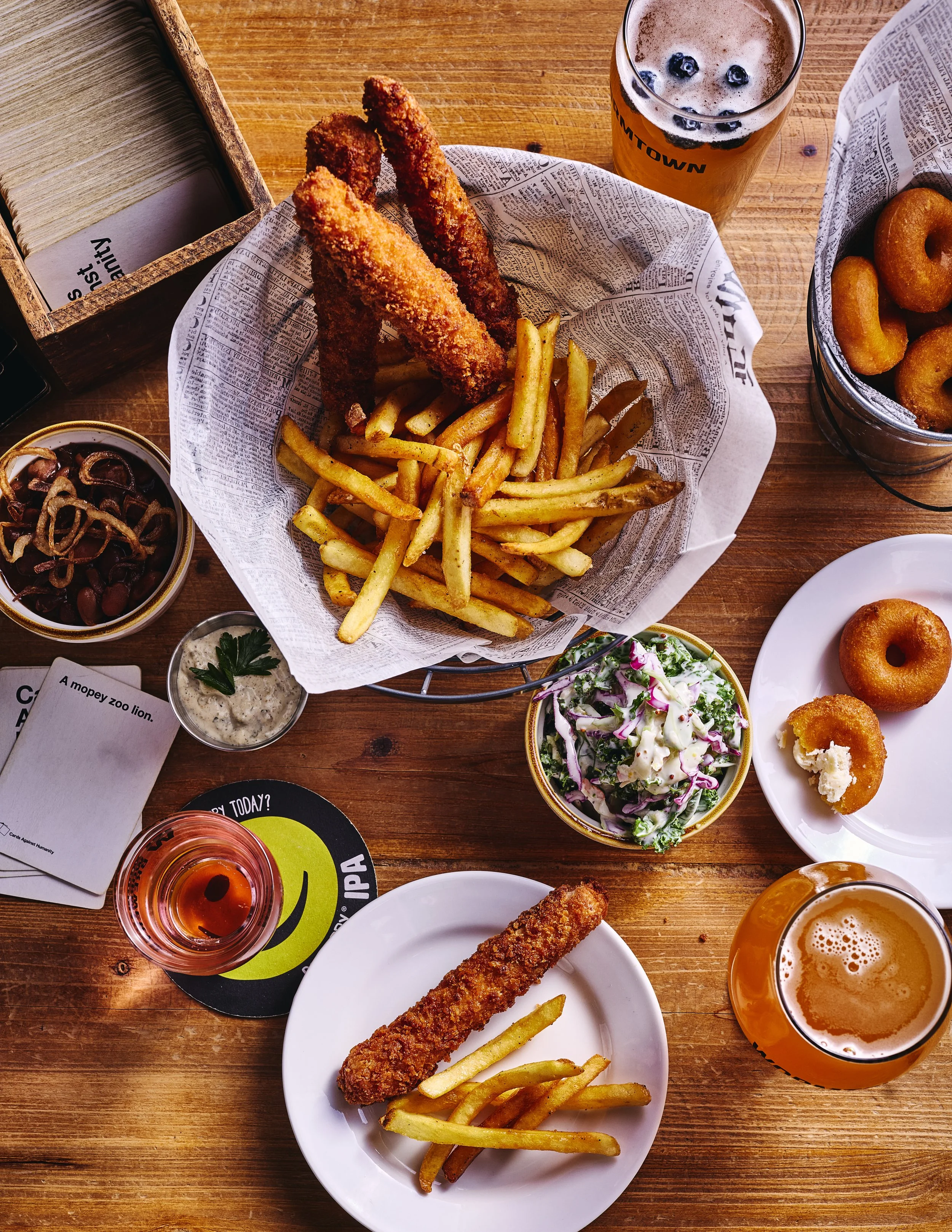
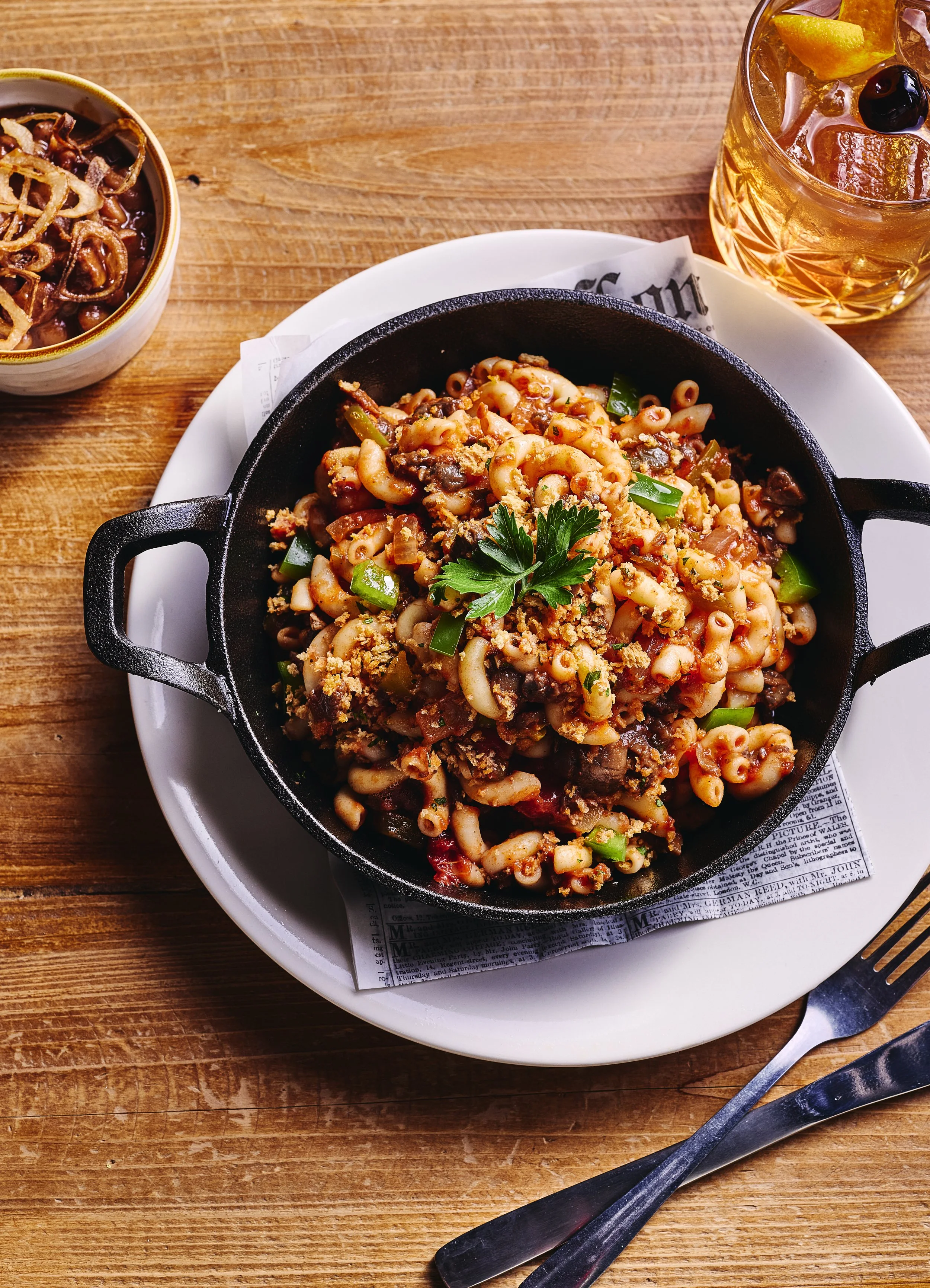
A few weeks after the soft opening, the taproom is winding down from a busy Sunday afternoon. General Manager Britton Atchley, who worked for Wormtown before the sale, says she just tended to an entire rugby team. She passes out the menus, including a beer list with all of the Wormtown hits and a few new brews, like the refreshing blueberry wheat ale, “Be Berry.” The dishes are an ode to classic childhood comfort foods, including the homemade, stick-to-your-soul dishes and the quick eats a ’90s kid would crave: Only at Wormtown’s taproom can you pair your American chop suey with dino nuggets. Those nuggets arrive by the basket-full, light and crispy with a side of honey mustard. The star of the menu is a double-smash burger, slathered with beer cheese and dosed with a hint of spice from a Calabrian chili mayo.
Eating at Wormtown’s taproom feels like going back home, remarks one patron. Wormtown is home, finally. The brewery, Hendler acknowledges, didn’t feel the same away from Shrewsbury Street. “It’s a totally different thing to be able to invite people back into our space,” says Hendler. “That is a one-on-one connection you can make with somebody that in our experience can’t be replaced.”
This story appeared in the Summer 2026 issue.
