
Underground Mushroom Co.

Photos by Michael Piazza
Picture a heavily weathered industrial warehouse abutting Gloucester Harbor, a short walk from the Beacon Marine Basin, a popular subject among plein air painters in the area. It’s just where you would expect to find a boat repair yard and fishing supply shop. And that’s exactly what you’ll see, along with something unexpected: a thriving indoor mushroom farm.
Two years ago, Matt Pinstein launched his mycelial operation in the space formerly occupied by a lobster wholesaler. Reflecting his upcycling ethos, he spent weeks upon weeks repurposing the 2,000-square-foot space, transforming areas equipped with lobster condominiums—large saltwater tanks—into mushroom growing rooms. In true upcycling fashion, the business’s entrance is a patchwork structure built from reclaimed wood. According to local lore, Whitey Bulger ran guns to the IRA out of the building and “fight clubs” met in the space where a cold fog of water vapor now supports rapid mushroom growth.
Underground Mushroom Co. began as a pandemic passion project and then morphed into a true business when Pinstein realized he enjoyed the work and could scale it up. Previously, he studied sustainable agriculture at UMass Amherst and worked stints at a vineyard, an olive farm in Italy and a coffee farm in Hawaii before signing on with a salmon fishing boat in Alaska. Pinstein’s experience on the fishing boat established common ground with his current neighbors on the working waterfront.
“We are all food producers who respect one another’s jobs and how hard everyone works here,” he says.
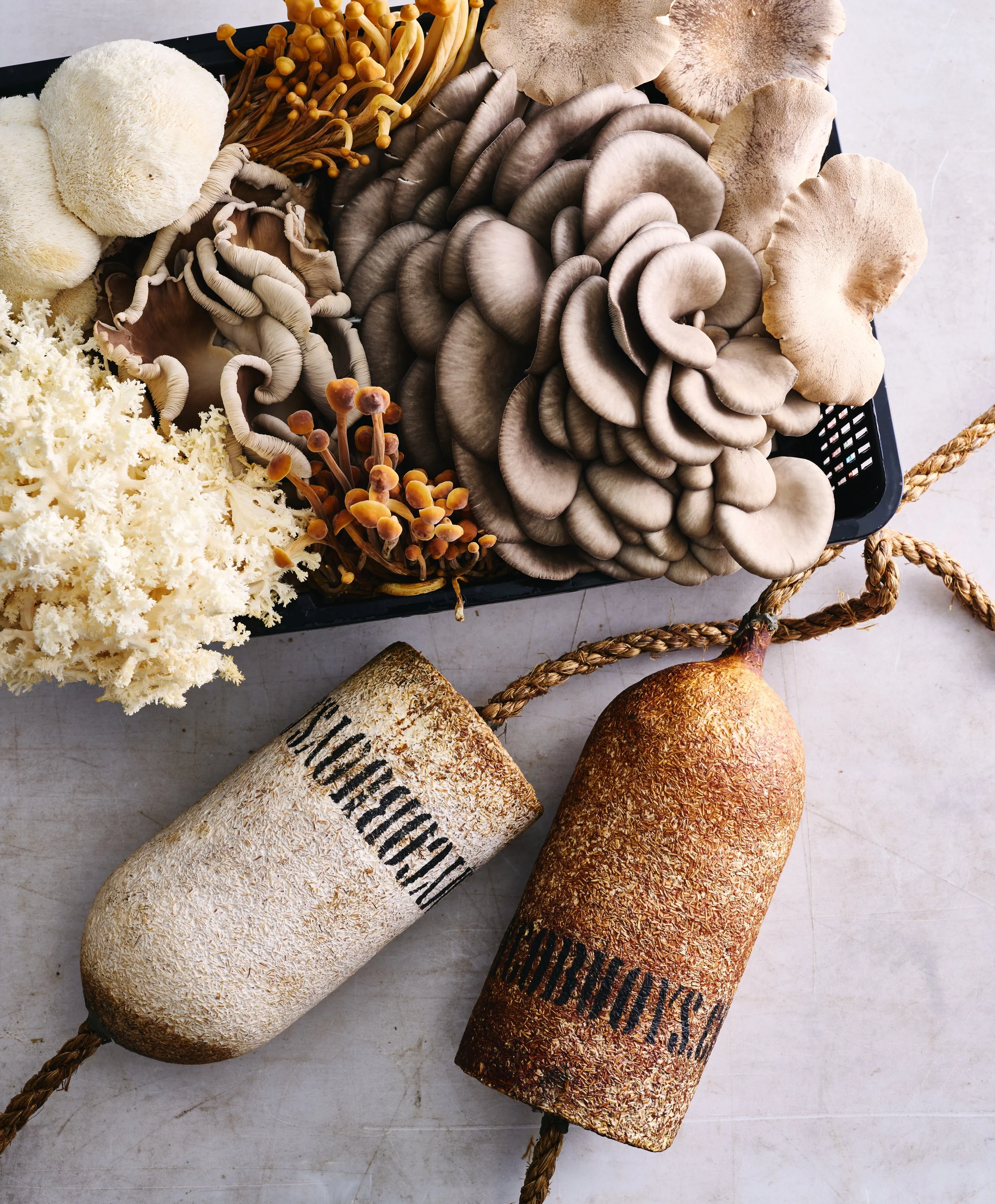
Pinstein enjoys another link to the fishing industry: He collaborates with a mycologist—Sue Van Hook, a mushroom scientist—who developed “myco” buoys. The product, an alternative to plastic and synthetic foam buoys, is made of reishi mycelium—mushroom root material—that grows on a straw substrate.
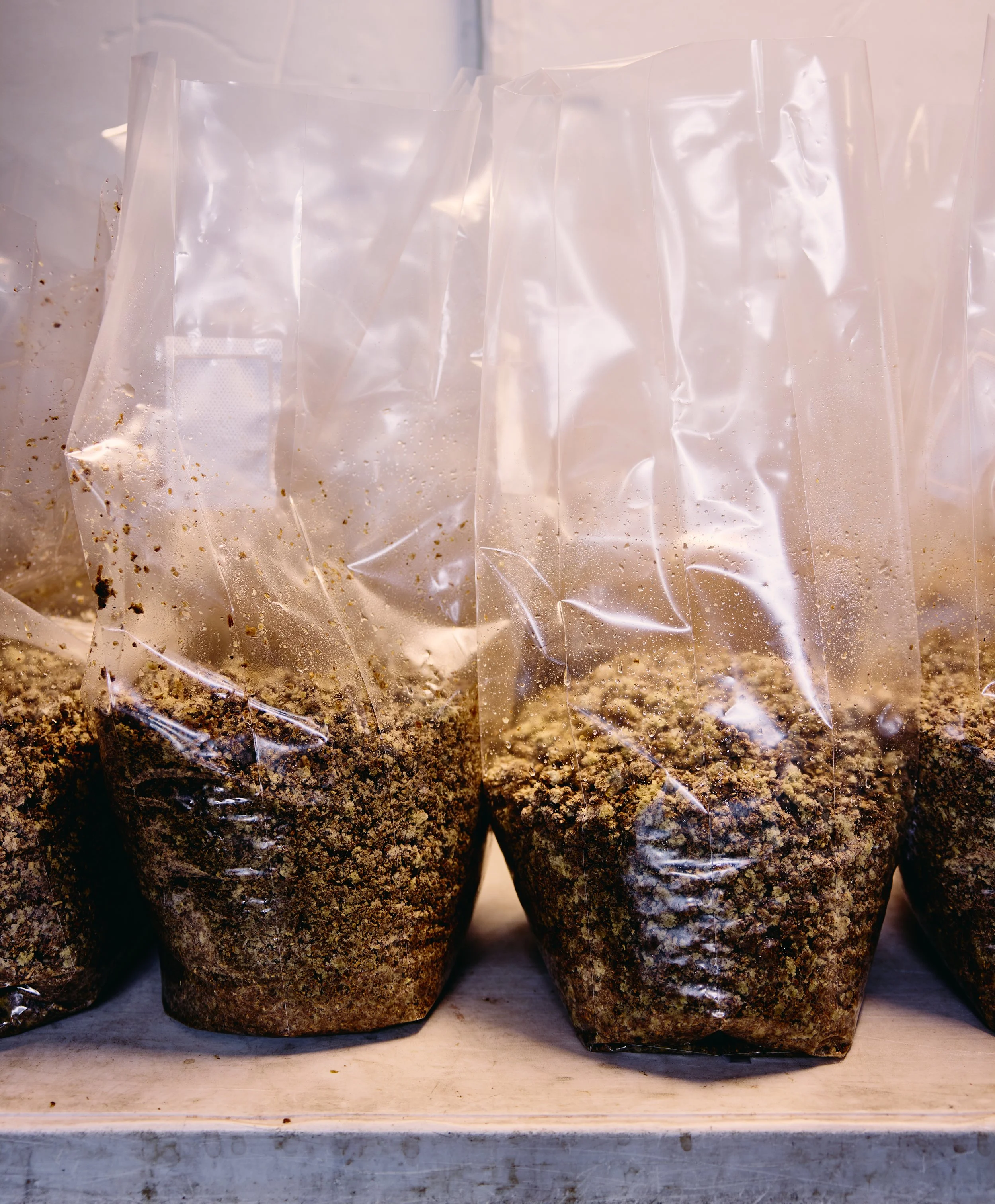
Underground Mushroom Co. employs the “spawn to bulk” technique to produce their crops. Pinstein creates 10-pound hardwood sawdust blocks that he inoculates with mycelium. The blocks “colonize” for 10 to 30 days, depending on the variety. He then places the blocks in a high-humidity environment that promotes mushroom growth.
“Mushrooms are one of the most sustainable food sources,” he says. “We use sawdust to create beautiful, delicious food that can be the centerpiece of a meal.” In the spirit of sustainability, Pinstein hauls the used mushroom blocks to Iron Ox Farm in Topsfield for composting.
Pinstein and two employees cultivate king trumpet oyster mushrooms, black pearl oyster mushrooms, golden oyster mushrooms, enoki, maitake and lion’s mane. In addition to selling mushrooms at farmers markets around the North Shore, the company offers home delivery and supplies products to numerous chefs.
Daniel Gursha, executive chef at Ledger in Salem, is an Underground Mushroom fan. “I often create specials featuring their mushrooms because they are so special,” Gursha says. “One recent example is a dish of yakitori-style mushroom skewers served with English pea goma dare (peas combined with sesame paste and yuzu), pickled cucumber salad and a topping of crumbled crispy chicken skin and fresh herbs to brighten it up.”
To celebrate mushroom farming and gain visibility for his business, Pinstein offers tours of the Underground Mushroom Co. facility. The company also sells mushroom growing kits. He says, “The kit is a fully colonized 10-pound block that will produce more than two pounds of mushrooms. You put the block in indirect sunlight, make a cut in the bag, and spritz it three times a day using a mister. The mushrooms will grow in five to 10 days and will double in size every day, which makes it a fun project.”
This story appeared in the Spring 2026 issue.
