
Sotto Chocolates


Photos by Linda Campos
Amy Vachon’s gift for making chocolate began with a gift, of all things. Her husband signed her up for a bean-to-bar craft chocolate subscription called Cocolectic—and immediately she was hooked.
“I would have this little ritual tasting of these bars,” Vachon says, “and it opened my eyes to the fact that a bar from one country tastes very different from a bar from another country.”
Visiting chocolate makers and taking classes came next, followed by another gift from her husband: a melanger, which grinds cacao nibs for over 48 hours to create chocolate’s smooth texture. Thanks to this instrumental tool, she began experimenting with chocolate making in 2017, and by 2020 had founded her business, Sotto Chocolates.
In classical music, sotto translates to “under,” often written to convey an undertone in song. It felt like the perfect symbol to represent a complex food with flavors under flavors, harmonizing with her background as an amateur violinist in the Cambridge Symphony Orchestra. Yet by day, Vachon worked as a clinical pharmacist, which she compares to being a chemist of medicines.
“I love all the chemistry behind chocolate. There’s so much molecularly that goes into tempering, for example, or flavor development or roasting profiles,” she says. “And especially in tempering, when you look at crystal structures and melting points.”
Chocolate makers, she explains, are doing the scientific method when figuring out how to bring about the flavors they want from an individual bean or harvest. It wasn’t until later that she learned about pharmacists’ outsize role in chocolate making, beginning with European pharmacists using cacao beans to create sweet medicinal drinks to sell to customers. Then there was Henri Nestlé, a pharmacist’s assistant who discovered you could turn milk into powder—and that powder could be used to create the first milk chocolate bar.
“I have some ancestors, if you will, that were pretty special,” Vachon says.
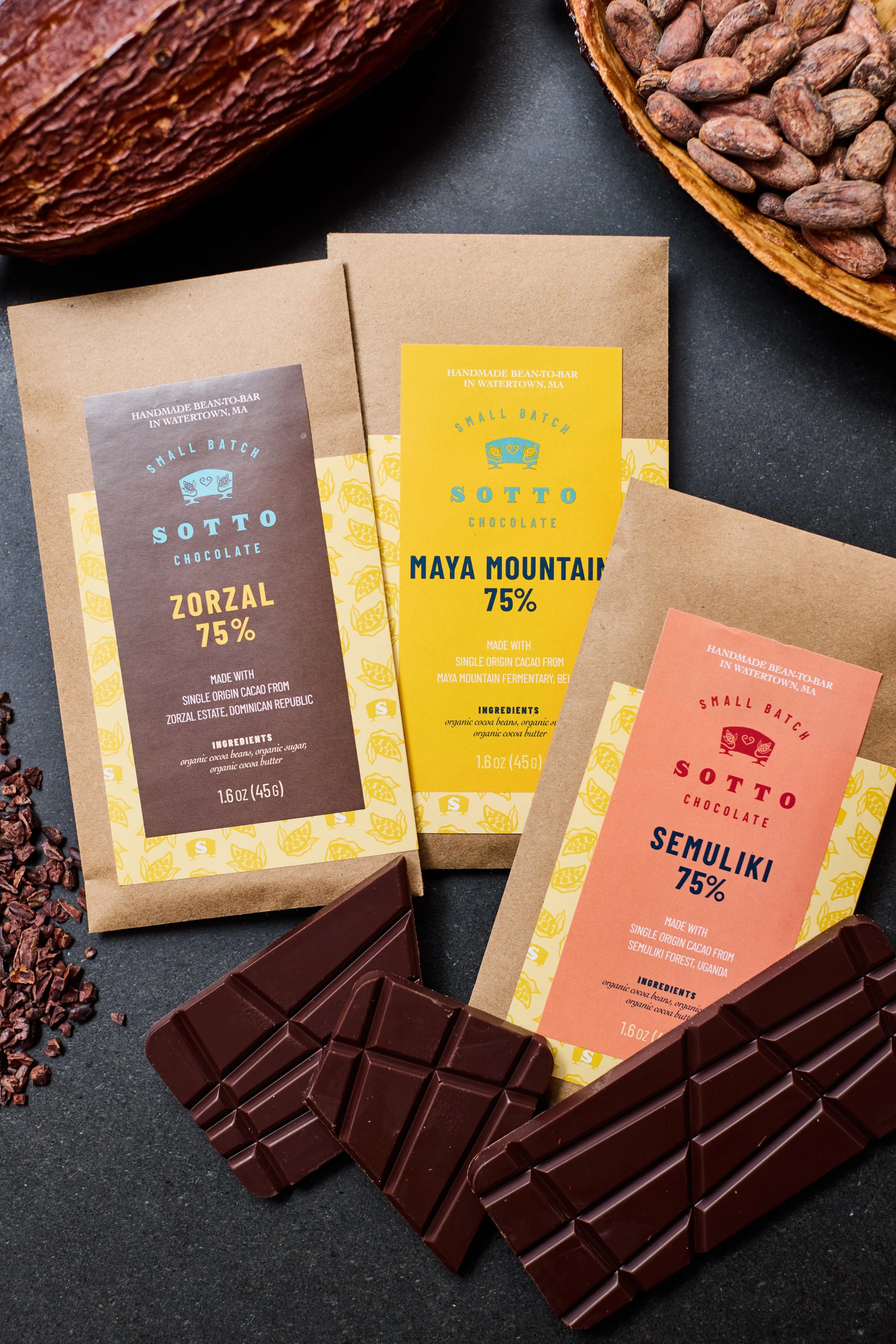
Today, Vachon handcrafts chocolate bars in small batches—typically fewer than 50 bars at a time—in a dedicated room in her Watertown home that her husband and son outfitted with small-scale machinery. She relies on reputable wholesalers to sell her cacao sourced ethically from growers and fermentaries in Belize, Uganda and the Dominican Republic, and with it, she crafts mostly 75% dark chocolate.
“I feel like that’s a generalized sweet spot for bringing out the unique flavor of the bean, not having too much sugar in it but still being accessible to almost everyone,” she says.
In terms of flavors, Vachon only makes bars that she loves: A cardamom-infused bar called Cardy Dark is at the top of her husband’s list, while customers keep coming back for Raspberry Swirl, a Tanzanian white chocolate mixed with raspberries and 68% dark chocolate; and Tangerine Crunch, Vachon’s take on crunch bar made with puffed quinoa. (“Quinoa is smaller, so there’s a nice texture to it,” she says. “It acts a little bit like a Rice Krispie in a bar.”) She also invented a Lemon Espresso flavor for her sister who loves café limone, or hot espresso with a twist of fresh lemon rind.
While Vachon sells Sotto bars during shoulder seasons at the Watertown Farmers Market—the chocolate would melt during the height of summer—they’re also stocked in speciality shops like Fataschi in Watertown, The Cheese Shop in Concord, Cork & Board in Newton Center, Brookline Booksmith and all Revival Cafés, in addition to her website. And when she’s not making or selling chocolate, she’s learning more about it: She became a certified level 2 chocolate taster via the International Institute of Chocolate & Cacao Tasting in 2025.
“I just love, love learning about this,” she says. “It’s honestly for the pure joy of it.”
A fitting full circle moment came this past October, when Cocolectic, the gifted subscription box company that spurred Vachon’s love of chocolate, reached out with a simple question: Would she like to be their featured maker of the month?
This story appeared in the Spring 2026 issue.
