
Little Champions
Worcester-Grown Mushrooms Nourish Immigrants and Tradition
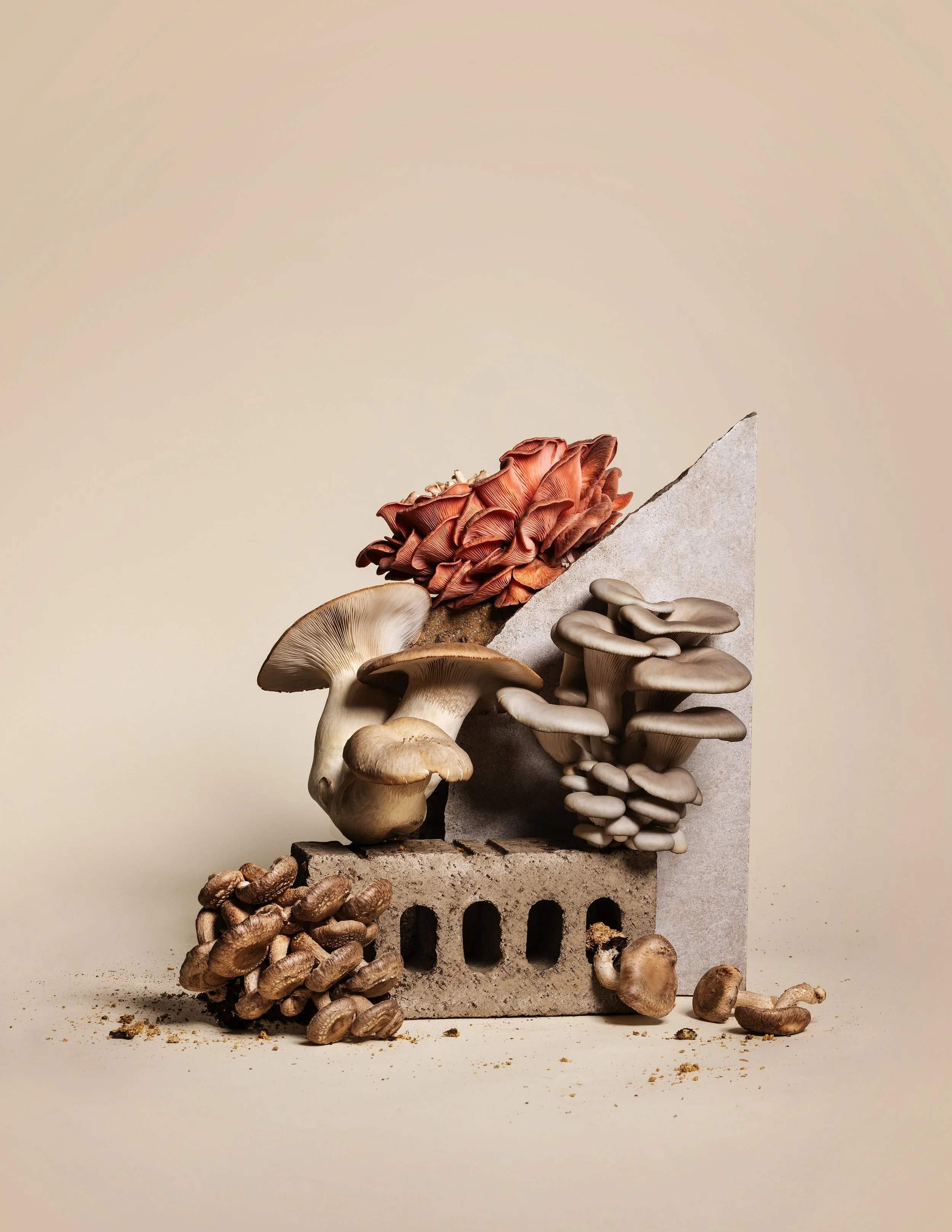
Photos by Adam DeTour/ Styled by Beth Wickwire
A mushroom farm is thriving in the heart of downtown Worcester. It’s deep inside an industrial building that has been repurposed to house a variety of community-serving organizations. This local iteration of fabulous fungi sprang from the memories of herbs and mushrooms grown on a farm in Vietnam, in happier times before war tore the country apart. Tuyet Tran’s mother was a farmer. Decades later, Tran moved to Worcester as a refugee of the Vietnam war and became a co-founder of the Southeast Asia Coalition of Central Massachusetts (SEACMA), a nonprofit organization that helps immigrants from that part of the world thrive in Central Mass.
Over the past 25 years, SEACMA has partnered with other local and regional organizations in a wide range of programs and activities, including English classes and workshops on urban gardening, as well as business development support for crafters and artists. SEACMA also partners with local restaurants to prepare and deliver meals to elderly immigrants.
“My family always used herbs and mushrooms medicinally,” Tran says. “I believe in the healing power of food. As Asians we eat a lot of mushrooms.”
Tran’s appreciation of the culinary and medicinal powers of mushrooms dovetailed with SEACMA’s interest in food security. “We collaborated on a grant to distribute Asian and African produce grown by the World Farmers [in Lancaster],” Tran says. “We distributed 250 boxes of vegetables every week during the summer, but when winter came there was nothing. I wondered if mushrooms could be a replacement.”
At first, when she described her ideas for growing mushrooms few people took Tran seriously. It didn’t help that at the time, an episode of the TV series, “The Walking Dead: Dead City” was being filmed in the street outside SEACMA’s office. “We heard all sorts of jokes about mushrooms creating zombies,” Tran says.
When Covid hit, Tran had time to further research the health benefits of mushrooms. She learned that fungi are among nature’s most powerful superfoods, loaded with vitamins and minerals. “Plus, they grow fast, require minimal space and are sustainable little champions of the food world,” she says.
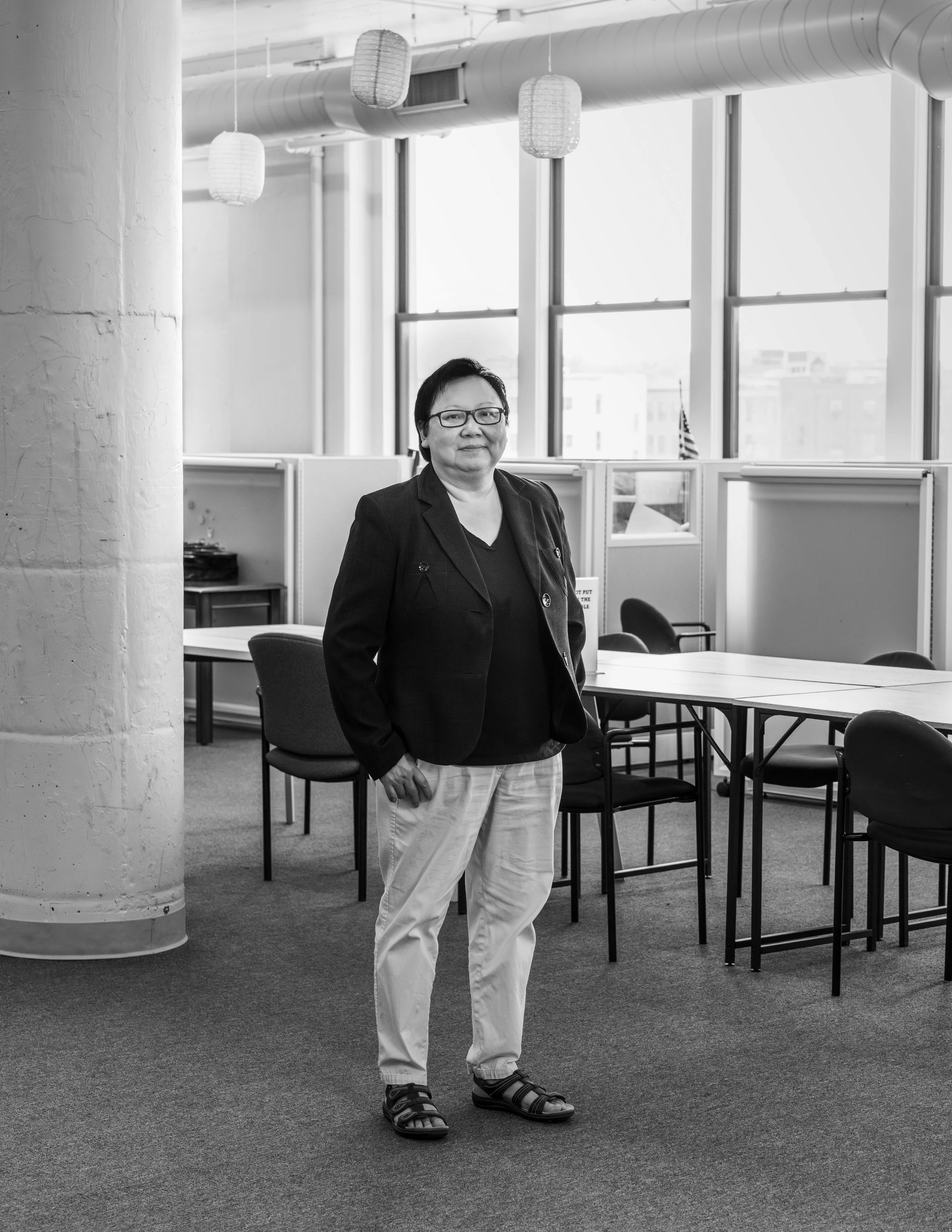
Tran even tried growing mushrooms herself in her Worcester apartment. “It took three tries before I was successful,” she says. “Growing mushrooms was harder than I thought it would be.”
Nevertheless, she was convinced that mushrooms could help SEACMA fulfill its mission. When the organization moved into offices at the former Printers Building in the center of Worcester, Tran found an unused storage room, a promising site for the mushroom farm of her dreams.
She asked the owner of the building if the space could be used for some indoor growing “if we can get a grant to support it.” He agreed and with that SEACMA made what Tran describes as a leap of faith into mushroom farming. It landed with a successful splash when the grant proposal was awarded $120,000 from The Health Foundation of Central Massachusetts to purchase and install equipment for the indoor mushroom farm.
The Health Foundation selectively funds projects that empower organizations to “test new ideas and develop sustainable solutions to community health challenges,” said Amie Shei, president and CEO. She adds that the foundation was “intrigued by SEACMA’s approach to the problem of food insecurity.”
Food insecurity is an official term from the U.S. Department of Agriculture defining when people don’t have enough to eat and don’t know where their next meal is coming from. Not having enough to eat is fast becoming a crisis for low-income residents throughout Massachusetts. A recent study by the Greater Boston Food Bank found that two million adults in the Commonwealth either can’t afford to eat or worry about the source of their next meal. The Food Bank surveyed 3,000 Massachusetts residents from November 2024 through March 2025 and found that 37% reported being food insecure.
SEACMA’s grasp of the issue, along with a considerable amount of research into growing mushrooms, impressed The Health Foundation. So did its plan to offset the cost of growing and distributing them by selling their mushrooms locally.
With grant money secured, Tran approached SEACMA’s landlord with plans for the mushroom farm and secured permission to drill holes in the walls for air outflow and in the floor for drainage. Retrofitting the storeroom to create the carefully controlled environment required to grow mushrooms took almost a year. In the interim, SEACMA reached out to David Hibbitt, a mycologist and associate biology professor at Clark University, and Amanda Dye, his graduate student, who is an experienced mushroom forager and farmworker.
“Amanda’s experience was valuable in helping us plan the design of our mushroom farm,” Tran says. They bought three greenhouse tents, shelving, thermometers and other equipment. The room had to be painted with mold-resistant paint. Everything was done with the requirement that the farm would be organic as well as local—important considerations in SEACMA’s marketing plan.
Soon after she was introduced to SEACMA, Dye became project manager of the mushroom farm. She heads a group of three staff members, including the executive director, who each take a turn as a farm hand, tending their crops of shiitake, lion’s mane and oyster mushrooms.
Instead of acres of soil or stacks of logs, the SEACMA mushrooms are farmed from 10-pound blocks of substrate that are stacked on shelves inside the greenhouse tents. The blocks are made up of compacted sawdust and wheat middlings (residue from flour milling) or soybean hulls.
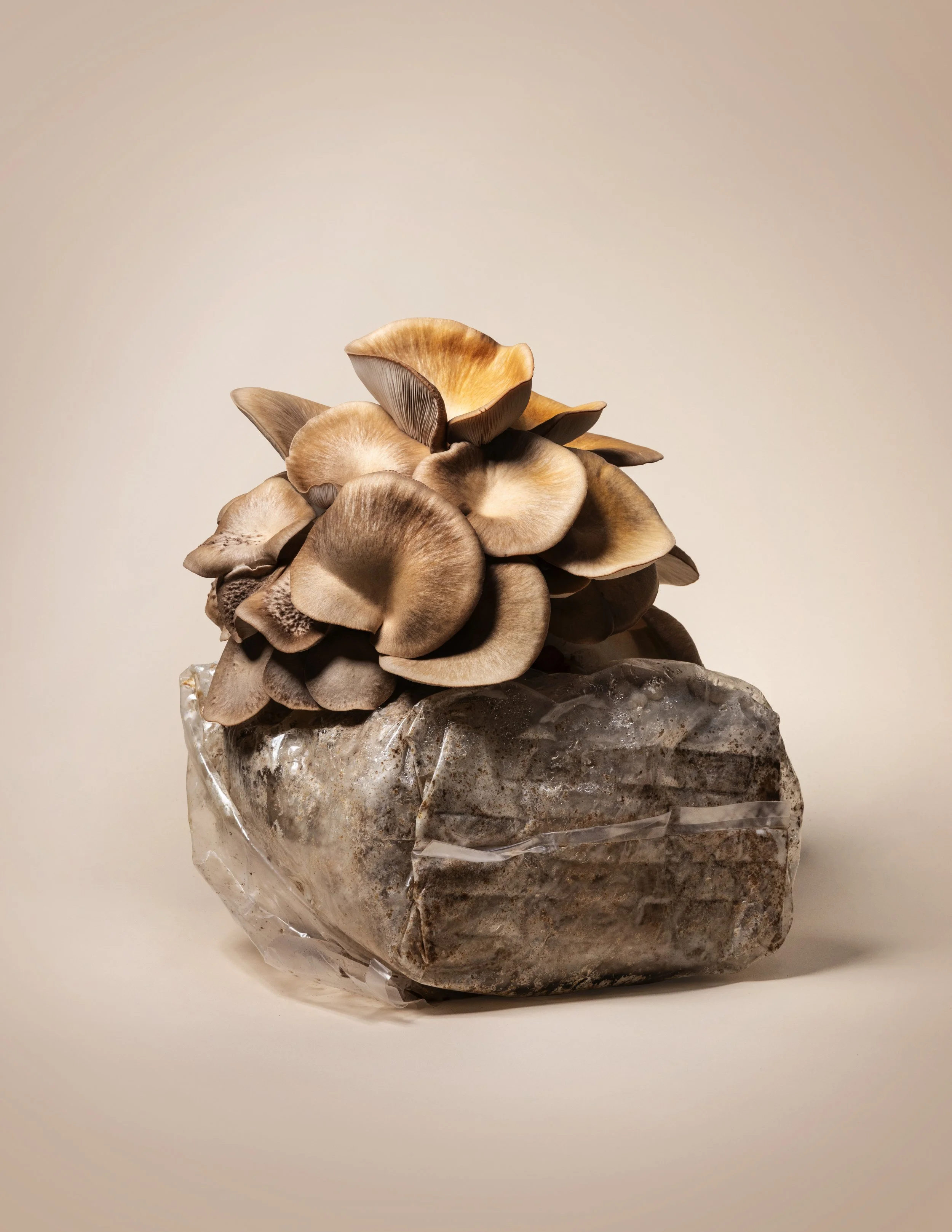
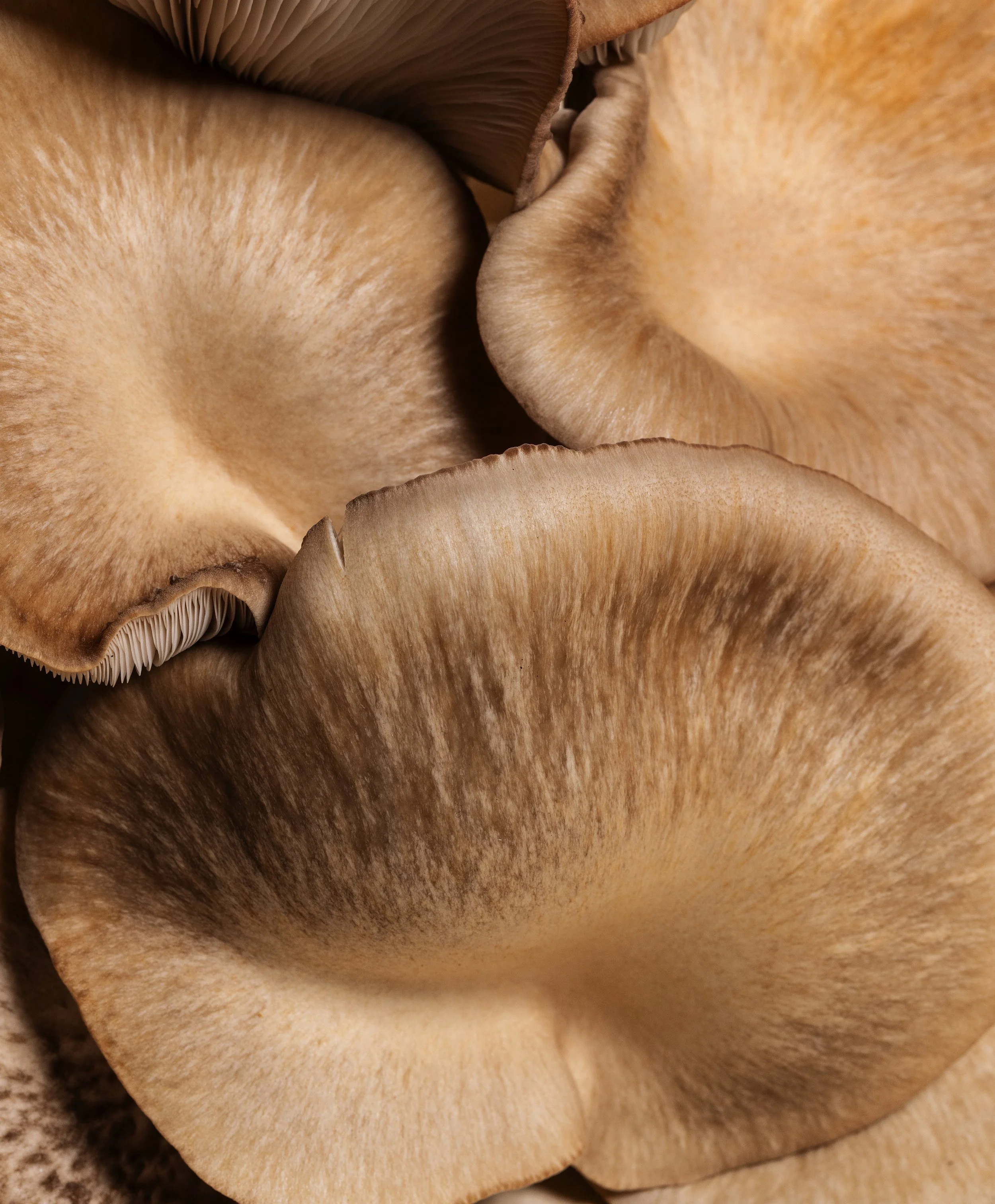
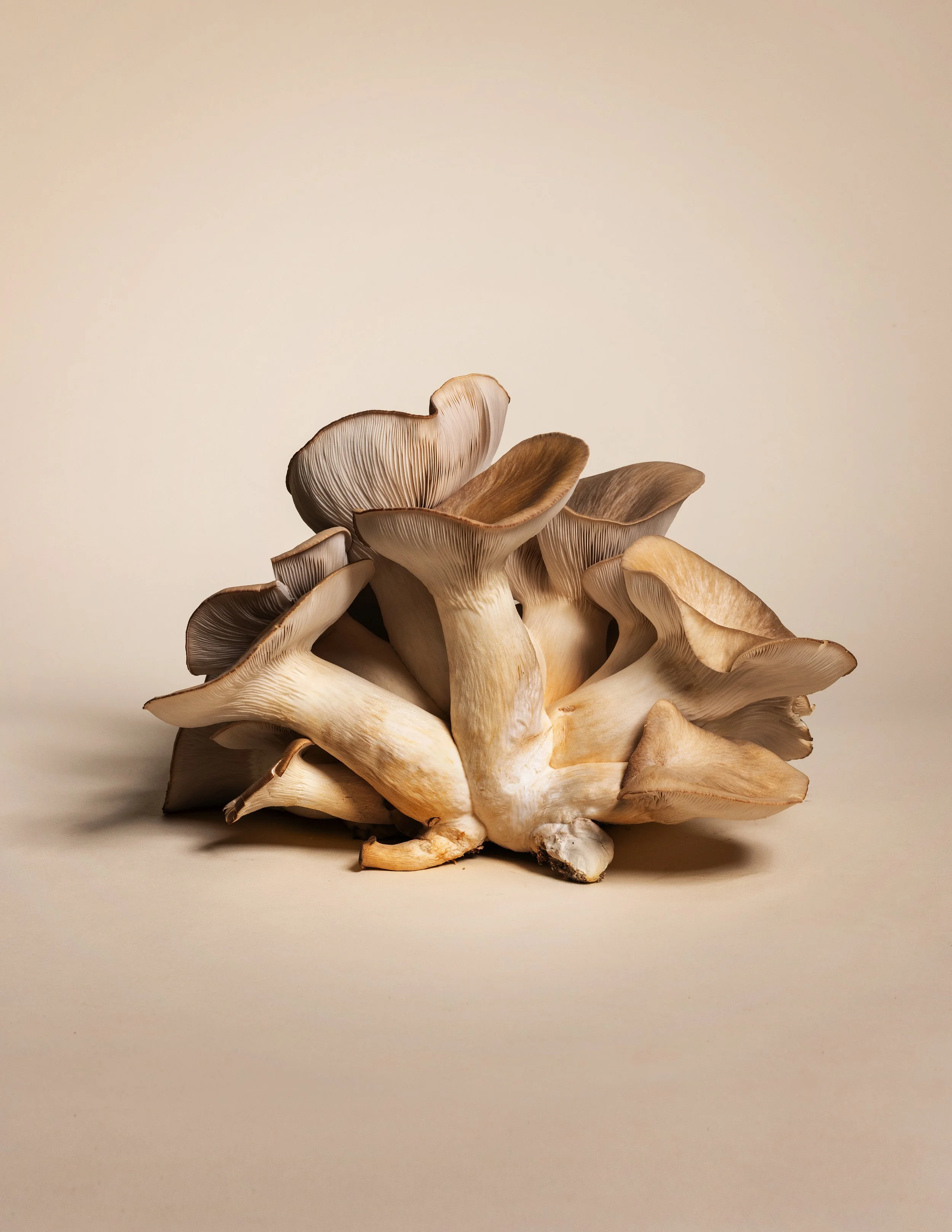
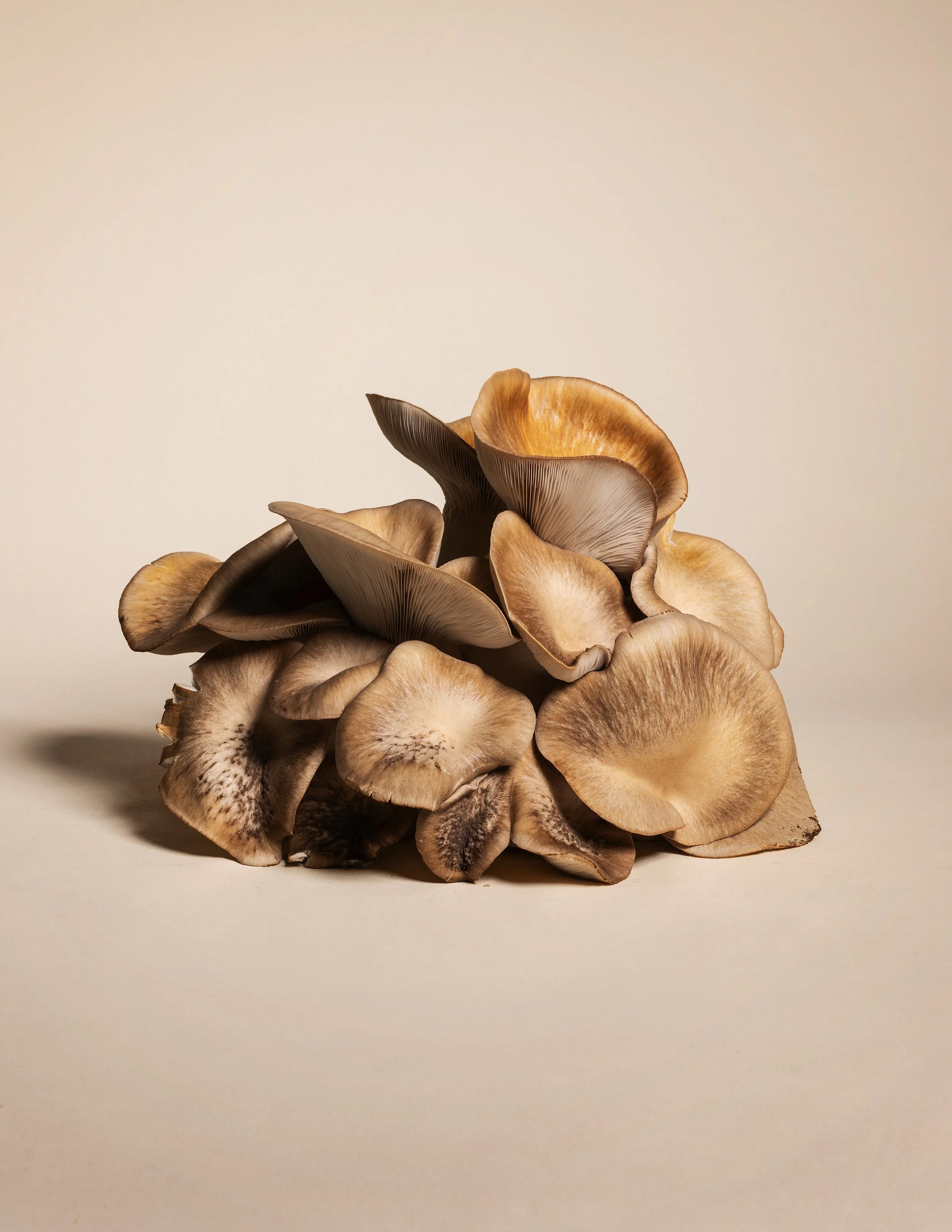
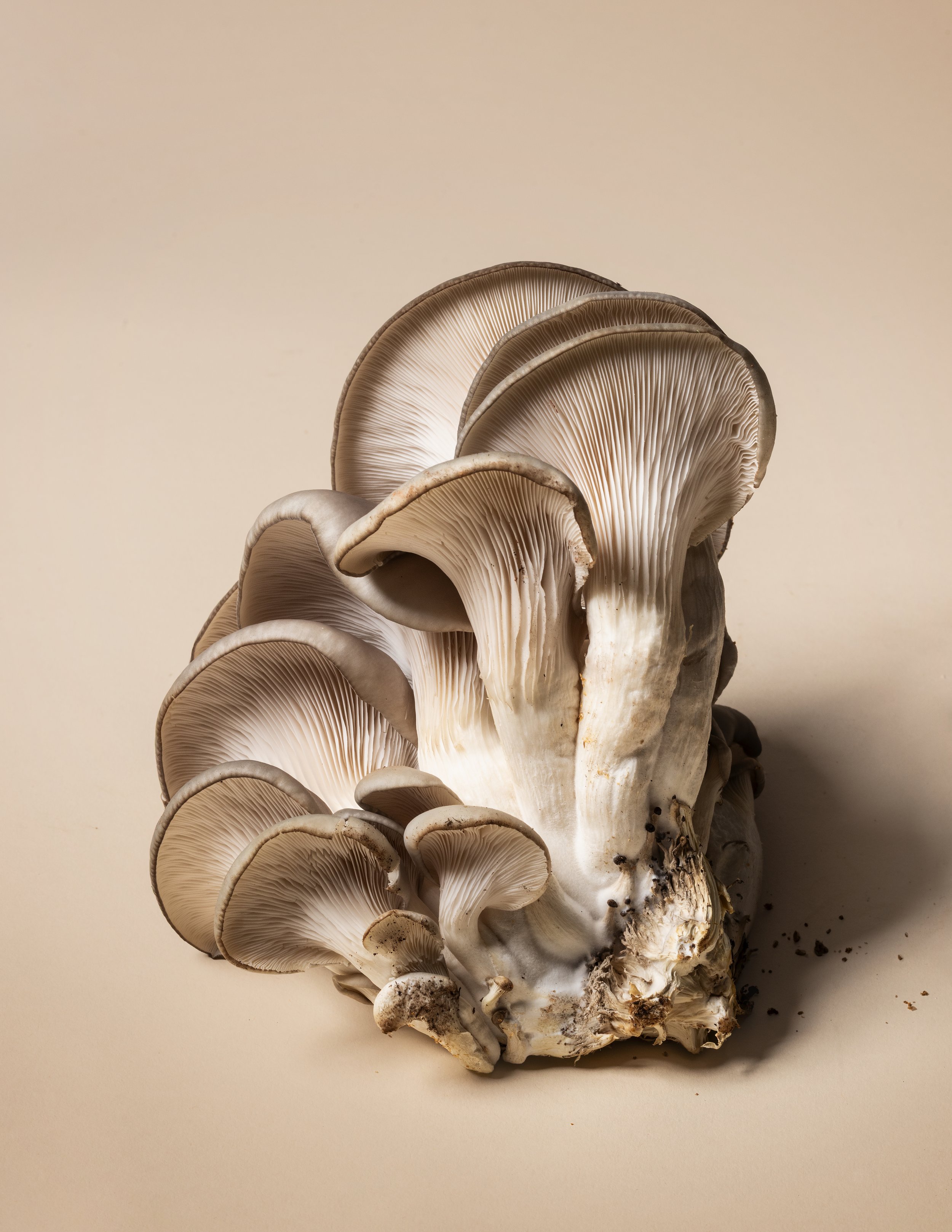
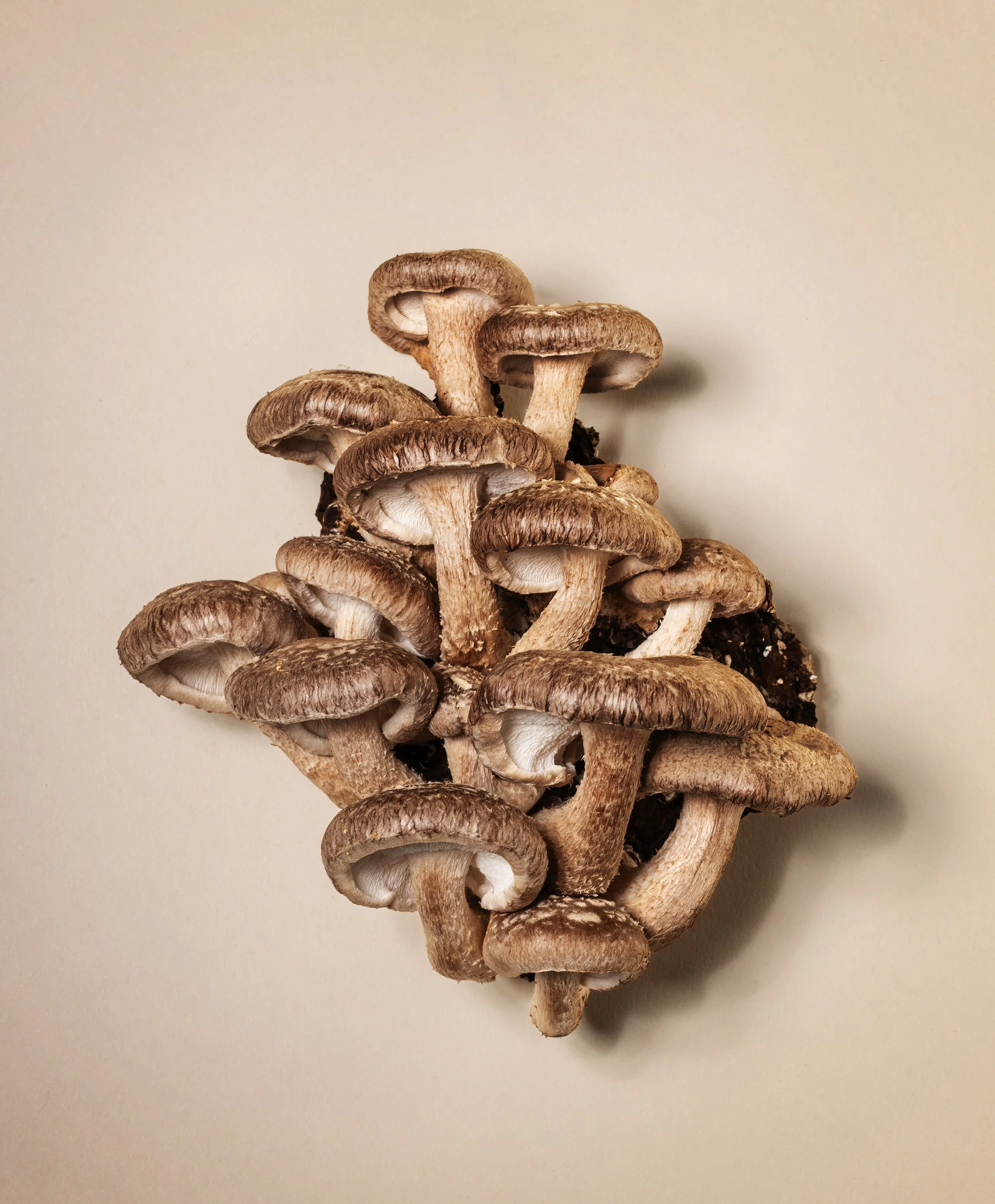
The blocks, injected with mushroom spores, are from Cap N’ Stem, an organic mushroom grower in Maine. They look like giant loaves of peasant bread dusted with flour, but the blocks provide everything the mushrooms need to grow. Dye compares them to apple trees, “the support systems for apples.”
As soon as the plastic wrapped blocks arrive at SEACMA, Dye opens up a portion and cuts a slit to allow air into it. Soon, tiny mushroom growths, or pins, begin to appear throughout the surface. They will double in size within 24 hours. In a week or less, there will be fully grown mushrooms ready for harvest.
Timing is important; the full-grown mushrooms can’t stay too long on the substrate before they begin to deteriorate. “There is a window of about 24 to 48 hours for harvesting,” Dye says. “We really have to stay on top of it.”
After they are picked, the mushrooms will stay fresh for about a week in a refrigerator. Eventually, SEACMA plans to acquire a dehydrator so they can dry mushrooms. Also on the horizon is a plan to develop SEACMA’s own strains of mushrooms “so they will be hyper-local in addition to being organic,” says Dye.
A colleague at a nonprofit technology worker space in the same building has offered to collaborate with SEACMA to research and develop mushroom strains. The potential for growth is substantial. In early summer the mushroom crop was between 40 and 80 pounds every week. “We could increase that to 400 pounds,” Tran predicts.
SEACMA’s mushrooms are already a feature of meal sites throughout the city as well as Worcester’s Senior Center. You can buy them at three local farmers markets: on Fridays at Beaver Brook Park, on Saturdays at University Park and at the “Out to Lunch Farmers Market” behind City Hall on Wednesdays at noon. Tran notes that SEACMA is getting an increasing number of requests for large orders of mushrooms for special events. “If we have enough lead time, we can coordinate the growing cycles,” she says.
Sustainability was an important goal in SEACMA’s proposal for the mushroom farm and it’s already being achieved. After the mushrooms are harvested, the biodegradable blocks that nourished them are reused as compost in urban flower and vegetable gardens a few blocks away from the urban mushroom farm. In another example of the many collaborations that SEACMA participates in, volunteers from another refugee assistance organization, Worcester RISE for Health, tend the gardens nourished by SEACMA’s mushrooms.
It’s the cycle of life for the mushrooms and a circle of purpose for the mushroom growers.
This story appeared in the Fall 2025 issue.
