
Cookie Power
Maura Duggan and Her Fancypants Baking Co. Are Committed to Upcycled Ingredients and Zero-Waste Initiatives
Maura Duggan is one smart cookie. Armed with a master’s degree from Harvard University in neuroscience and education, the Norwood native launched a budding career in statistical analysis. But with days packed crunching numbers and interpreting data to help a nonprofit make informed decisions, she needed some relief.
To stave off the 9-to-5 pressure of the grind, she turned to scratch baking—an interest that some might say was baked into her DNA.
“When I was really young, my grandma lived across the street. Every day after school, I would hang out with her,” remembers Duggan. “She was often baking cookies. She loved to make chocolate chip and always had gingersnaps in her cookie jar.”
By day, Duggan worked with data. By night, she transformed bonafide butter, flour, fresh eggs and sugar into delightful cookies. The distraction proved to be a recipe for success, and Fancypants Baking Co. was born. Today, the company champions sustainable, upcycled food production with the belief that things don’t have to be complicated to be good.
FROM SMALL KITCHEN TO BIG BUSINESS
Duggan began Fancypants Baking Co. in her Boston apartment in 2004 with one stove cranking out shortbread cookies (think Valentine’s hearts, Easter bunnies, Halloween jack-o-lanterns) that were then hand-iced to perfection. But the side hustle needed an outlet.
“When I initially started the business, I walked into the fresh bakery department to sell because I thought all cookies are fresh,” she says, noting her grandma’s legacy led to the impression that all cookies were baked homemade. That small decision on grocery store placement had enormous implications for Fancypants’ success. Very quickly her cookies were nestled among the muffins, bagels and pies in about 40 specialty stores in greater Boston, such as Allandale Farm, Volante, Wilson Farm and Roche Bros. “Being in the fresh bakery department allowed me to learn a lot about how to be a manufacturer and to perfect a lot of things. And that enabled me to jump over to CPG [consumer packaged goods].”
Business was booming and within three months of starting the company, Duggan quit her research job to focus solely on Fancypants. The turning point came in the summer of 2004 when a massive order came through for the Democratic National Convention.
“It was for 1,800 cookies that I baked out of an apartment- sized oven,” she recalls. “It took more hours than I care to remember, and my second-floor, unair-conditioned apartment was hot.” The business had clearly outgrown its limited space and so she moved it into its first commercial space in 2005. In 2006, her sweet creations made a charming appearance at Allandale Farm for the launch party of Edible Boston magazine. It was clear these cookies were no longer a side project; this was turning into a full-fledged venture.
“Fancypants was meant to be a three- to six-month detour as I figured out what I was going to actually do with my life,” laughs Duggan. “I never expected this to happen. It was really exciting.”
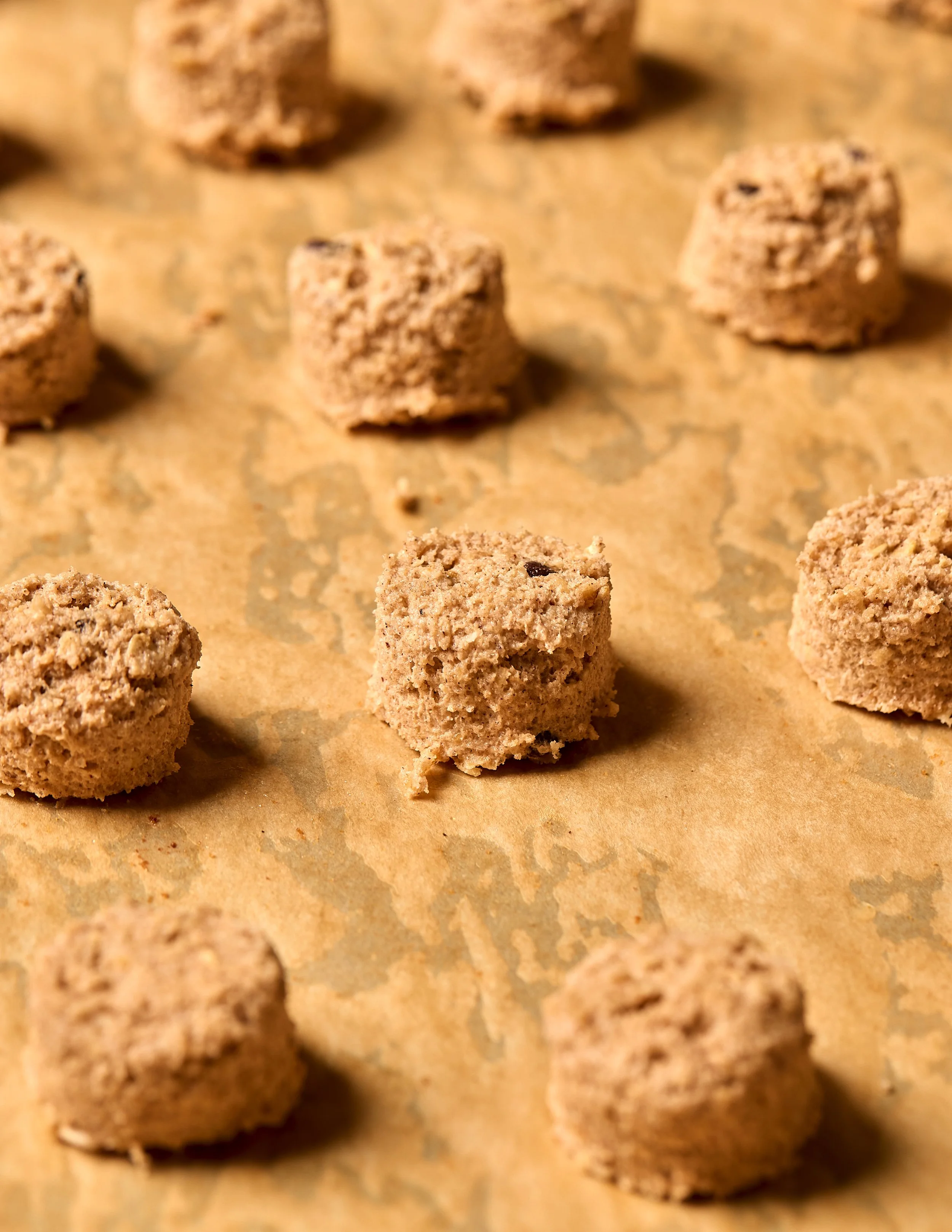
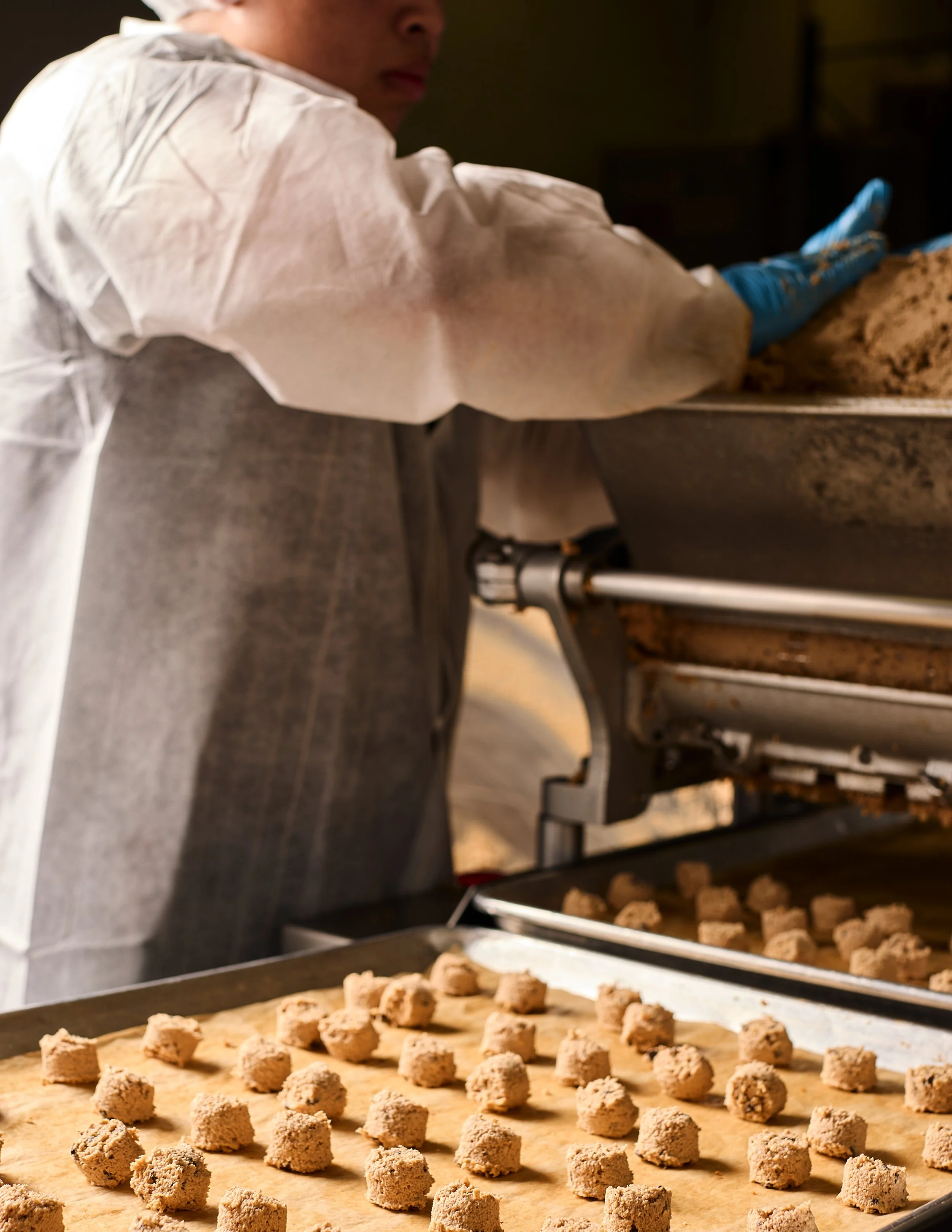
Now a nationally recognized brand, Fancypants is in more than 3,000 stores including Whole Foods and Costco, orders they fulfill out of their 20,000-square-foot Walpole facility packed with commercial ovens, dough presses and sheeters to help bake a half million cookies each week. The company has traded in hand-decorated iced cookies in the fresh bakery aisle for five-ounce bags of small crispy cookies on cookie aisle shelves during a February 2024 relaunch.
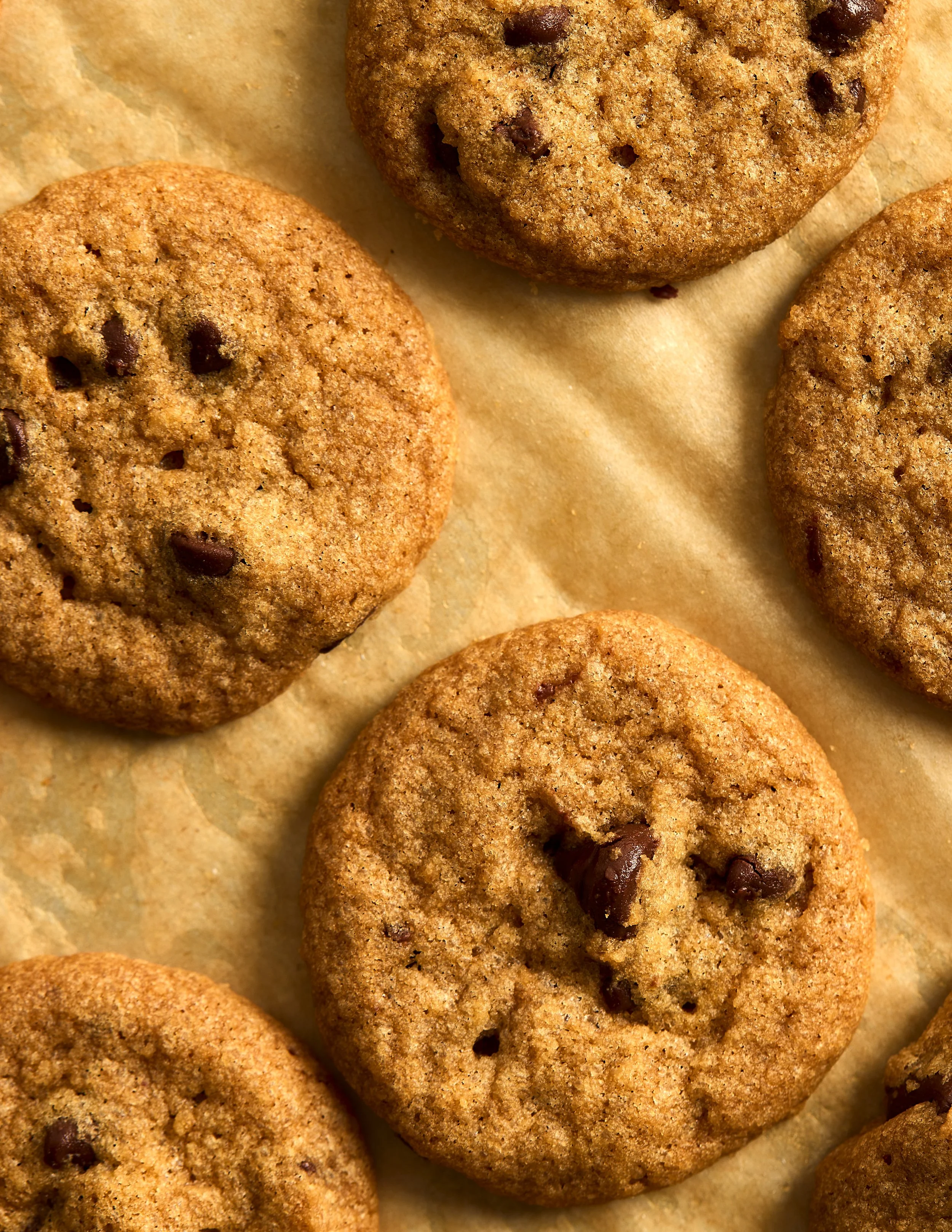
Recipes are developed in-house, with help from her husband, Justin Housman (a former third-grade teacher- turned-COO), along with a tasting team of dedicated employees. The collection includes six core flavors: Chocolate Chip, Salted Caramel, S’mores, Oatmeal Raisin, Mint Chocolate and Birthday Cake. They also send out a seasonal Pumpkin Chocolate Chip in the fall and Lemon Tart and Strawberry Shortcake for spring and summer. A new certified gluten-free Chocolate Chip cookie came out last September, and a Gingersnap that began as a seasonal offering recently earned yearround availability status and boasts her grandma’s original spice blend.
While Chocolate Chip reigns as the brand’s best seller, with Salted Caramel a very close second, Duggan hopes that’ll change. “I’m on a mission to make our Mint Chocolate number one,” she says.

WASTE NOT, WANT NOT
For Duggan, building a successful brand never translated to compromising her sustainability values. In fact, it gave her a space to embrace them. Fueled by the understanding that the USDA estimates food waste is up to a staggering 40% of America’s food supply, Fancypants became one of the early adopters of the zero-waste initiative through Weston-based Vanguard Renewables, whose primary goals are to produce renewable energy, support local farms and reduce greenhouse gas emissions. Duggan had just what they were looking for. As it turned out, it was the way the cookie crumbled. Literally.
“When we were making the decorated cookies, there was a lot of royal icing overrun. It was a thick, gloopy mess that I hated to throw out,” she explains. Duggan and her team partnered with Vanguard in 2022 to turn this sugary waste into something more meaningful: renewable energy for local businesses, including a seventh-generation family dairy farm in Hadley. As the icing was eventually phased out from its cookie line, Fancypants still had broken and burnt cookie pieces ready to be hauled off and turned into energy via the company’s anaerobic digesters.
“The way they describe [an anaerobic digester] in layman’s terms is as the inside of a cow’s stomach. It breaks down the food waste with bacteria,” explains Duggan, who visited the local farm to witness the process herself. The resulting biogas can be used for energy production. “[The farm] didn’t have any electric bills to pay anymore. All the electricity was provided by the digester.” Thanks to this sustainable waste management solution, the farm saved money and was able to upgrade its equipment to remain competitive with larger farms. “It’s a win-win for everyone involved.”
SUSTAINABLE SUCCESS
Duggan’s personal oath for being eco-conscious doesn’t stop at waste reduction—it also helps her choose cookie ingredients. Once again, she channels past generations’ know-how.
“Our mothers, grandmothers and great-grandparents were really efficient at using every little scrap,” she says of a concept that has sadly fallen by the wayside in the name of cost-cutting and fast production. And Duggan’s not alone in her desire to divert waste in the food space. In 2015, the USDA joined with the U.S. Environmental Protection Agency to set a goal to cut our nation’s food waste by 50% by the year 2030. One such way is through upcycling, the process of transforming something no longer in use and giving it a second life.
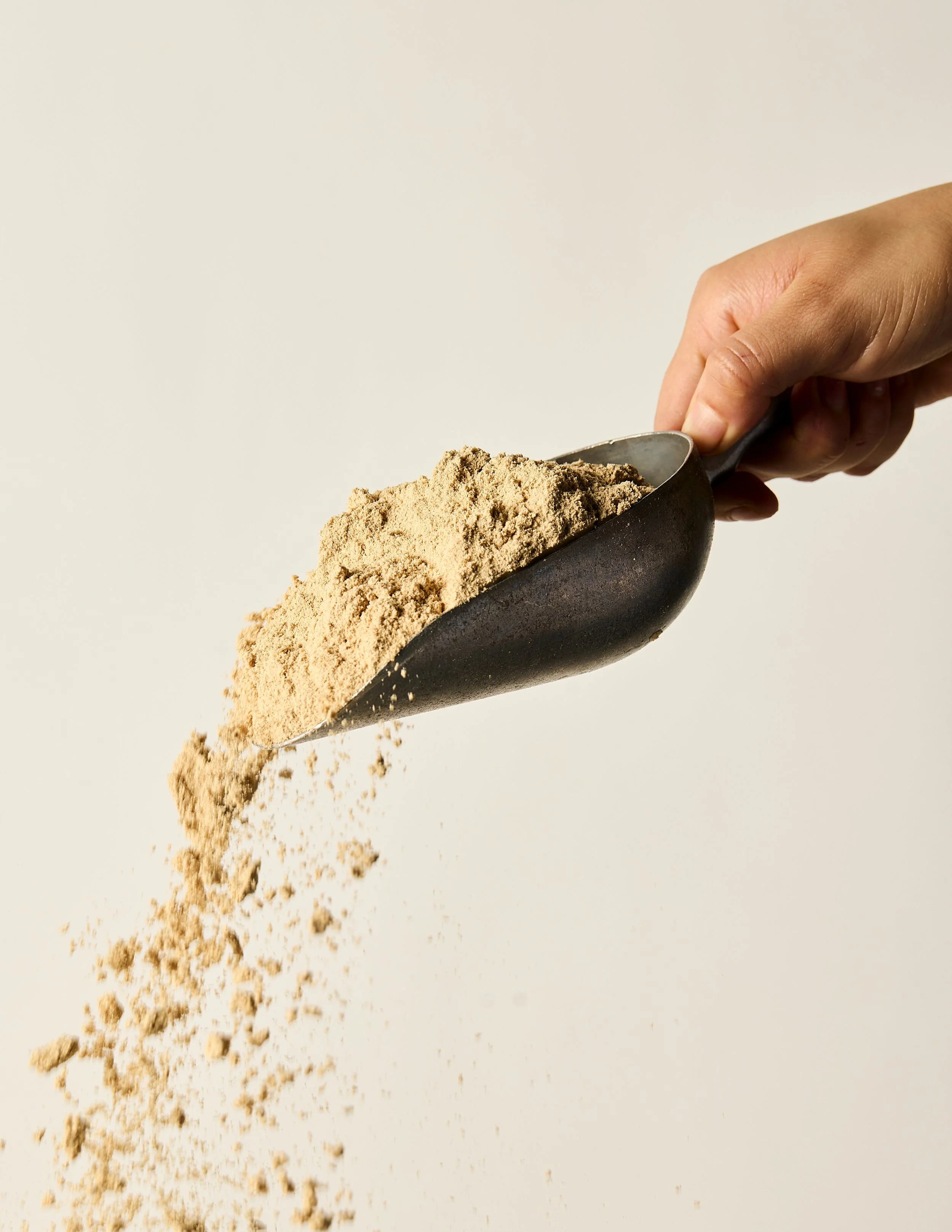
“There are so many creative people out there coming up with different ways to use everything from pulps to peels. I love being a part of that,” she says. As a proud member of the Upcycled Food Association, Fancypants works with Renewal Mill (another female-founded company) to incorporate upcycled oat flour and okara flour (a soy milk production byproduct used in their gluten-free cookies) into their confections. In one year alone, Fancypants saved 25 million gallons of water and diverted enough greenhouse gas emissions to charge 2.7 million cell phones just by baking with the upcycled oat flour.
“When you make oat milk and you’re squeezing the oats, there’s a runoff that was just discarded and thrown into landfills because no one had found a use for it,” she explains. “[You] can actually dry it, mill it and turn it into a very usable flour.” Fancypants evens out the upcycled flour’s dense texture by mixing it with another King Arthur Baking Co.’s all-purpose flour, for a delicious cookie that’s better for the planet.


FANCYPANTS’ FUTURE
With new launches on the horizon, the future looks pretty sweet for Fancypants. This fall, the company will roll out a new one-ounce cookie package, targeted at fulfilling the snack needs of guests of hotels, casinos, food service and airlines, as well as front-of-store grocery store checkout displays. The company was also recently awarded a grant from the Massachusetts Technology Collaborative that will allow them to buy state-of-the-art packaging equipment and increase overall production speed.
Whether it’s advocating changes in ingredient sourcing or discovering ways to limit waste, Duggan stays grounded in the principles she learned as a child watching her grandma make cookies from scratch with simple pantry ingredients.
“I feel like I have a responsibility to do what’s best for not just me [or] my family but for the community at large, which can then extend to the national or global community,” she says. “People can make small, impactful changes and really make a difference. It was how I was raised, and I want to be an example for my two children. That’s just the way that I’ve chosen to run Fancypants.”
Because, when it comes to taking care of our planet, every bite helps.
This story appeared in the Fall 2025 issue.
