
The Plastic Pandemic
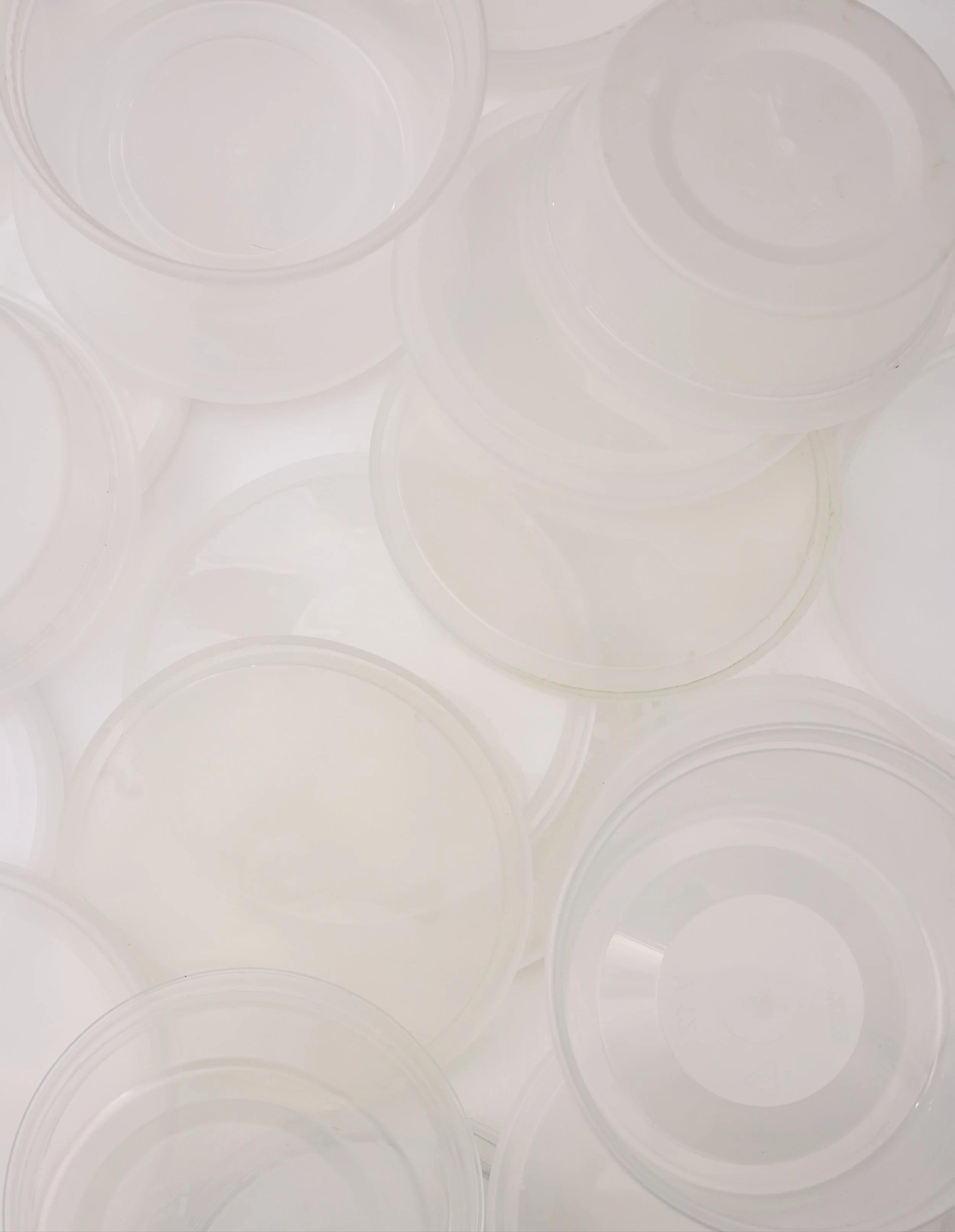
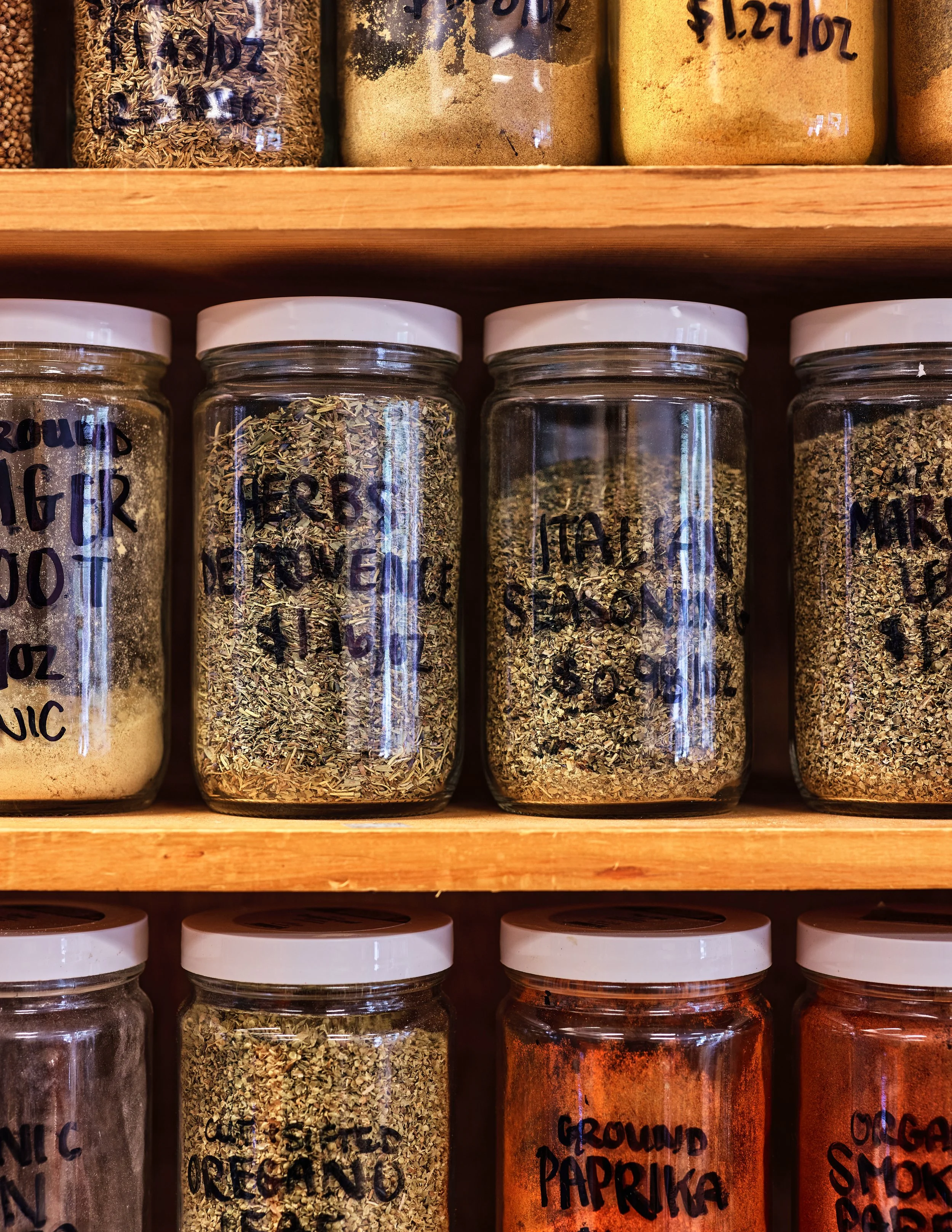
Photos by Michael Piazza
Five years ago, in June 2020, the United States became the first country in the world to surpass 2 million Covid cases, with the number of American casualties surpassing that of World War I.
The summer was beginning just as it is now, but the fear and uncertainty that spread through the air like the virus itself did away with the excitement the season usually brings. Vacations were canceled in the shadow of the lockdown, and while beaches slowly reopened, they remained barren out of fear of infection.
The early years of Covid are painful to think back on. However, humans are not the only ones recovering from the trauma of the virus; the planet itself has also suffered a significant blow. According to a 2021 study by PNAS (Proceedings of the National Academy of Sciences), an estimated 8.4 million tons of Covid-associated plastic waste were generated in the first year of the pandemic, with about 26,000 tons ending up in the oceans.
In a time of unprecedented uncertainty, public health and community support was crucial. Disposable Covid tests and personal protective equipment (PPE)—including face masks, gloves, face shields and hand sanitizer bottles—needed to be readily available to prevent infection. In grocery stores, plastic was seen as a barrier against the virus, and policymakers such as former Massachusetts Governor Charlie Baker halted municipal plastic bag bans during the pandemic.
“You had to choose between evils,” says Shara Ertel, owner of Fulfilled Goods, a bulk refillery and market in Newton. “Safety and personal health versus planetary health.”
As local restaurants struggled in the early days of the pandemic, curbside pickup, takeout and delivery kept businesses afloat as people remained confined to their homes. Garbage bins consequently filled up with plastic containers, straws and disposable utensils (including many that were delivered but never used).
“The rise of the pandemic both encouraged and increased the amount of waste,” recalls Clint Richmond, executive committee member and toxic and solid waste issues chair of the Massachusetts Sierra Club. This period was “a giant step backwards” for climate action, he adds.
It’s difficult to call plastic an evil when it was largely used for good, but the planet is now facing these consequences and, unfortunately, societal practices around single-use have not reverted to pre-pandemic behaviors.
It was an era of plastic usage “we’ve never really recovered from,” says Richmond.
A CULTURE OF CONVENIENCE
With the rise of takeout, a new culture of eating was created, one that thrived on ease, simplicity and single-use. More restaurants than ever began offering and promoting takeaway meals (and drinks), including fine dining locations who’d never focused on that sector of the industry before. And even as Covid restrictions lifted, the convenience of calling in one’s dinner order and throwing out the containers rather than washing them remained.
For some people, like business owner Margie Bell, witnessing the towering mountains of trash ignited a fervor to practice a zero-waste lifestyle.
“The pandemic hit, we were ordering a lot of takeout because we wanted to support our local businesses, and we saw the plastic piling up,” remembers Bell.
In 2021, as a response to the waste generated by the pandemic, Bell, along with Ulrike Mueller, began Recirclable. Their company provides restaurants and cafes with reusable containers to offer in place of single-use takeout ware, and is now available in 12 restaurants in the Greater Boston area. Customers request their containers when ordering takeout, then return them within 14 days at any participating Ricirclable location.
Bell and Mueller say the concept of reuse can be difficult to swallow, and the newly and deeply ingrained culture of convenience has been arduous to break through.
“Everyone says reuse is a good thing and that they don’t want to see these piles of plastic, but at the end of the day,” says Mueller, “we really need to step over to a behavioral change.”
“Maybe we can be willing to return the container next time we pass by the restaurant,” says Sunwoo Kahng, vice president of Green Newton, member of the City of Newton’s Sustainable Materials Management Commission, and a fervent supporter of Recirclable. “We’re perfectly fine doing it for library books. We need to shift that mind-set to something like a reusable container.”
THE PLASTIC PARADOX
Restaurants are not the only guilty parties in the plastic waste pandemic. Grocery stores are also rife with items wrapped in plastic for the sake of public safety, as they prevent person-to-person contamination of food via touch.
“The problem is, in grocery stores, everything is more and more in plastic since the pandemic,” says Alys Myers, owner of Supply Bulk Foods, a bulk food service she opened in 2021 based at Commonwealth Kitchen in Dorchester.
In fact, during the pandemic, bulk markets struggled due to this fear of contamination. Adam Stark, owner of Debra’s Natural Gourmet, a health food store in West Concord, remembers “when the pandemic hit, all of a sudden the State of Massachusetts asserted its authority to say ‘bulk is off limits.’ The touch points were ‘unsafe.’”
“People don’t want to go back,” believes Richmond. “They say, ‘I don’t want to get germs, I want things in plastic,’ So here’s an instance where plastic is helping public health, but at the same time it’s hurting public health.”
But recent discoveries about the terrifying prevalence of microplastics—miniature particles left by the degradation of plastics—have also raised fears of plastic-wrapped everything.
In a 2021 study from Kyushu University in Japan, it was estimated that 24.4 trillion pieces of microplastics were in the world’s oceans, equivalent to 30 billion half-liter water bottles. In 2023, a new study updated that count to over 170 trillion pieces.
Microplastics are found not only in the ocean but in the soil, air and even human bodies.
A 2024 study conducted by The New England Journal of Medicine suggests an increased risk of heart attack, stroke or death from microplastics and nanoplastics, while another 2024 study by Cell Reports Medicine found a correlation between microplastics in the human body and noncommunicable diseases.
With the proliferation of related studies, a handful of the population’s attitudes towards plastics have shifted. Whether for the Earth’s sake, or themselves, consumers are supporting sustainability efforts and small businesses like Debra’s Natural Gourmet, Supply Bulk Foods and Fulfilled Goods.
“I have lots of people come into the store who are just happy because of the fact that we are avoiding having stuff stored in plastic,” says Ertel.
“I’m seeing customer demand. People are starting to pay more attention,” adds Massachusetts State Senator Rebecca Raush, who worked to pass the 2024 Plastics Reduction act. “I’ll see people choose takeout from places that provide meals in nonplastic, compostable containers.”
Despite the difficulty Debra’s faced during the pandemic, in 2022 the store opened a second location right next door to the original storefront, acting exclusively as a bulk refillery.
The refillery was the “last great victory” of Debra Stark, Adam’s late mother and former owner of the store, as she worked to change Massachusetts laws to allow for customers to bring their own containers to bulk stores, making the second location possible.
“She spent 18 months politicking, fighting, pushing, smiling, researching, bringing in experts,” he adds.
A PUSH FOR POLICY
Business owners like Bell, Ertel, Myers, Mueller and Stark are leading a plastic-free revolution on the ground level, infiltrating consumer behaviors and accessibility by sprouting alternatives to single-use shopping. They find, however, that their efforts are not always enough.
“We’re a long way from cracking the behavioral change, and I think it’s going to take policy,” says Bell.
“There has to be some forcing function to nudge people over to really take action,” adds Mueller.
A number of Massachusetts policy makers are joining in their cause, giving a voice of authority.
In 2023, state Senator Rausch was architecting a bill intended to ban plastic bags, black plastic containers, single-use bottles and limit the use of single-use utensils.
While working on this bill, Rausch and her colleagues collected the plastic trash that accumulated in their office, demonstrating the mountains of waste generated on a daily basis. There was so much plastic, when her children came into the State House during a day off from school, they “built a kindergarten-sized human completely out of plastic trash,” she recalls. “We called him Plastic Pete.”
Rausch brought Plastic Pete out to the floor of the Senate and to a press conference in advance of a debate on the bill, as a “warning” to her fellow policymakers about its necessity.
On June 20, 2024, an overwhelming state senate majority voted to pass this bill, the Plastics Reduction Act, which carried out a ban on plastic bags and black plastic containers, stops state purchases of single-use plastic bottles and requires restaurants to offer single-use utensils, condiments and straws only if requested.
“I think people don’t want to become Plastic Pete,” Rausch says.
It’s still a fight, though, as Bell says much of Massachusetts’s climate action is “still largely happening at the community level.”
In March 2024, Newton City’s Sustainable Food and Beverage Serviceware, Packaging and Single Use Items ordinance took effect, placing restrictions on serviceware and packaging that cannot be reused, recycled or composted, as well as by-request-only single-use utensils, condiments, and straws.
Both Ertel and Kahng were involved in drafting this ordinance, taking into account the needs of businesses and the environment. They hope to expand waste-reduction policies to bend towards reuse rather than recyclable, but they believe this will take time.
“Not to say recycling is a myth, because things can be recycled, but it’s still not the same as avoiding it in the first place,” says Ertel.
Kahng, says “the only true way to reduce waste” is by using reusable materials like glass or metal containers. “But that’s definitely going to be a while.”
“For the sake of preserving our world,” she adds, “we need to take a step back and say, ‘If we don’t get immediate gratification every moment of our lives, it’s OK.’”
debrasnaturalgourmet.com
fulfilledgoods.com
recirclable.com
supplybulkfoods.com
This story appeared in the Summer 2025 issue.
