
Biodiversity Builders
Photos by Michael Piazza
Ask the average Gen Z-er to name their favorite native plant and you might expect a blank stare. But for alumni of the Biodiversity Builders program, the hard part is narrowing it down.
Strawberries come to mind for Jasmine Rancourt, International School of Boston graduating senior—“or maybe butterfly weed, because it’s really pretty and vibrant … and it attracts butterflies, obviously.”
Belmont High School’s Sophia Shaginian chose to plant bleeding heart in front of her house because it’s “absolutely gorgeous” and “blooms all summer long.”
Leia Ahmad-LeBlanc of Arlington Catholic High School gravitates to the striking red pods of wild sumac. “You can actually make lemonade out of it, and it’s a good source of food for animals.”
And UMass Amherst student Kira O’Neill is partial to black birch trees: “They have such beautiful yellow leaves in the fall. And if you scratch a twig, it smells like root beer.”
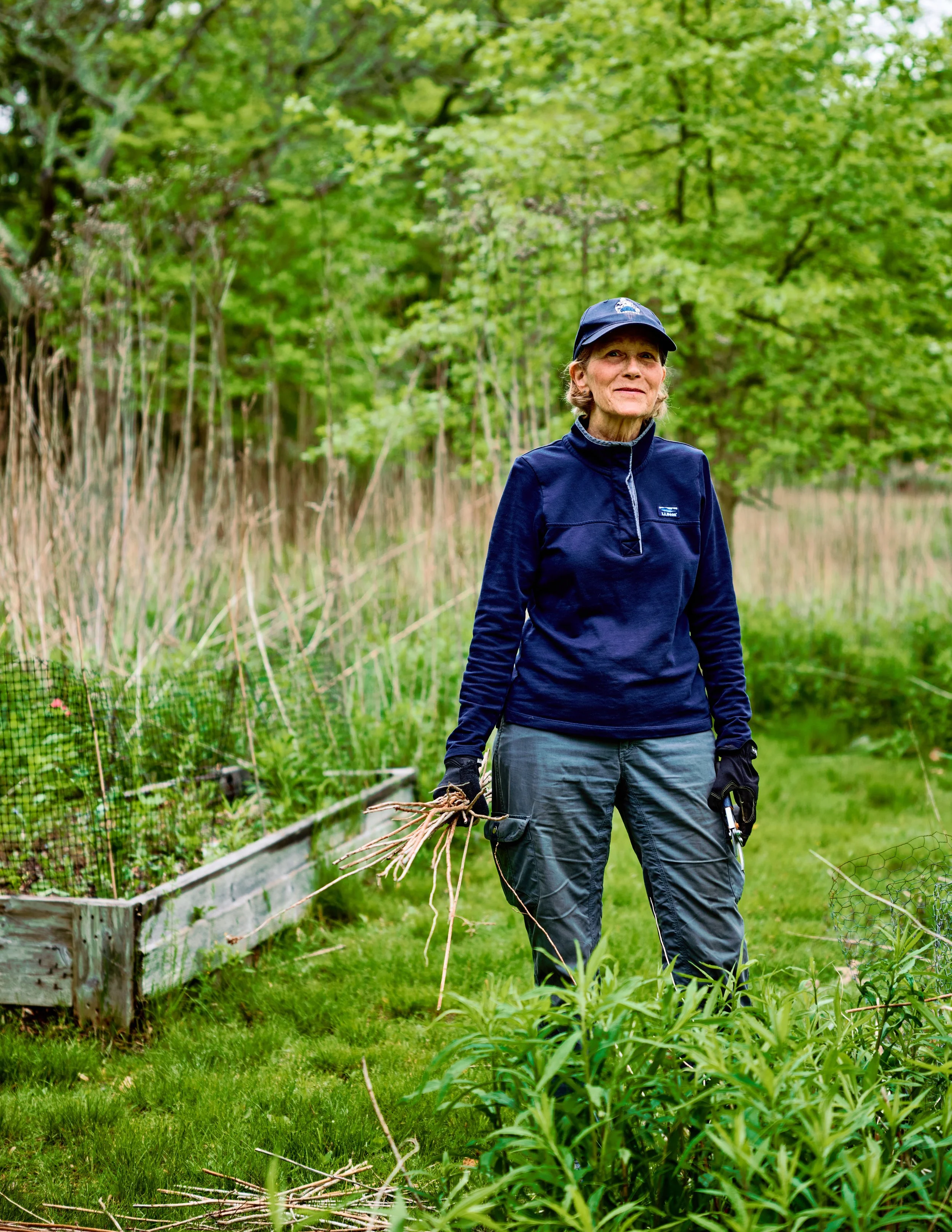
The students got to know these and many other plant species native to Massachusetts through a six-week paid summer internship created and run by Jean Devine, a Belmont-based environmental educator, native plant coach and specialty landscaper. Entering its fourth year, Biodiversity Builders has provided 55 high school students from Arlington, Belmont and Cambridge with hands-on experience designing and installing native plant gardens and removing invasive flora. The curriculum also covers entrepreneurial concepts like mission and marketing and culminates in a native plant sale run entirely by the students. Last year customers went home with 334 plants representing more than 40 species.
For Devine, the day spent matching buyers with plants is when the summer’s learning clicks into place.
“I’m a strong believer in the fact that you don’t really know what you know until you have to explain it,” she says.
“I rolled up my sleeves”
It’s only been a decade or so that Devine herself could tell you much about birch trees or bleeding hearts. Her career spanned furniture manufacturing, business school, urban planning, investor relations in biotech and nonprofit fundraising before her interests turned to curriculum design.
“I was looking for opportunities to mentor youth and get them outdoors as an antidote to ‘nature-deficit disorder,’” she says, referencing a term coined by journalist Richard Louv in his book Last Child in the Woods.
A walk with a scientist opened Devine’s eyes to the ecological value of native plants, including as a source of food and shelter for pollinators and other wildlife, and the threat invasives pose to biodiversity. Teaching kids how to restore this balance struck her as “an ideal project with a purpose that helped the world and the youth at the same time.”
It wasn’t something her small-scale gardening experience up to that point had equipped her for.
“My motto is ‘always be learning,’” she says. “So I rolled up my sleeves and just started learning it.”
After several years running nature programs for school kids in Cambridge and Brookline, she launched her own business, Devine Native Plantings, in 2021. Biodiversity Builders followed a year later, operating as a nonprofit under the fiscal sponsorship of the Vermont-based Tiny Seed Project. It partners with the Cambridge Mayor’s Summer Youth Employment Program to support the participation of students from that city and covers the rest of its budget through grants and crowdfunding. This July, it will recommence with a fresh batch of 14 high school students and a pair of college mentors, plus four young professionals interested in the Biodiversity Builders approach.
“Jean is so high energy and enthusiastic about the curriculum,” says O’Neill, who did the program in 2022 and returned last summer as a mentor. “She very easily connects with the students … and she knows so many of the people in the area doing similar kinds of work.”
Among her many affiliations, Devine is a co-founder of the Mystic Charles Pollinator Pathways Group, which maps local gardens that support declining populations of native bees, butterflies and birds. She guided Belmont High School’s Climate Action Club in creating a pollinator garden and is part of an intergenerational committee of Belmont residents organizing to plant a Miyawaki miniforest. As a member of the Native Plant Community Gardeners group in Cambridge, she’ll help install Danehy Park’s first pollinator garden this summer—with upkeep to come from the 2025 Biodiversity Builders crew.
These activities all combine getting more native plants into the ground with raising public awareness of their significance. To illustrate the point, Devine likes to show a photograph of her mother’s carefully tended, highly ornamental flower beds, from an era of gardening that prioritized exotic looks over local provenance.
“I say, ‘Beautiful, huh? But this is what it looks like to a native bee’—and then I show a desert,” Devine says.
For 2024 Biodiversity Builders participant Rancourt, who has artistic leanings, planning gardens that are aesthetically pleasing and ecologically useful was a highlight of the program.
“It turns out you have many colorful native plants that can be used,” Rancourt reasons, “instead of those other plants that are colorful but look like plastic for pollinators.”
Hands in the dirt
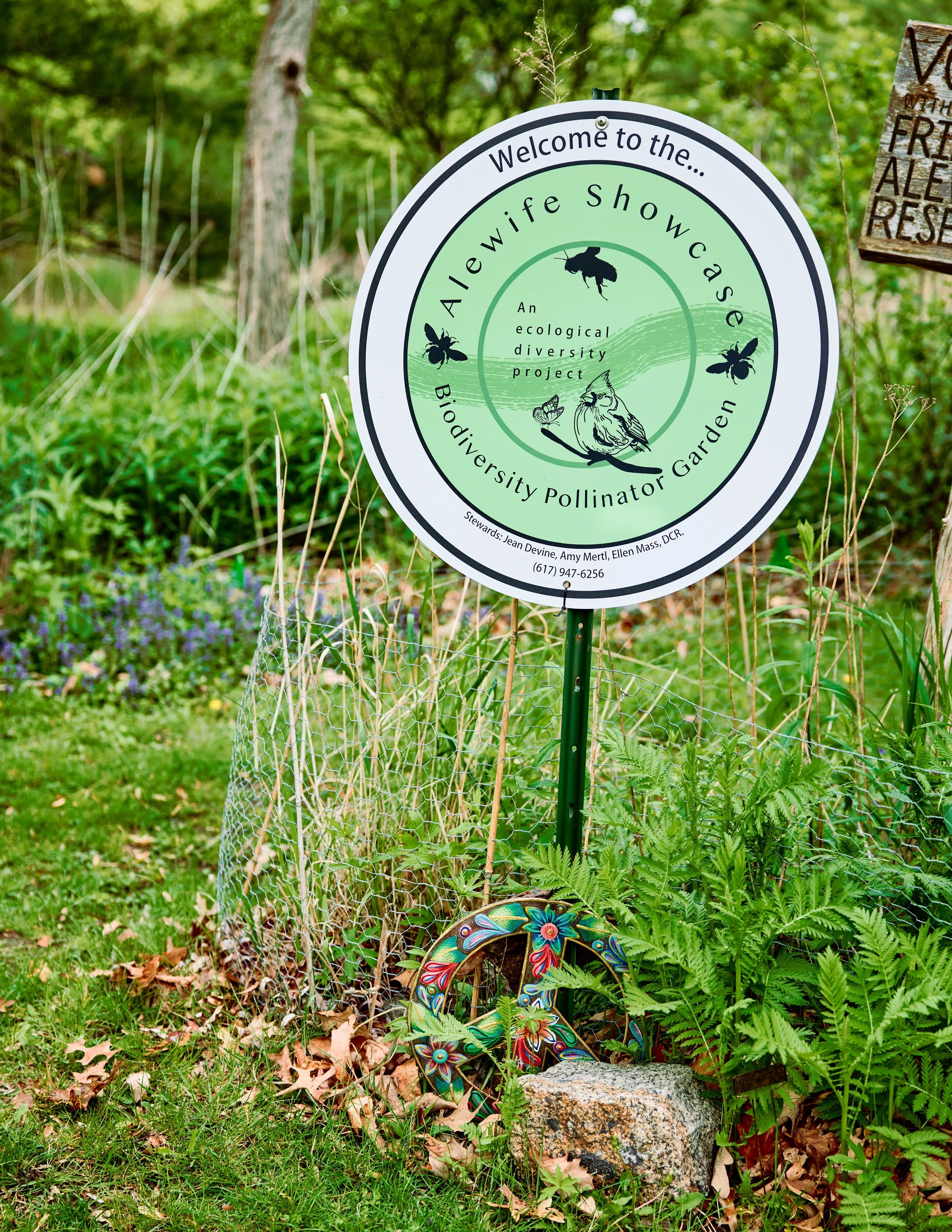
Early last summer, the Biodiversity Builders students were just starting out with the basics. On a sun-soaked July morning, they assembled at the Alewife Showcase Biodiversity Pollinator Garden on the north side of Cambridge’s Alewife Brook Reservation.
“Before we leave today, we will all learn how to water this garden,” Devine told them.
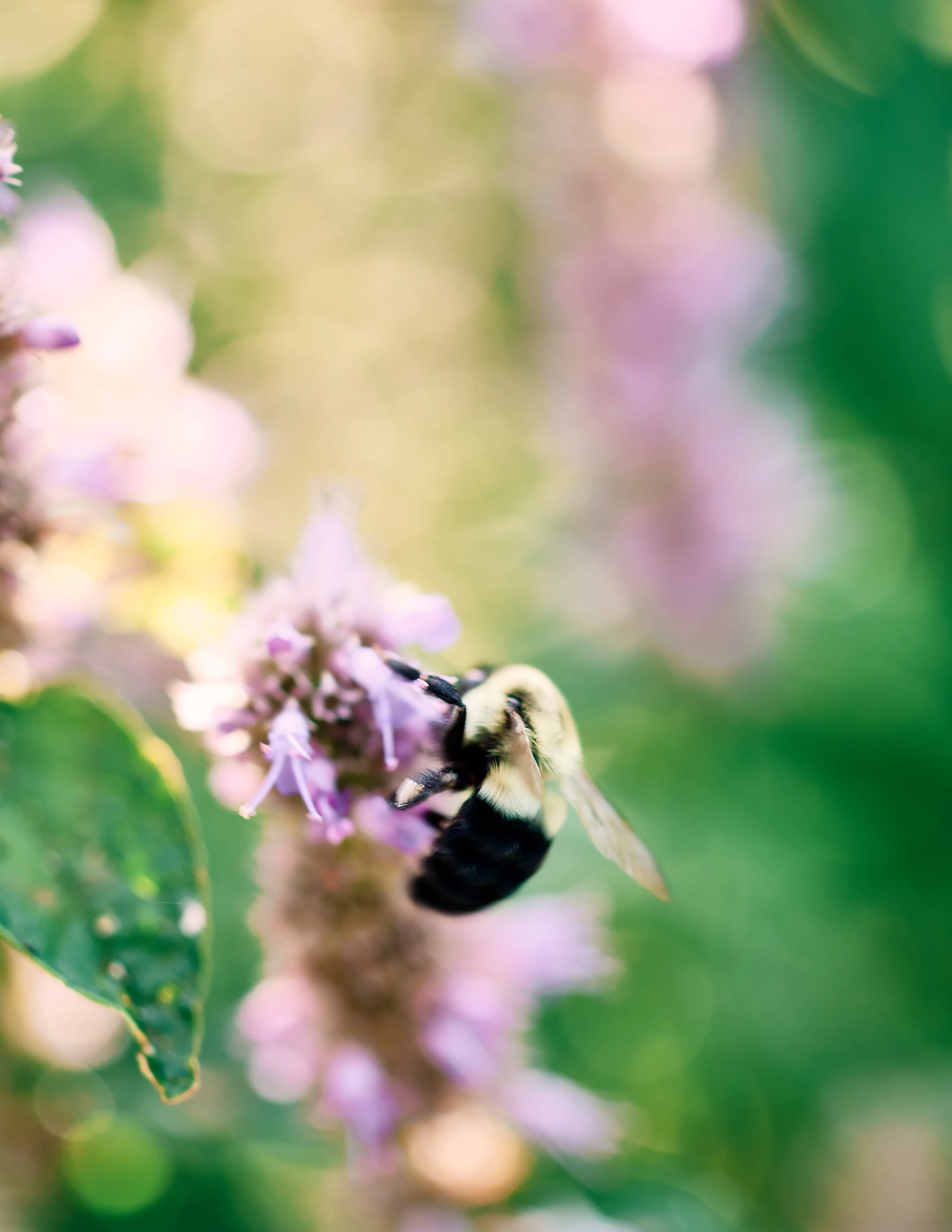
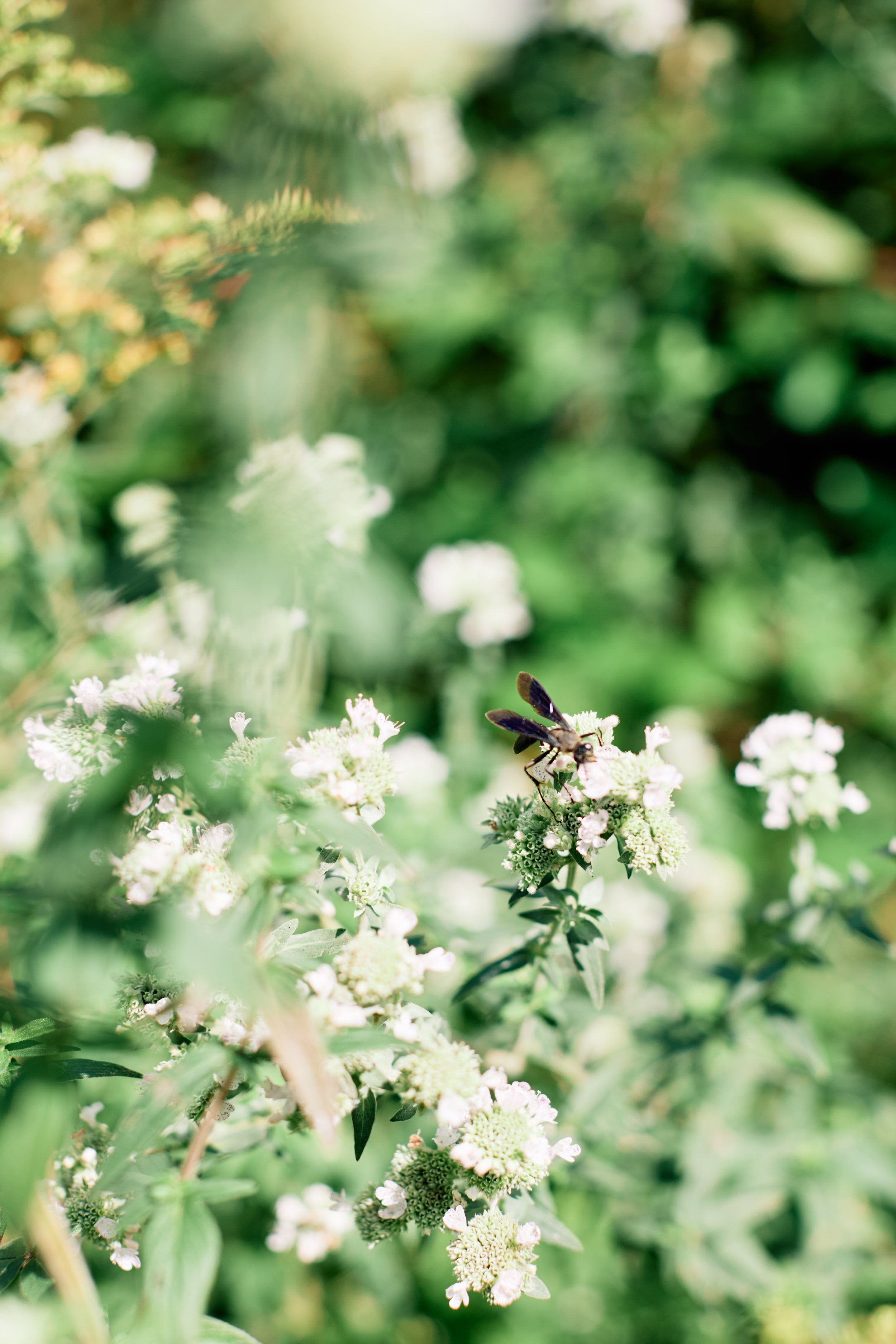
They split up, some heading into a nearby office building to construct nature journals they’d use throughout the summer. Another group, led by O’Neill, stood under the welcome shade of a maple tree with their phones out, downloading a citizen science app called iNaturalist. The students fed snapshots of leaves and blossoms into the app to discover what was growing in the raised bed in front of them: golden alexander, spotted bee balm, swamp milkweed. O’Neill used a leaf from the tree to point out other clues to a plant’s identity. Does it have a smooth or serrated margin? Palmate or pinnate veins? Over the course of the summer, they’d be using decks of cards packed with botanical facts, designed by program advisor Skye Schirmer, to further hone their knowledge.
Just around the corner, a third cluster of kids settled on the ground with Devine and started passing around old gelato containers full of dirt.
Devine encouraged the students to use touch and smell to investigate which key ingredients of New England soil these mystery samples contained. She showed them how to pour in water and time how long it took for the bubbles to dissipate. Water goes through sand, she explained, faster than through silt or clay. A loam that balances those three ingredients, mixed with some rich compost, is what plants adapted to this region need to thrive.
Ahmad-LeBlanc, part of last summer’s cohort, says she applied to Biodiversity Builders after watching her sister go through the experience two years prior.
“She would always come home covered in dirt, she would have to wear super high socks because there were a lot of ticks, but she had a great time,” she says. When it was her turn to get dirty, she understood why. “I think it was easier for us to process the information because it was all really hands-on ... It’s a way that we’re not usually able to learn in school.”
Branching out
The Alewife reservation is Biodiversity Builders’ home base, but the students tend plots in other community spaces, including Jerry’s Pond and Magazine Beach in Cambridge, and explore a variety of local ecosystems. Last summer they removed invasives at Mass Audubon’s Habitat Education Center and Wildlife Sanctuary with the aid of its resident goats; toured Mount Auburn Cemetery with a herpetologist, a horticulturalist and an artist; and took the T to East Boston for birdwatching in Belle Isle Marsh. They also donned gloves and climbed into canoes with the Mystic River Watershed Association to remove thick, spiny mats of invasive water chestnuts from the Arlington Reservoir—filling 270 laundry baskets by day’s end.
“It was just amazing how we were all collaborating and working all together,” says Shaginian, who shared a canoe with Devine. “I remember how big that pile was. It was huge.”
Shaginian says pulls like that one, or the sweaty hours spent uprooting black swallow-wort along the edge of the Minuteman Bike Path, impressed upon her both the enormity of the problem and the importance of doing her part.
“I felt proud of myself,” she says, “that even though, yeah, I know it won’t make very big of an impact, it’s better than just sitting home and not making an impact at all.”
While their peers may spend the summer lifeguarding or scooping ice cream, Biodiversity Builders offers high school kids a rare combination of earning and learning.
“You would imagine that in order to have this sort of class from an expert such as Jean, you would have to pay something,” Rancourt observes, “but it’s actually the opposite.”
“For me, the idea of getting paid to do gardening, which I did at my house for fun, was novel and exciting,” says O’Neill, “and definitely cemented the idea that I wanted to study something related to working outside when I got to college.” Her courses at UMass include a focus on forest ecology and conservation, and she took this past year away from campus as an AmeriCorps service member placed with CitySprouts, which runs gardening education programs for kids in Cambridge and Boston.
Other Biodiversity Builders alums have found ways to put its principles into practice at their high schools. Rancourt and her school's Eco Club have lobbied for using compostable containers in their cafeteria. A 2023 participant, Lina Ye, founded a club at Belmont High School that runs native plant sales with assistance from Devine. Shaginian is one of that club’s officers.
“It feels great to continue this work and inspire others to care for our planet,” Shaginian says. Through her experience in Biodiversity Builders, “I not only learned but I realized,”she emphasizes, “that everything in nature is connected, and that taking care of our surroundings really affects our lives.”
This story appeared in the Summer 2025 issue.
