
Rooted in Flavor: The Full Circle Journey of Chef Will Gilson
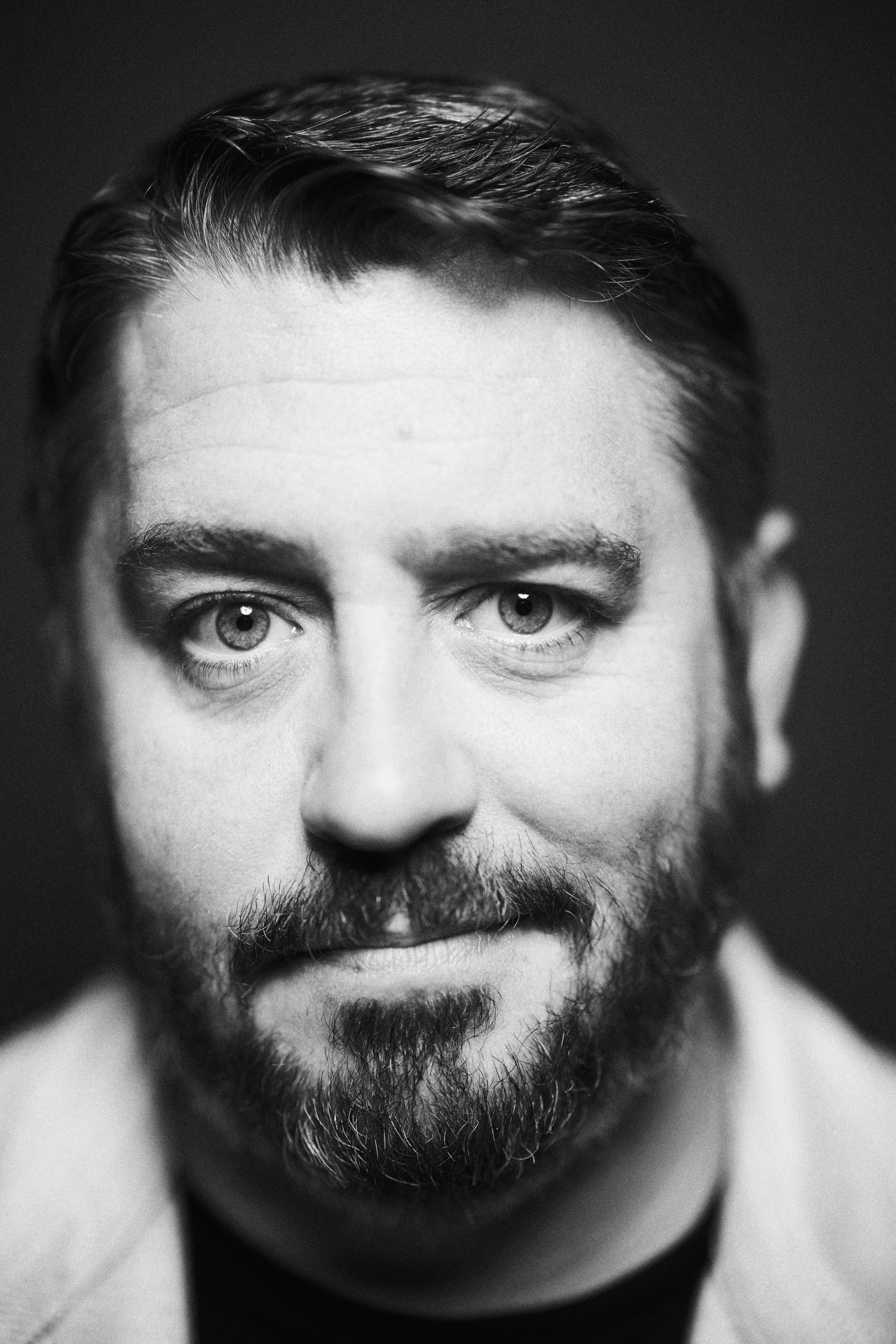
Photo by Michael Piazza
When most people imagine a childhood on a farm, they picture hay bales stacked in the sun, cows roaming the fields and chickens clucking in their coop. For Cambridge chef Will Gilson, his formative years instead smelled of basil, thyme and rosemary. The greenhouses on his family’s four-acre herb farm in Groton were his first classrooms—fragrant and alive with the ever-changing growing seasons.
It was here that the budding chef found his space in the kitchen, his passion eventually driving not only his popularity but also kudos in the form of James Beard Award nominations. And it all began with a stroll through a rustic barn and onto a path of aromatic herbs.
“[The farm] was my introduction to the seasonality and sensory nature of things that are predominantly used for cooking,” he recalls.
THE EARLY YEARS
When Will was 5 years old, his father, David, a director of pupil services at the Groton Dunstable Public School System, left the school setting to start Gilson Farm. The joys of education at their core, he and Will’s mother—a local librarian—soon transformed the property into The Herb Lyceum, a barn-turned-learning-center where the public could attend workshops about crafting, cooking and herbs. Derived from the Ancient Greek word for “hall of lectures,” the property’s very name was a nod to the elder Gilsons’ backgrounds.
The location provided the couple a place to teach surrounded by bucolic backdrops of massaged landscape and herb garden pathways inspired by Provence and Tuscany. Alongside the bounty, their son’s curiosity around food also began to grow.
The renovated 19th century carriage house became home to the Lyceum’s kitchen. Alongside the lovingly restored 1920s gas stove, Gilson’s earliest experiments with food began. He assisted his parents in creating jams, focaccia and cookies to sell at farmers markets. But it wasn’t long before interest led him beyond the farm and into the city.
FIRST TASTE OF THE RESTAURANT WORLD
At 15, Gilson met a chef named Charles “Chuck” Draghi at a Boston farmers market, who invited him to spend a night in his kitchen at Mercutio’s. “It was terrifying,” he laughs, “but that was the aperture, the opening to a chance to really see a world where everything made sense.”
It was in that bustling North End restaurant that Gilson discovered that cooking, unlike farming, offered instant gratification. “In farming, oftentimes you spend months working on something to get it to come to life. And even then, it could die,” he explains. “With cooking, it felt more immediate. You’re taking something raw, applying heat or a knife to it, and then putting it in front of somebody for them to enjoy. That was so much more gratifying.”
After his parents’ divorce, which forced the Lyceum’s ventures to change course, Gilson’s father encouraged him to host intimate weekend pre-fixe dinners in the barn. The mismatched chairs, relaxed setting, joy of feeding others—this was the beginning of something special for the budding chef.
While finishing out his high school career and still heading into Mercutio’s weekly, Gilson also cooked these 20-person dinners at the Lyceum, even employing fellow students as servers or dishwashers. “I learned how to run a business when I was still in high school,” he says.
These moments filled a void the teen didn’t know needed satisfying. “I didn’t really play team sports in high school. I didn’t do anything that felt like it had a lot of camaraderie to it, but I had this community of restaurant people who took me in when I needed it the most,” he says. “They were all working together towards the same thing.”
FROM STUDENT TO CHEF
Gilson soon enrolled at Johnson & Wales University in Providence, to refine his craft. His time there—including a formative internship in London during sophomore year—broadened his understanding of the industry. Working in a gastropub to pay the bills, he became enamored of the modality of casual, approachable food.
A few years later, armed with expert wine knowledge gained at the university, he won the prestigious R.C. Knopf Student Achievement Scholarship (one of six available in the country) that sent him through Napa Valley, Venice and Paris for seven weeks of immersive study.
“It was like ‘Road Rules,’ but instead of challenges like launching watermelons, we were stomping grapes and rolling wine barrels,” he says, adding that dining at 32 Michelin star restaurants didn’t hurt either. The trip cemented his desire to get into the industry full time.
Once back in Boston, Gilson worked at Cambridge’s Eastern Mediterranean hot spot Oleana to master all the aspects of the kitchen, from front of house to back.
“That set me up to learn the skills I didn’t possess,” he says. “In all the years of running the Lyceum, a ticket never printed with multiple things where I had to coordinate with other people. The menu was always the same for the month, so I had never really scratched that itch.”
It was mission accomplished, but the young chef wanted more. After two years, a serendipitous conversation over drinks at The Cellar led to his next adventure: an opportunity to take over the kitchen at the Harvard Square bar. He jumped at the chance. With $1,500 and a desire to make it work, at age 23 Gilson became the cook, dishwasher and chef of the Garden at The Cellar. Throughout his five years there, he built a supportive team to make the “glorified pop-up” in Cambridge’s casual fine-dining scene a success.
EXPANDING THE TABLE
Around 2011, when San Francisco’s pop-up restaurant scene was exploding, Gilson teamed up with local food promoter Aaron Cohen (of Eat Boston fame) to bring the now-you-see-them/now-you-don’t concept to Boston. Beginning with a successful on-stage pig butchery demo, the duo began hosting events in unexpected places. Think furniture stores and hair salons.
“It was like going back to my Lyceum days of tasting menus for a set amount of people,” he says.
Still, Gilson longed for a permanent home. That chance came in 2012, when he partnered with local developers (now Cambridge Street Hospitality Group, with partners Ming-Tai Huh and Nick Vantzelfde) to open Puritan & Company. The Inman Square space was ready, but the direction wasn’t yet refined. Like many young chefs, Gilson had a ton of ideas but needed to hone the vibe. He literally threw his thoughts onto the wall to see what would stick.
“Some nights I would write in red Sharpie on the walls like a real psychopath,” he jokes. “I was thinking of all these things it could be and getting the ideas out, pre-iPhone Notes app.”
Early menus featured modern takes on forgotten nostalgic New England dishes, but the team soon went with a broader approach. “We realized that nobody wanted antiquated food. They grew up on that stuff,” he says. “So we pivoted and just made good food that’s seasonal and makes people happy.”
A love letter to his roots, the restaurant was filled with the farm’s legacy—literally. “We took physical things from there and brought them to the space,” he says. One of the Lyceum’s antique stoves is Puritan’s host stand, while the old farmhouse sink now anchors the chef’s counter in the adjacent space that became Puritan Oyster Bar in 2023. “I washed every dish at the Herb Lyceum in the sink where we now serve oysters.”
Gilson’s vision saw early success, and within three months of opening his doors he received two 2013 James Beard Award nominations: Best New Restaurant and Rising Star Chef of the Year. Puritan has won numerous awards over the past decade, including making Boston Magazine’s annual “Best Restaurants” list. He also added to his resume with appearances on the “Today” show, Food Network’s “Beat Bobby Flay” and as a judge on Bravo TV’s “Top Chef.”
Gilson’s footprint continued to expand over the next decade across Cambridge, with a three-pronged dining destination at Cambridge Crossing: The Lexington, a neighborhood rooftop restaurant; Café Beatrice, an all-day café serving pastries, sandwiches and salads; and Geppetto, an upscale Italian restaurant featuring handmade pastas.
“We wanted to put our feet down in Cambridge and to make sure that if you dined with us, you could technically dine at any one of our restaurants and it would be a different experience,” he says.
THE UNTHINKABLE HAPPENS
Throughout the years, the Herb Lyceum soldiered on as a gorgeous destination for weddings and private events, including Gilson’s own marriage in August 2016, to his wife, Molly, with whom he now shares two young daughters.
But in September 2024 all that changed when a fire completely destroyed the beloved carriage house. While there was so much charm to the lost building and so many memories, the energy of what they were creating there remained.
“The weddings were more about the grounds and people experiencing how beautiful that place was than the building [itself],” he says. For the past year, Gilson and his team have continued catering events at the Lyceum from his restaurants, hosting weddings and celebrations in the converted greenhouse.
While rebuilding will take time and significant investment, his vision remains rooted in honoring the past while creating something sustainable for the future. “We’re figuring out how to rebuild that property and reimagine it so there’s a continuing legacy that can still be part of the property’s story,” he adds.
A RETURN TO THE ROOTS
Gilson’s newest venture—First Street Market and the adjacent Amba, a Mediterranean-inspired restaurant that serves farm-fresh delicacies and pastries crafted by Chef Brian Mercury—is a café-farmers-market-event space hybrid that embodies his full-circle journey. “I got into restaurants by working at farmers markets selling produce for my family,” he says. “Now I’m running a farmers market as part of my restaurant group.”
Within the space he sells produce from the Lyceum—potted herbs, peppers, heirloom tomatoes, zucchini, pumpkins— grown on the same soil where he first learned to dig and dream. His commitment to local sourcing runs deep, even as farming faces new challenges.
“Agriculture and food service are the two industries most vulnerable to the instability we’re seeing,” he says. “I can't wait for [First Street] to become something where chefs pull into our loading dock to load up all the produce to bring to their restaurants.” Also on the agenda are seasonal festivals, with hopes of becoming a place where the public can celebrate and shop locally.
For Gilson, it’s all connected—from the herbs in his family’s greenhouse to communal meals under rustic barn rafters to special dishes served in bustling restaurants.
“It’s not until [now] that I realized the irony of the full circle nature of where my career has gone,” he says. “It’s a good reminder to remember where you came from.”
This story appeared in the Winter 2026 issue.
