
Local Beer + Local Food: New Legislation Allows Breweries to Sell at Farmers Markets
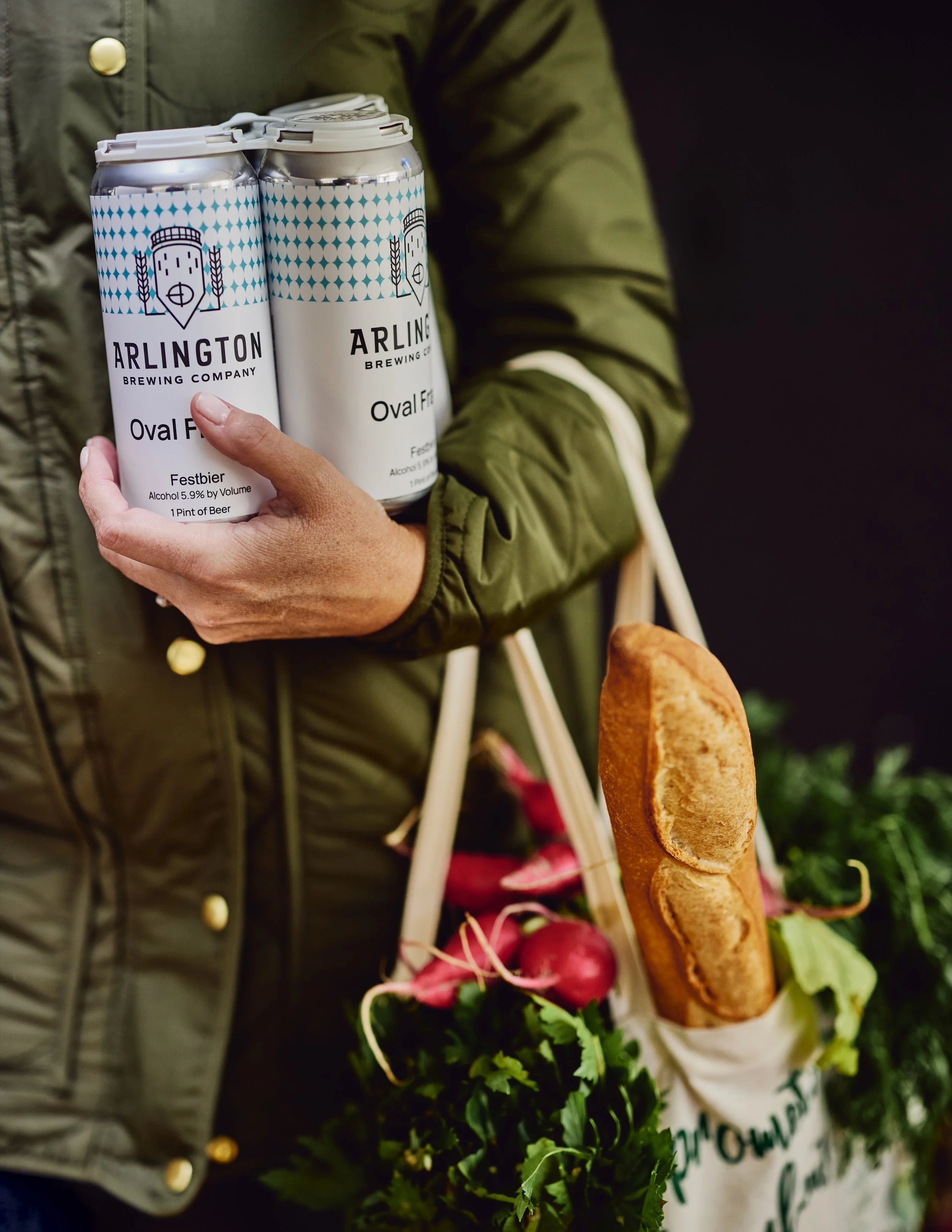
Photo by Michael Piazza
Standing beneath his market tent, Brian Shirley is explaining to customers the subtle nuances in hop flavor between his New England IPA and pilsner. The co-founder and co-owner of Time & Materials Beer Co. in Reading is enjoying his first season at the Wakefield Farmers Market, introducing the community to his craft beers, alongside farmers and artisans selling their own local goods.
The nanobrewery is one of a small group of craft breweries in Massachusetts that took advantage of new legislation that authorized breweries and distilleries to sample and sell their products at farmers markets and other agricultural events. When the law passed late last year and Massachusetts joined other New England states like Maine, breweries from Arlington to Pittsfield, Littleton to Springfield, Mashpee to Ashland and downtown Boston began selling their products at markets. They complemented wineries and meaderies, which already were allowed to sell at markets here.
This experimental season is going exceptionally well so far, Shirley raves, so much so that he brewed twice the amount of beer this year as last year when he wasn’t a vendor. It’s all thanks to the exposure the market brings, he says, introducing his brand to new customers, some of whom had no idea the brewery was their neighbor.
“For us, it's been an absolute lifesaver,” Shirley says. “We are an unpretentious farm-to-glass nanobrewery, so the farmers market was a perfect opening for us.”
Brewing only one barrel at a time, one batch of beer for Shirley and wife and co-owner Liz Leahy is 10 cases on a good day, he says, which limits their selling options. Without a public-facing taproom, they struggled with a sales strategy and platform. E-commerce worked well during the pandemic while UPS rates were modest, he explains, but proved impossible when rates skyrocketed. Meanwhile, package stores are saturated by choice in a crowded brewing marketplace, and restaurant taps aren’t usually available or affordable to small breweries. As the only brewery at the Wakefield Farmers Market, Shirley found an opportunity to promote his business while connecting with consumers who are genuinely interested in local products.
“It’s a huge marketing opportunity. It’s a great connection point. It’s a great bottom-line booster. In some instances, brewers are hiring extra staff so that they can be at these markets, so it’s helping to generate jobs,” says Katie Stinchon, executive director of Massachusetts Brewers Guild, who lobbied for eight years to pass this legislation. “Those are the ways that it’s supporting and giving back to the community.”
Across the state, shoppers like having choices, says Rick Grudzinski, director of member services at the nonprofit Mass Farmers Markets. If they care about local food, he says, they like to be able to do much of their shopping at a market where they can actually meet the makers, support local businesses and know where their food is coming from. “Beer is something that people buy and enjoy regularly, so it’s great that they have the option to buy it at the farmers market where they can do so much of their other food shopping,” he says.
Mireia Carpio, manager of Belmont Farmers Market, says Arlington Brewing Co. is nearby, and when the legislation initially passed, “it was a no-brainer for me to reach out and say, ‘Why don’t you come be at the market?’ And they just happened to be interested.”
This has created business opportunities for small breweries, opened up a new industry for farmers markets and gives customers what they want, says Wakefield Farmers Market Manager AnnMarie Galligan. The market was limited to wine and mead, she adds, and while there’s demand for that, their customers wanted hops, too.
“When Time & Materials isn’t here, customers always ask, ‘Are they here? Are they here?’” she says. “Customers have already grown accustomed to purchasing it at our market. They come back looking for it.”
While there has been success, there has also been struggle, and Shirley admits the learning curve has been steep and not inexpensive. He invested approximately $1,500 in market infrastructure, like a pop-up canopy tent, signage and an electronic point-of-sale system (a significant amount for a small business), struggled with how much beer to take to market and what style would sell best. The three-stage licensing process can be tricky, too, he adds. Stinchon explains that breweries must apply to each market where they want to sell, apply to the Department of Agricultural Resources (MDAR) to authorize the market as an agricultural event, then apply to the town or city for a one-day license to sell alcohol. All beer must be consumed off-premise, and while the legislation generally allows breweries to offer samples, the town of Wakefield doesn’t allow sampling at its market, so Shirley can’t sample while other breweries can elsewhere. He laments that sales are more likely when a customer can sample different flavors first, but he works around that as best he can.
Out in Pittsfield, Sarah Real of Hot Plate Brewing has seen positive growth as a vendor this year at two markets, in Great Barrington and Pittsfield. But she’s learned it’s also a lot of work to be a brewer and market vendor at the same time. After spending more than $1,000 and wading through the layers of paperwork and approvals, Real says there are myriad decisions she must consider in order to sell at each market, from balancing her inventory to staff management.
“I often think, ‘Can I afford to do a full season? Will I have the beer? Do I have the time to produce that? Do I have the people to put against it?’ Plus, I have one vehicle that is licensed to carry alcohol, so that's why (my husband) Mike and I do the market, because we are the registered people to drive that vehicle. I’m not taking any chances. And so that’s a huge challenge,” Real says. “It is a slog. I have always frequented farmers markets. I have always appreciated the people who do this every week. We hustle.”
As the first complete season for this new legislation wrapped up last fall, market managers and participating breweries were still figuring out what success looked like. With more than 200 markets statewide, there are just as many methods to incorporate breweries in real life. Some markets, including Ashland Farmers Market, limited the number of alcohol vendors so that there would be only three at any given market, says board member Steven Mitchell. He adds that having a craft brewer attend every other week enhances their product selections, but it remains unclear if it increases foot traffic. The city of Bourne required alcohol vendors at the Canal Region Farmers Market to fund a police detail if they were to offer even a thimble-sized sample, which neither the vendor nor the market could afford.
And still others are seeing mixed results. Westborough Farmers Market Manager Kristin Bradley says that though they’ve had a positive experience overall, one brewery that tried her market withdrew after a few days because it wasn’t profitable enough, but another is doing well. Meanwhile, dozens of other breweries decided against being a vendor at all for various reasons. As the initiative continues to morph in 2026, there will continue to be opportunities for breweries to expand into their local farmers markets.
“Over the past 15 years, Massachusetts has shed many of its blue laws, including restrictions on alcohol sales. I heard from the Massachusetts Brewers Guild that many local brewers wanted to be able to sell their products at farmers markets, alongside area farms, bakeries and food artisans. Farmers markets are constantly trying to diversify their offerings, to attract more customers,” says Sen. Jamie Eldridge (D-Marlborough), who sponsored the bill. “Passing the Farm Brewery bill was a win-win for brewers; farms that provide the hops, barley and wheat for beer; and Massachusetts consumers."
drinkarlingtonbeer.com
hotplatebeer.com
massbrewersguild.org
MassFarmersMarkets.org
TimeAndMaterialsBeer.com
This story appeared in the Winter 2026 issue.
