
Italy’s Naturally Gluten-Free Table
Photos by Michael Piazza / Styled by Catrine Kelty
Growing up in an Italian family, food was always central to my life. But when I was diagnosed at age 52 with Hashimoto thyroiditis, an autoimmune disease linked to gluten intolerance and celiac disease, I had to eliminate pasta and bread from my diet. I felt like a deer in headlights, trying to figure out how to eat in a new way while also preparing nightly family dinners. There were few quality gluten-free products available at the time, and I worried that part of my culinary heritage might be lost. But instead of replacing wheat flours with gums and starches, I learned to cook traditional Italian dishes that are naturally gluten-free.
Nowhere are these dishes more prevalent than in la cucina povera, a style of cooking born out of necessity that uses humble, inexpensive ingredients. Cooks have long relied on legumes, seasonal vegetables, olive oil and herbs to create nourishing meals that happen to be naturally free of gluten. Legumes, in particular chickpeas and fava beans, are a prime example of this culinary wisdom.
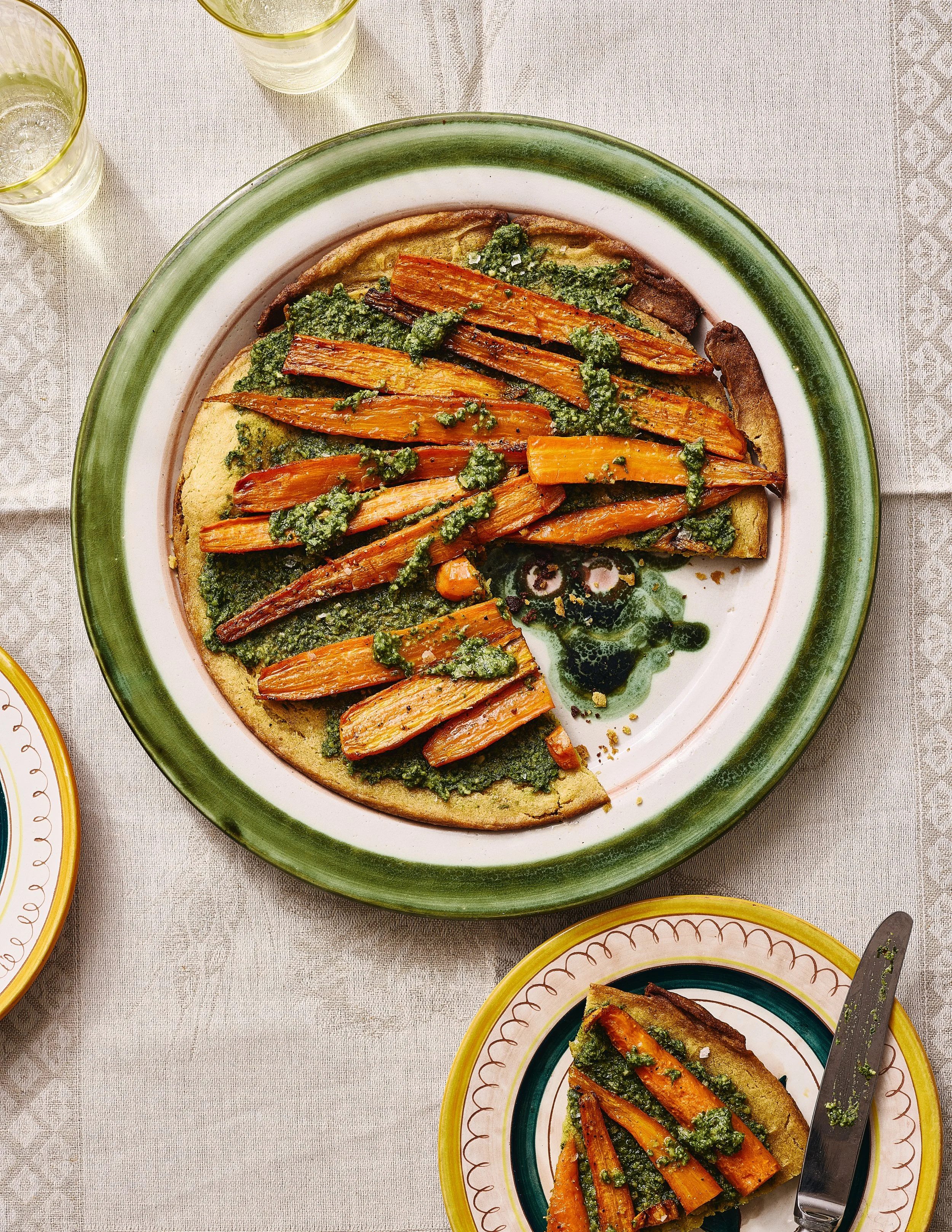
Chickpea flour, made from ground dried chickpeas, has been a staple in Italian kitchens for generations, valued for its ability to create hearty, satisfying foods. One of the most beloved examples is Ligurian farinata, a thin flatbread made from chickpea flour, water, olive oil and salt. Baked in a hot pan until golden, farinata is often enjoyed plain, cut into wedges and eaten warm as street food. Its simplicity also makes it a perfect canvas for seasonal vegetables and creative toppings.
One of my favorite ways to serve it reflects the wastenot, want-not spirit that defines traditional Italian cooking. Roasted carrots add sweetness and color to this dish, but the real magic comes from using the whole vegetable. Rather than discarding the carrot tops, their greens can be made into a pesto. The result is a golden farinata topped with caramelized carrots and finished with a carrot top pesto, la cucina povera at its best—and naturally gluten-free.
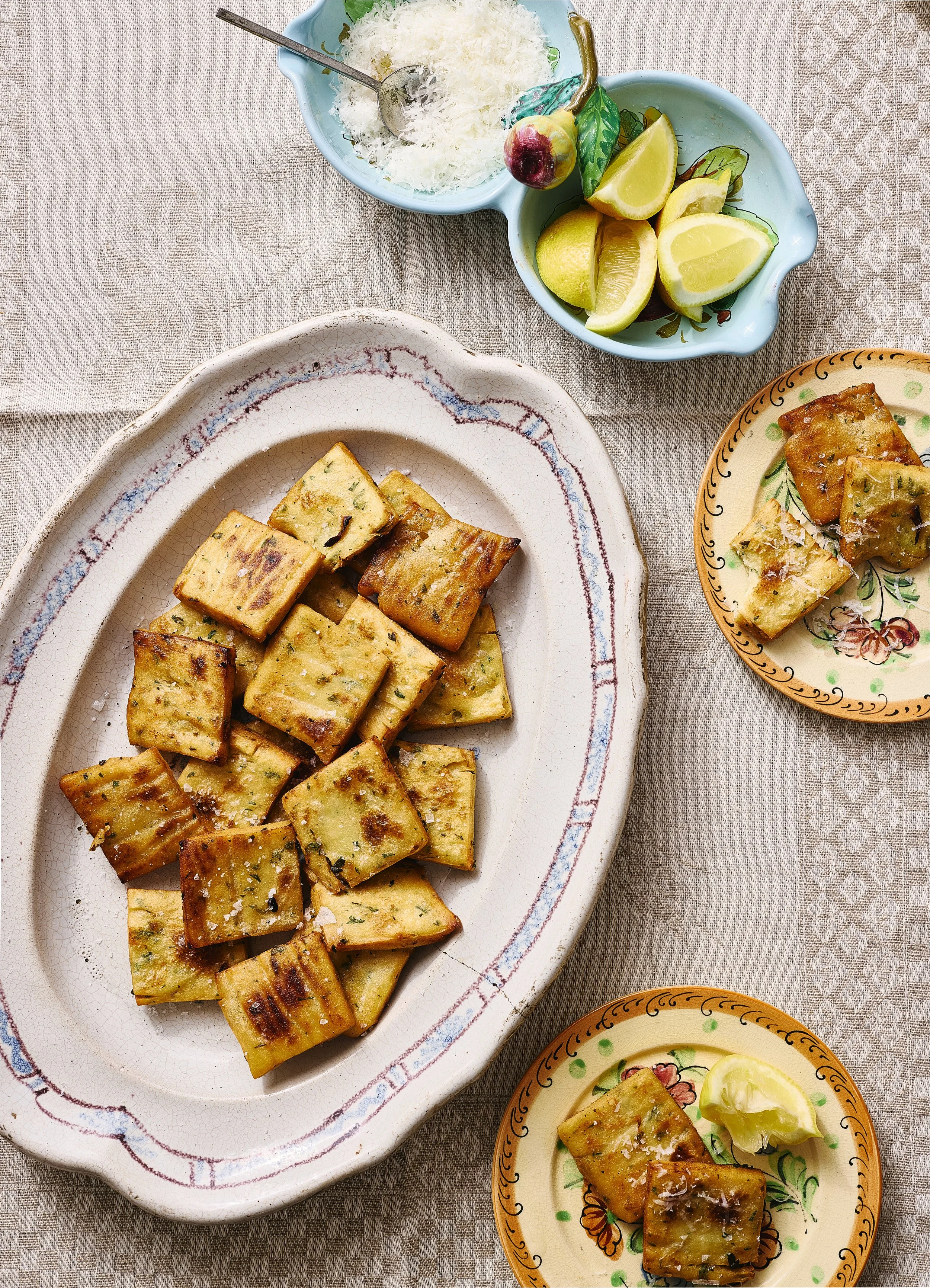
Another chickpea creation, panelle, comes from Sicily. Made by cooking chickpea flour with water and olive oil until thick, spreading it thin, cutting it into pieces and frying until crisp, panelle are essentially chickpea fries. Crispy on the outside and creamy inside, panelle are a perfect example of transforming a humble ingredient into something delicious. Rich in fiber and plant-based protein, they also demonstrate that gluten-free cooking need not rely on substitutes and can include ingredients that have been part of the Mediterranean diet for centuries.
Equally important in Italian cooking is the fava bean, one of the oldest cultivated legumes in the Mediterranean region. While favas are a summer crop in New England, in Italy they remain a cherished spring ingredient, especially in the south. Fresh fava beans can be eaten raw, straight from the pod, or lightly steamed, depending on personal preference, then drizzled with extra virgin olive oil and topped with thin shards of Parmigiano Reggiano or Romano. This simple combination captures the essence of Italian cooking: letting the quality of the ingredients speak for itself.
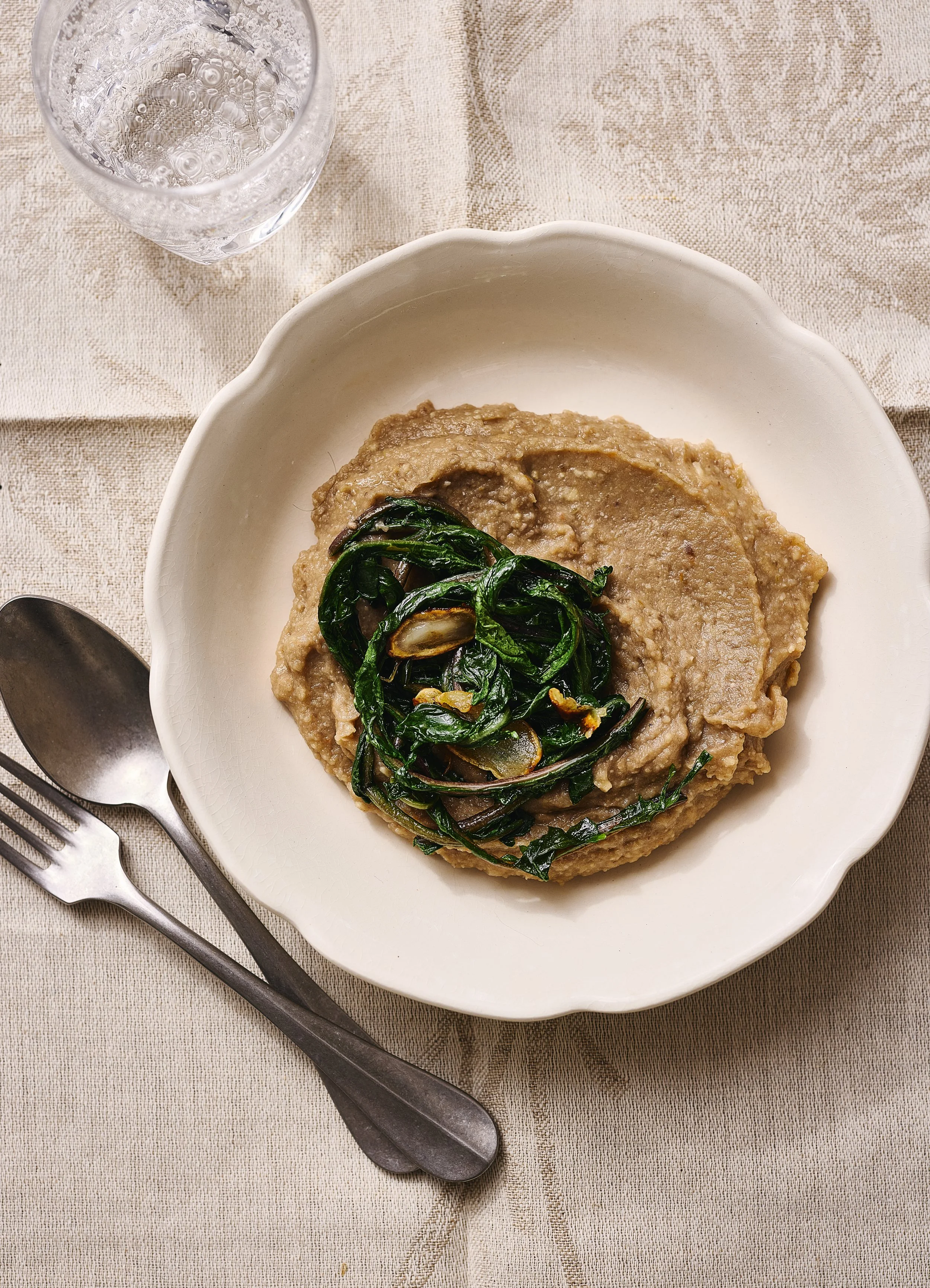
In Puglia, where my family has roots, fava beans appear in one of the region’s most iconic dishes, Fave e Cicoria, enjoyed in all seasons. This dish begins with dried, skinless fava beans simmered slowly until tender and then puréed into a creamy consistency and topped with braised bitter greens, often chicory or other wild greens. Drizzle your best extra virgin olive oil over all to bring it together. I first discovered this dish while visiting Puglia, and it immediately struck me as the Mediterranean diet at its best: simple, deeply nourishing and rooted in centuries of tradition.
Together, dishes like Ligurian farinata with roasted carrots and carrot-top pesto, crisp Sicilian panelle and creamy Pugliese fava purée with braised greens reveal that the heart of Italian cuisine lies in respecting ingredients, seasons and traditions of using every part of the harvest. For those of us living with gluten intolerance, these recipes encourage exploring the naturally gluten- free dishes that have been part of Italian cooking for generations. The lessons are timeless: Cook with what’s in season, waste nothing and trust that the simplest ingredients can create something special.
recipes
This story appeared in the Summer 2026 issue.
