
All Are Welcome Around the Seder Table: Passover Cuisine That Embraces Ashkenazi and Sephardic Traditions
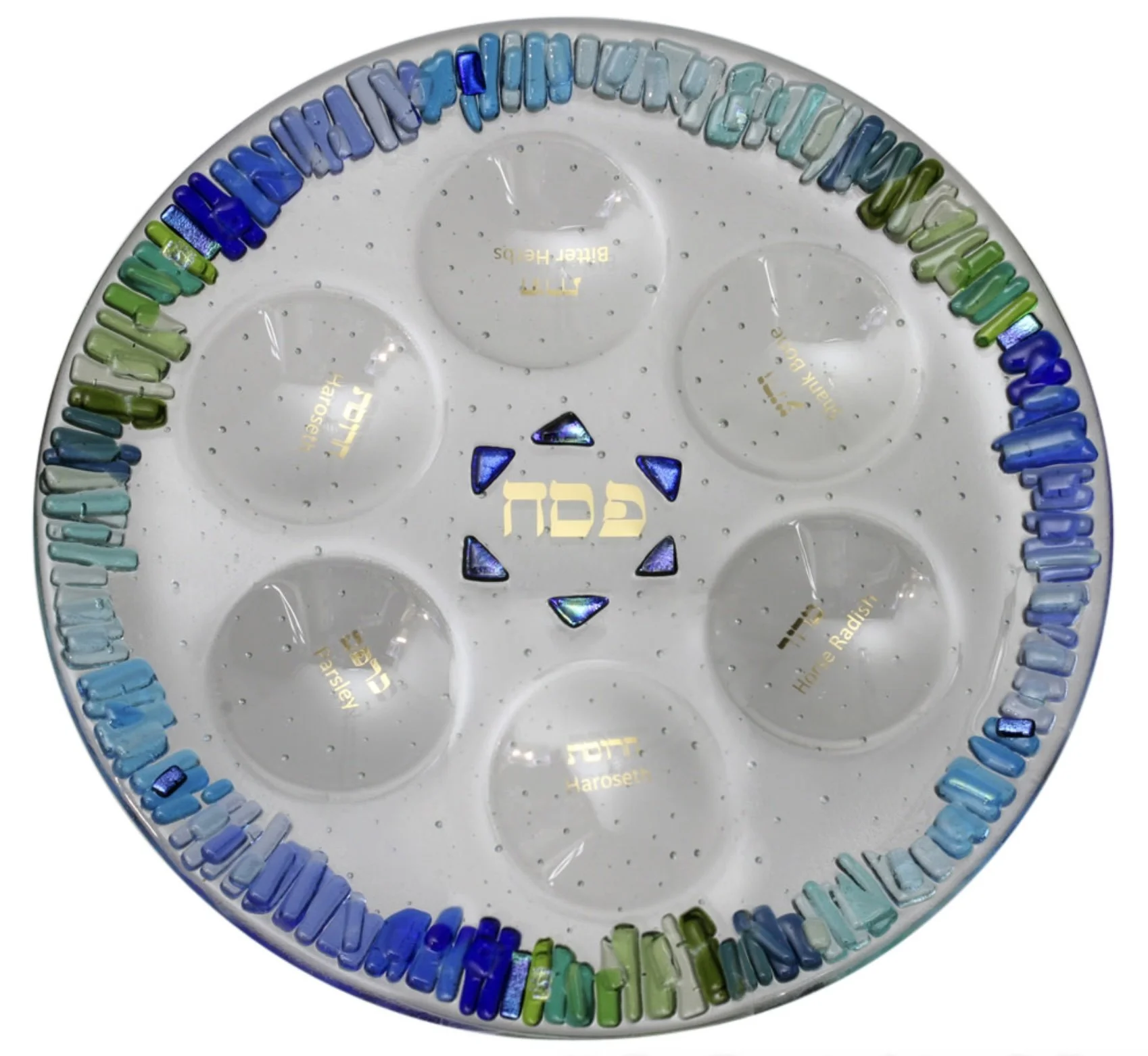
Photo: Kolbo Fine Judaica, Brookline
Growing up in Everett, Sara Winer always knew when her mother, Rose Rutstein, was baking her Passover lemon sponge cake, a traditional dessert for the holiday.
Made with a dozen eggs, her mother’s enviable sponge cake rose majestically in the oven (because her egg whites were whipped separately and folded into the batter, for a light, air-filled cake).
But baking time came with strict rules for the kids, Winer recalls in a recent phone conversation with Edible Boston.
“‘Don’t even walk in the kitchen. No jumping, no running. Stay out,’” her mother would warn Sara and her sisters, Carolyn and Linda.
“‘If the cake collapses in the oven, it won’t be a sponge cake. It will be flat, like a pancake,’” her mother would worry aloud.
For Avi Shemtov, a prominent Boston-area chef and proprietor of Chubby Chickpea and Tapped, a mobile beer and wine catering company, Passover growing up was a cultural blend reflecting his family’s diverse background.
His Israeli-born father, Yona, was from a Turkish Separdic family. His mother, who converted to Judaism, grew up in a small town outside of Buffalo.
Must-haves at their family seders included his father’s signature chocolate-infused haroset, a ritual food made of a blend of apples, nuts and sweet red wine; and his mother’s mouth-watering Ashkenazi-American-style brisket, braised in tomato paste served with his godmother Judy Avnery’s always-perfect rice.
There was also always Chraime, a Sephardic dish of flaky white fish cooked in a light, spicy tomato sauce that was featured as its own separate course.
These are among the beloved traditional foods enjoyed over the eight-day holiday of Passover, a harbinger of spring for Greater Boston’s Jewish families that begins this year on the evening of Wednesday, April 1.
Also known as the Festival of Freedom, Passover celebrates the Biblical Exodus story when God liberated the ancient Israelites from hundreds of years of slavery.
With its focus on freedom and its central theme of welcoming the stranger, Passover is considered the most popular of all Jewish holidays. It’s a home-based holiday that draws extended families and guests together for a seder, a ritual-filled festive meal where the Passover story is read aloud.
For Rabbi Susan Abramson of Temple Shalom Emeth in Burlington, creating a memorable seder with her son has meant focusing on the meaning of the holiday. From an early age, he could recite the whole saga, she wrote in an email. The two have baked their own matzah and prepare the haroset, eggs and other ceremonial foods together.
“The story is the core of the holiday. From slavery to freedom. Liberation from those who seek to oppress us. Hope for the future,” wrote Abramson, the longest-serving female rabbi in New England and a prominent advocate among clergy for immigrants and refugees.
What’s On The Menu?
For many, the meal takes center stage and varies across global traditions.
During the holiday, Jews don’t eat bread or other leavened food, a practice harkening back 4,000 years, when the Israelites hastily fled Egypt and did not have time to bake bread.
Instead, Jews eat matzah, a rapid-baked flatbread also called the bread of affliction, a humble reminder of the sting of poverty.
Sephardic Jews eat rice and beans during Passover, a tradition now accepted across Conservative and Reform Judaism.
Ashkenazi menus from Central and Eastern Europe feature matzah ball soup, gefilte fish and brisket or roast chicken; Sephardic dishes from the Iberian Peninsula, North Africa and India include leek patties, huevos hamanidos—slow roasted eggs—and Quajado, a frittata-like egg dish with vegetables.
Winer, a business consultant-turned-baker and chef in Swampscott, began her own baking journey for family and friends about 10 years ago. She honed her baking and cooking skills from her mother-in-law, Ida Winer, whose Shabbat and holiday meals were always open to last-minute guests from their synagogue.
In addition to her mother’s Passover sponge cake, Winer bakes Passover rolls—a family favorite that worked well for her kids' lunches.
She started with 10 cakes that she baked alongside her husband, Marc. Unlike her mother’s 1950s kitchen with maybe a small hand-held mixer, Winer’s modern kitchen boasts a pair of mixmasters so she and her husband worked in tandem, one blending the egg yolks and the other whipping the delicate whites.
Baking the sponge cake came with the same warning to her kids to stay out of the kitchen while the cakes were in the oven, Winer says, laughing.
As word-of-mouth spread about her delicious baked goods for Passover, Shabbat and the Jewish New Year, the business grew. Winer now has an email list of some 70 customers with about 25 regulars.
“Passover is difficult for some of us, they get nervous about baking the sponge cake and the rolls. It’s a lot of work,” Winer says.
Over time, she’s added soup, which is especially popular in the winter. People either pick up at her home or her husband delivers locally. (For more information, email Winer at sewiner48@gmail.com.)
The brisket on the Shemtov’s seder table was introduced by his mother, Diane, who did not grow up in a Jewish family. In searching recipes to contribute to the seder, she discovered that brisket was a popular dish in Ashkenazi families. She perfected a recipe that was a hit, Shemtov says.
Seder tables that reflect Ashkenazi and Sephardic traditions are far more commonplace today than in the past, he observes.
“I’ve made a career in trying to educate folks as to what Sephardic culture looks like. Fifteen years ago, if you looked up Jewish food, you wouldn’t find Sephardic recipes. Today, of course, you will,” Shemtov says.
Now, with his professional expertise in smoking meats, Shemtov has adapted his mother’s brisket recipe using a home-smoker.
While Shemtov’s father passed away four years ago, he is grateful that his mother continues to enjoy Passover with their family, savoring the multicultural foods she served at their family’s seder.
RECIPES
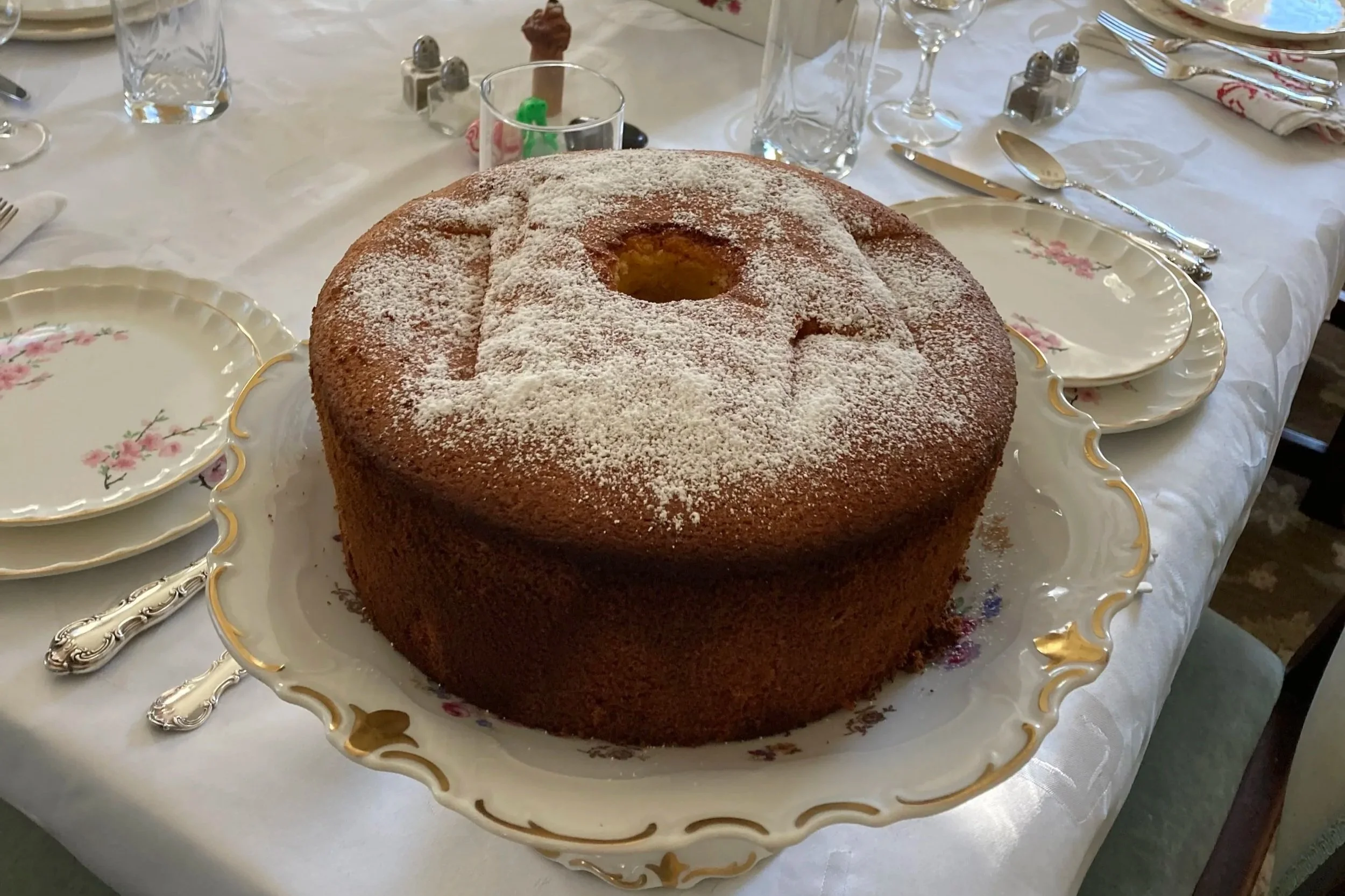
Photo: Sara Winer
SARA WINER’S MAJESTIC
PASSOVER LEMON SPONGE CAKE
Local baker and chef Sara Winer has transformed her love of baking for the Jewish holidays into a successful small North Shore venture. Her Lemon Sponge Cake for Passover is adapted from her mother Rose Rutstein’s recipe. When the cake went into the oven, Sara’s mother would warn her kids to stay out of the kitchen so the cake, leavened only with stiffly whipped egg whites from 10 eggs, would rise.
Serves 8
10 large eggs, separated
2 cups sugar
4½ teaspoons cold water
1½ teaspoons vanilla
¾ cup Matzah cake meal
¾ cup potato starch
½ teaspoon salt
1 lemon, zested and juiced
Preheat oven to 325℉.
Beat egg whites until stiff and set aside.
In another bowl beat together egg yolks and sugar. Add water, lemon zest, lemon juice, vanilla and salt.
Fold cake meal and potato starch into the yolk mixture, then fold in the stiff egg whites. Make sure the egg whites are completely combined.
Transfer to an ungreased 10-inch tube pan. Bake for one hour. Invert pan onto rack to cool.
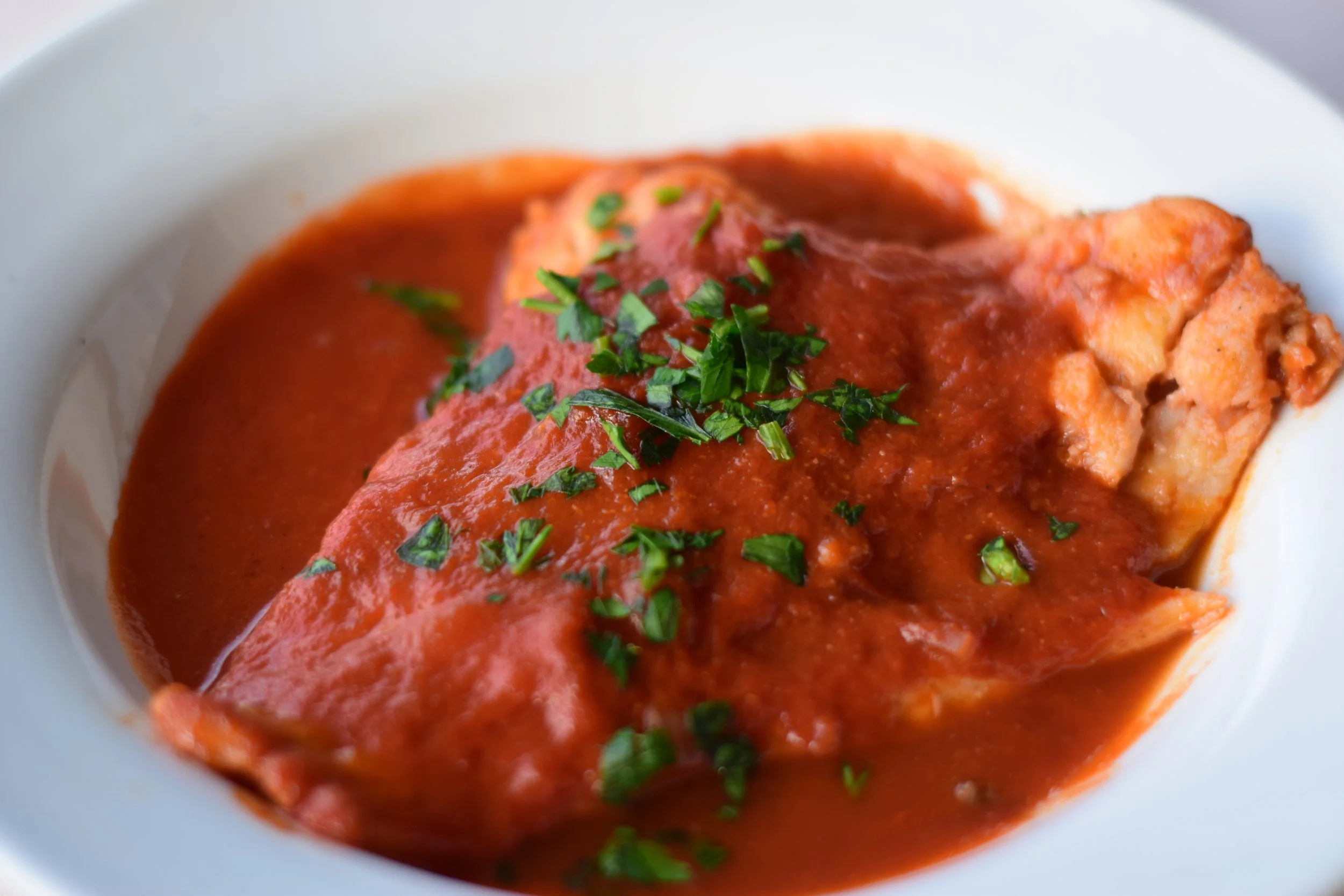
Photo: Adrian Shemtov
AVI SHEMTOV’S CHRAIME: FLAKY WHITEFISH IN LIGHT TOMATO SAUCE
Award-winning local chef Avi Shemtov, owner of Chubby Chickpea and Tapped, a mobile wine and beer catering business, has a sweet spot for this Sephardic fish dish that his father, Yona Shemtov, prepared every Passover. It was a course all its own, Shemtov says. It took Shemtov years to figure out that the distinct flavor his father called coriander was actually cilantro, the leafy, parsley-like herb that produces coriander seeds. A family favorite, Shemtov serves this year-round.
Serves 4
2 tablespoons extra virgin olive oil
½ onion, medium dice
2 cloves garlic, minced
3 tomatoes, medium dice
1 tablespoon chopped cilantro, plus more for garnish
pinch cumin
pinch cayenne
pinch cardamon
1 teaspoon kosher salt, plus more to taste
1 (12–16 ounce) cod filet
Freshly ground black pepper, to taste
In a medium frying pan over medium high heat add 1 tablespoon olive oil. After a minute, add onions and garlic. Sauté for approximately 2 minutes, until onions become translucent.
Add tomatoes, cilantro, cumin, cayenne, cardamon and 1 teaspoon salt. Stir and allow to simmer on medium high heat until tomatoes are broken down. If the tomatoes are not juicy enough, add a small amount of water to prevent the sauce from burning.
In a separate frying pan on high heat warm the rest of the olive oil.
Season the fish to taste with salt and pepper and place the cod filet in the skillet, bottom side down. Allow the fish to brown (approximately 2 minutes) and then flip the filet carefully. Allow to brown another few minutes, until the fish reaches 145°F or when the flesh is opaque all the way through.
Spoon the sauce into a shallow bowl or onto a rimmed plate, and carefully place the fish on top of the sauce. Spoon a small amount of sauce onto the fish. Garnish with a bit of cilantro. Serve hot.
This story appeared as an Online Exclusive in March, 2026.
Editor’s Note: For an additional take on global Jewish cuisine with a local connection, find a copy of Sabor Judio; The Jewish Mexican Cookbook by Ilan Stavans, Professor of Humanities and Latin American and Latino Culture at Amherst College, and Margaret E. Boyle, director of Latin American, Caribbean and Latinx Studies at Bowdoin College. “Sabor Judio isn’t only a cookbook; it is also a vibrant history of Jewish immigration to Mexico from 1492 to the present.”
