
Historic Family Farms: 100 Years and Counting
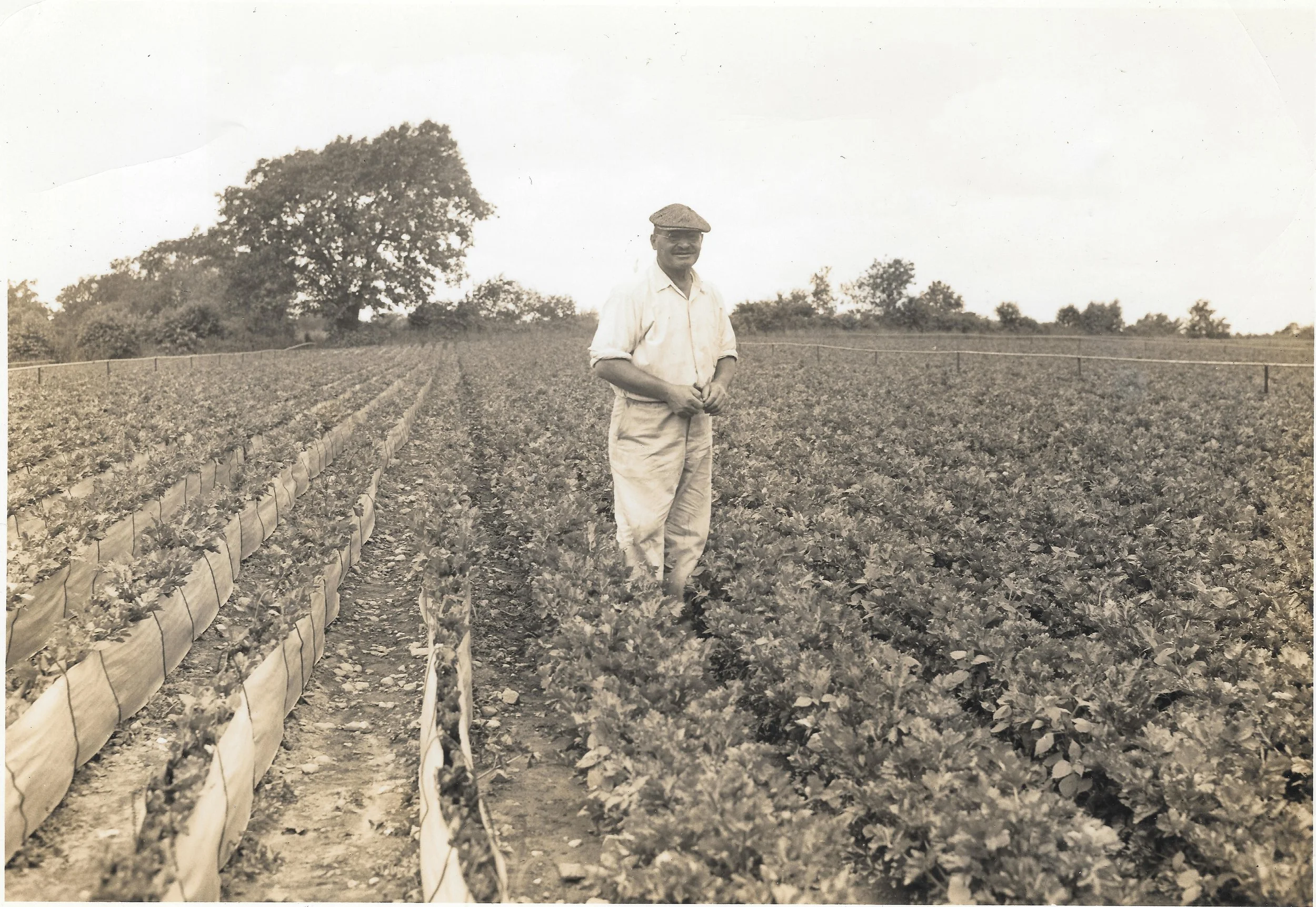
Images courtesy of the Volante and Wilson families
Farming has always been challenging work, and no one understands this better than the families who have been raising crops and animals in Massachusetts for more than 100 years. Within Edible Boston and Edible Worcester’s readership area are farm families who can trace their ancestors back to the earliest settlers of the Commonwealth.
These 100-year-old+ family farms have survived wars, hurricanes, droughts, economic upheavals and the ever-changing whims of their customers. They do it with courage, determination and devotion to their land. They have survived because they are willing to change direction when faced with the insurmountable.
Many of these farms were founded by immigrants who sought a better life for themselves and their descendants in the fields of Massachusetts. And many employ immigrants and temporary foreign workers to harvest crops and work their farmstands, both seasonally and full-time. But no matter their story, these generations of farmers have in common something essential to their survival: They are keenly aware of the importance of community, an acknowledgement that has stood the test of time. As Tim Nourse, one of the ninth generation at Nourse Farm in Westborough, says, “I’m excited that the community values what we offer: open space and the opportunity to taste fruit right off the vine and vegetables just picked.”
Fran Matheson, whose husband Frank is the seventh generation to own Spring Brook Farm in Littleton, notes: “We’re one of the last farms in our town. I’m proud that we are still here.”
SPRING BROOK FARM, Littleton, established in 1713
Scott Matheson knew that farming was for him the day his father boosted him up into the seat of his tractor so the 5-year old could help plant corn. From then on, Scott recalls, “That’s where I wanted to be.” As the eighth generation of a family whose ancestor was given the land in 1713 for his services as a Colonial soldier, Scott is part of a long line of farmers. They faced many challenges over the years, including wars, weather and competition from bigger farms and supermarkets.
In 2002 the farm was mainly a dairy with vegetables as a sideline. Then a fire destroyed the entire dairy operation and the farm pivoted to vegetables with the addition of strawberries and raspberries.
Today, there are chickens, cows, pigs, goats, lambs, a country store and greenhouses. Scott’s father, Frank Matheson Jr., manages the livestock and grows grain that he custom mixes as feed for them. Their Country Store was built from timber harvested from trees on the farm. It showcases the farm’s own produce, meats, jams and jellies. Its bakery and selection of locally made gifts are proof of the family’s recognition of the changing trends in agricultural marketing.
Scott’s mom, Fran, notes with pride that the farm has been community-minded throughout its history. As the family looks to the future, Scott is optimistic. “We’re planting [more] perennial crops,” he says.
NOURSE FARM, Westborough, established in 1722
Nourse Farm traces its history back to the Salem witch trials of 1692 and Rebecca Nurse, whose story became the basis for the famed play, “The Crucible.” After she was hanged as a witch, Rebecca’s grandsons escaped Salem and settled in what is now Westborough. Nine generations later Tim Nourse and his siblings are transitioning into leadership roles at the farm their ancestors established. (In the mid-1800s the family changed the spelling of their name.)
David Nourse, Tim’s father, is the owner of the farm; his brother Jonathan is the manager. Jonathan remembers growing up on the farm; it was a dairy at the time. “It was like a big recreation area. As I got older, I’d help bring the cows in from the pasture. We’d feed them and calm them down before milking.”
The farm changed focus to fruits and vegetables in the early 1970s, starting with an acre and a half of strawberries. “We placed a small ad in the local paper advertising pick-your-own berries,” remembers Jonathan. “Traffic was backed up all along Route 30. They picked us clean the first day.” The farm added blueberries, raspberries and an orchard of peach trees to its pick- your-own offerings and shut down the dairy operations by the mid 1970s. Now, in addition to pick-your-own fruits, the farm’s store offers a wide variety of produce grown on 20 acres of the farmland.
For the extended Nourse family, with some members now living as far away as Hawaii, the farm in Westborough is a touchstone. “Knowing that it’s still here sustains us,” Tim says.
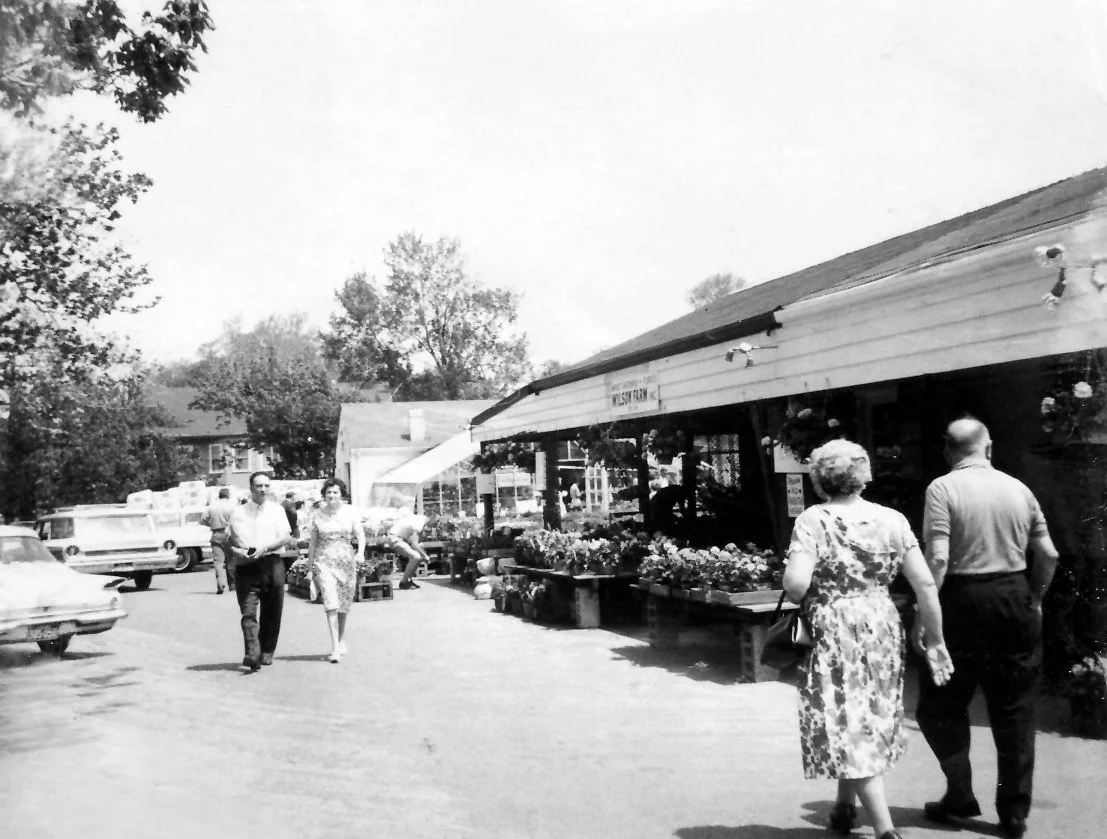
WILSON FARM, Lexington, established 1884
Wilson Farm was founded by Irish immigrant James A. Wilson and his brother-in-law, who together bought 16 acres of land. Today, the fifth generation helps run a farm and retail operation that includes 33 acres in Lexington and 500 acres in Litchfield, New Hampshire. There’s a warehouse in Boston for wholesale operations; an 8,500-square-foot barn housing a large farm stand, bakery and kitchen; and a 37,000-square-foot greenhouse for plants and, in the off-season, events. Over the years the family has expanded its crops of produce from beets, carrots and cabbage to more than 125 varieties of vegetables, fruit and cut flowers.
Scott Wilson (fourth generation) and his daughter, Lauren (fifth generation), both grew up across the street from the farm. They, along with Scott’s cousin Jim Wilson, his wife Cindy, and their son-in-law Nick Vigliotti, work alongside their employees at the farm and farm stand every day.
Lauren remembers playing with her many cousins in the field when they were children; today she’s delighted that her 3-year-old son—who represents the sixth generation— feels at home in the farm stand.
Growing produce has always been challenging for farmers, with short-term problems like weather, the economy or supply of labor. One of the biggest challenges for a farm today is keeping up with changing trends in how its customers buy and use the produce it grows.
“You can’t keep doing what you’ve always done,” says Scott. He uses the example of the farm’s butternut squash to explain how the farm’s sales and marketing of its produce has evolved.
“We noticed people weren’t buying whole squash, so we started packaging peeled squash. Then we added peeled and chopped squash. As fewer people were cooking at home we started featuring pre-cooked squash from our kitchen and for the past few years we’ve contracted with an online ordering service so customers can order precooked squash delivered to their homes,” he explains.
Marketing has always played a role in the farm’s operations. “Sixty years ago when we had an excess of beets, my mother created a recipe, brought it to the farmstand and offered samples,” Scott says. “It soon became a weekly sampling program that our customers look forward to.”
Lynne Wilson, Scott’s mother, often led tours of the farm for students in the Lexington schools. “I still run into people who remember coming to the farm in fourth grade,” Scott says. “Those tours helped build customer loyalty.”
ALLANDALE FARM, Brookline and Boston, established in the mid-1800s
The 130-acre Allandale farm, which straddles the line between Boston and Brookline, was originally included in land given to Captain Joseph Weld by the Colonial Massachusetts legislature. Weld’s descendants, the Lawrence family, have operated the farm for five generations.
Edward Lawrence remembers a childhood “full of animals and crops—horses, cows, pigs, chickens, acres of vegetables and flowers.” In the winter, huge draft horses were out on the farm’s frozen ponds hauling blocks of ice, and in summer pulling carts stacked 20 feet high with hay to feed the farm’s animals.
The family’s commitment to keep the land in agriculture instead of real estate development prompted the farm to become a commercial operation in the 1960s. Back then, the corn harvest sold for 67 cents for a dozen ears. Today, there are multiple greenhouses including one that’s 10,000 square feet, growing seedlings for the farm’s extensive crops of vegetables—including corn—and flowers. Although the farm is not certified as organic, all of its produce is sustainably grown with organic farming practices.
The Lawrence family worked with the City of Boston to put 30 of its acres into Agricultural Protection Restriction so that it will remain a farm and never be developed commercially. “The family has been committed for generations to being good stewards of this land and will continue this commitment into the future,” says Helen Glotzer, the farm’s CEO and general manager.
Glotzer notes the farm’s latest project proves the family’s commitment to stewardship of their land: Under construction is a new farm store powered by solar panels, sustainably built for year-round sales of the farm’s products and those of other local farms.
Having a new store that provides a year-round venue “is an exciting prospect to provide more good jobs in agriculture in Boston and Brookline,” she says.
VOLANTE FARMS, Needham, established in 1917
Teri Volante Boardman and her brothers, Steve and Dave Volante, are the fourth generation of a family farm started by their great-grandparents, who came to Massachusetts from Italy. The Volante descendants are proud to say that farming is the only job they’ve ever had.
“We were so fortunate to grow up seeing hard work modeled for us by our parents and the farm’s employees. Some of them have watched us grow up,” said Teri. “We always say we’d never ask any employee to do something that we wouldn’t do ourselves or haven’t already done. We’re here every day and are as hands-on as we can be.”
Teri remembers when her grandfather Ferdinand would stop by the farm in the morning with a pan of sweet peppers fried in olive oil. “We’d grab a chunk of warm bread, fill it with peppers and that would be breakfast,” she says. Those Volante cornetta peppers are historic. “One of the Volante brothers brought the seeds with him from Italy,” Teri says. “They are the last peppers to ripen in the summer and they are the sweetest.”
You can buy cornetta pepper seedlings as well as an array of plants and flowers, and, in season, pumpkins and Christmas trees in the Volante greenhouse.
The Needham farm has branched out from its roots as a truck farm selling produce. Today, Volante Farms grows 150 varieties of fruits and vegetables on 31 acres across three fields in town, and their “home” field was USDA Certified Organic in 2024. There’s a spacious farm stand showcasing their own produce as well as locally sourced grocery items. The farm stand includes an in-house deli, kitchen, butcher shop and bakery. During the off season in the greenhouse there are wine and cheese tastings, cooking classes and mah-jongg lessons.
“I’m especially proud and grateful that we’ve had the opportunity to grow and expand the business and maintain good relationships with our customers, with other farms in the area and our suppliers,” Teri says. “There are nine fifth-generation Volantes and we’re hoping at least a couple of them will want to continue the family business.”
VERRILL FARM, Concord, established in 1918
Verrill Farm was founded as a dairy farm; over the years the family expanded the acreage and added fruit and vegetable crops.
Jennifer Verrill, the third generation of the family, grew up on the farm and has fond memories of helping to feed newborn calves and riding her pony. By 1990, the price paid to farmers for milk had decreased so much that it was no longer sustainable to continue as a dairy. Jen’s parents, Stephen and Joan Verrill, decided to sell the dairy herd and pivot to produce farming. Today the Verrill family farm grows vegetables from arugula to zucchini; also strawberries, pumpkins and flowers. They’re locally famous for their asparagus and tomatoes, and they raise their own cattle for grass-fed beef to sell at the farm stand.
Stephen Verrill was involved in the efforts to preserve open space from over-development in the town of Concord. In 1982 the Verrills placed an Agricultural Preservation Restriction (APR) on 200 of the farm’s acres.
After college, Jen had honed an interest in baking by working at area restaurants. The Verrills converted the former milking parlor into a kitchen and bakery, adding pies and other baked goods to their farm stand. Today, there’s also an in-house deli and a catering business. In a heated greenhouse nearby many of the Verrill crops are started from seed. Seedlings, as well as flowering plants, are sold there, too.
Over the years the farm has met challenges ranging from weather to scarcity of labor and pricing competition from supermarkets. “We’re not a giant farm, compared to farms in other parts of the country; everything we grow is hand-picked,” Jen says. “We can’t compete on price.” Her daughter Chloe, the fourth generation to work on the farm, worries that the high cost of land will make it harder for young people to become farmers.
Jen is hopeful that, like her parents, farmers will continue to pivot when market conditions change. “Farmers are always trying to figure out new things to grow,” she says.
This story appeared in the Spring 2026 issue.
