
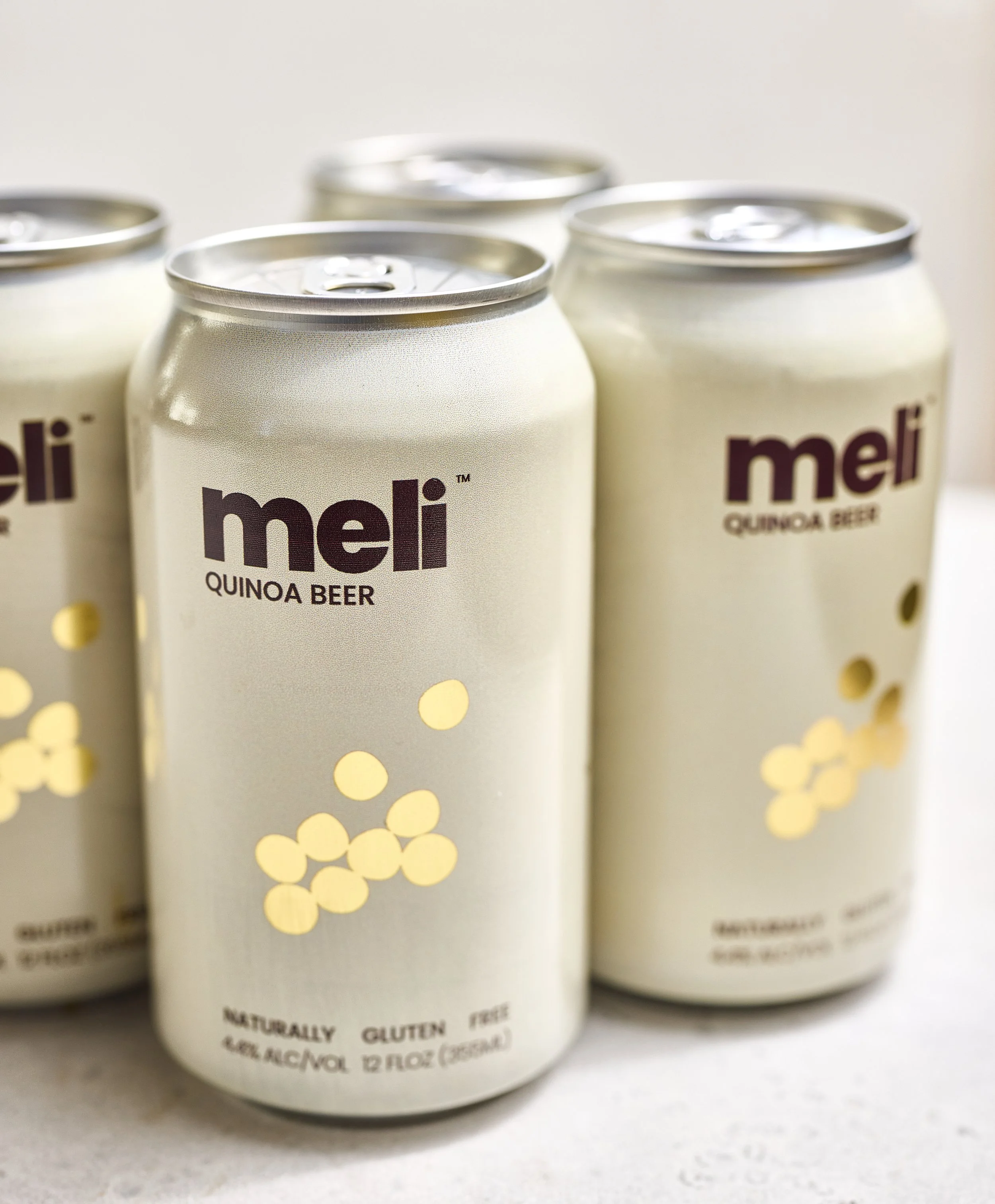
Meli Quinoa Beer

Photos by Michael Piazza
In 2019 Samara Oster and her family went to Peru. Prior to that trip Oster had primarily been a wine drinker, but didn’t love the fact that it often left her with a headache. After a long hike they settled in at a restaurant that served quinoa beer.
“My mom and I were not beer drinkers, but we like quinoa, and the novelty of it appealed to us,” recalls Oster. They were instant fans, and surprisingly so was everyone else at their table, even the traditional beer drinkers.
“That was the penny drop moment,” says Oster. “It had a much lighter, more approachable flavor profile than what we had associated with traditional beers. We were, like, ‘This is good! We could get behind this!” Conversation turned to the lack of a similar option in America, and how introducing a healthy, refreshing beer to the masses could be a viable business.
As with most ideas that occur on vacation, after returning home, everyone resumed their everyday lives and the idea fizzled out. But in 2021, when Oster was in business school at MIT and was taking a class on entrepreneurship, she returned to the idea during a group project. However, to really develop the product she envisioned, Oster realized she would need expert help. She linked up with two professors who had received PhDs in the MIT food science program (which closed in 2020), and the grand experiment began.
Three years and 100 formulations later, Meli was born. It involved tasting a lot of beers to hone in on the unique flavor that had sparked the idea in the first place. There was also the technical challenge of working exclusively with quinoa. Other breweries that used the grain often mixed it with barley, millet or buckwheat. Because quinoa is so tiny, it is hard to brew without clogging machinery.
“We’ve definitely had some moments where I said, ‘I think this is impossible,’” recalls Oster. “Every time we move into a new facility, they have different equipment, and there’s the knowledge curve of teaching that team how to work with quinoa without killing their machinery and stopping them from producing any beer at all.”
Meli started by contracting with a small brewery in New Hampshire. They currently operate out of a 50-barrel facility in Lowell, and are looking to ramp up production to expand beyond the Massachusetts market. Oster is grateful, however, that Meli got its start in such a hotbed of brewing innovation.
“The fact that we’re in this world in Boston that is so diverse in terms of the brewing landscape has been really meaningful to our start,” says Oster. She has a background in the fashion industry, where trade secrets were not widely shared. Brewing has been a different story. From having a wealth of experienced thought partners to folks willing to lend specialized equipment to being able to do small-scale research and development with experts, Oster has felt supported: “It is such a pleasant surprise to be in this warm embrace of fellow brewers. It’s been an awesome benefit to us as we’ve started.”
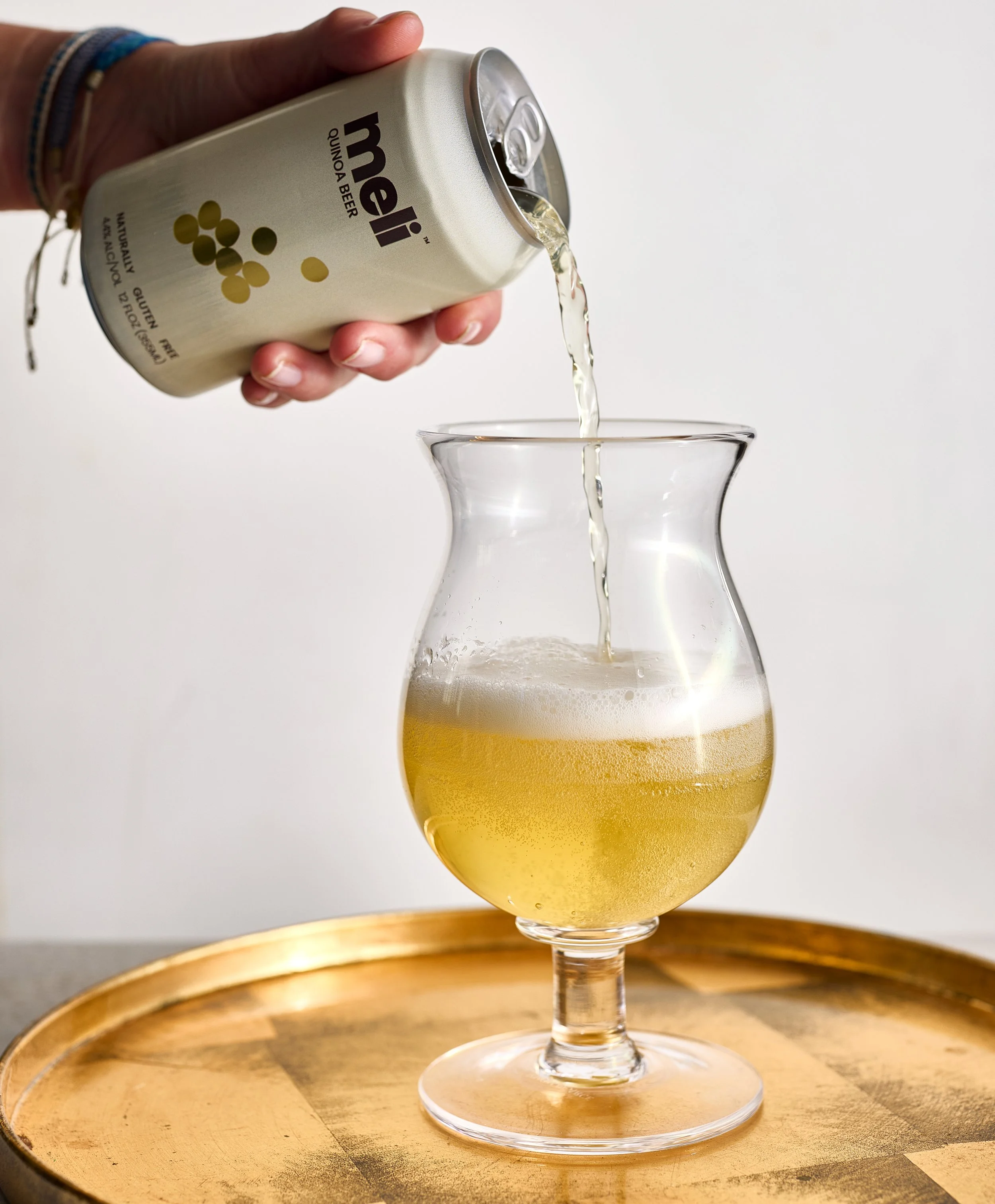
As the market for alternative alcoholic beverages like hard seltzers, hard kombuchas, and ready-to- drink cocktails continues to grow, Meli finds itself in an exciting moment. The beverage not only has a crisp, earthy and subtly sweet taste, it is healthier than most beers. Since it doesn’t contain gluten it doesn’t result in the uncomfortable bloat people often get when consuming beer. It is also 4.4% ABV, sugar free and features natural vitamins and minerals, plus one gram of protein per can.
“We have the same amount of potassium in one can of Meli as in a small banana,” Oster says. “So for people who have just had a big workout and are looking for a brew to crush afterwards it’s a nice electrolyte boost.” Health benefits aside, it is also downright refreshing. In the end Oster’s stroke of vacation inspiration did come to fruition, and that calls for a (quinoa-based) toast.
This story appeared in the Spring 2026 issue.
