
Her Latest Campaign: Julia Leja Shifts From Politics to Produce at the Boston Public Market
Photos by Michael Piazza
Julia Leja has spent much of her career moving at lightning speed: absorbing mountains of information, listening to people with wildly different perspectives, making quick decisions while also keeping the big picture in focus.
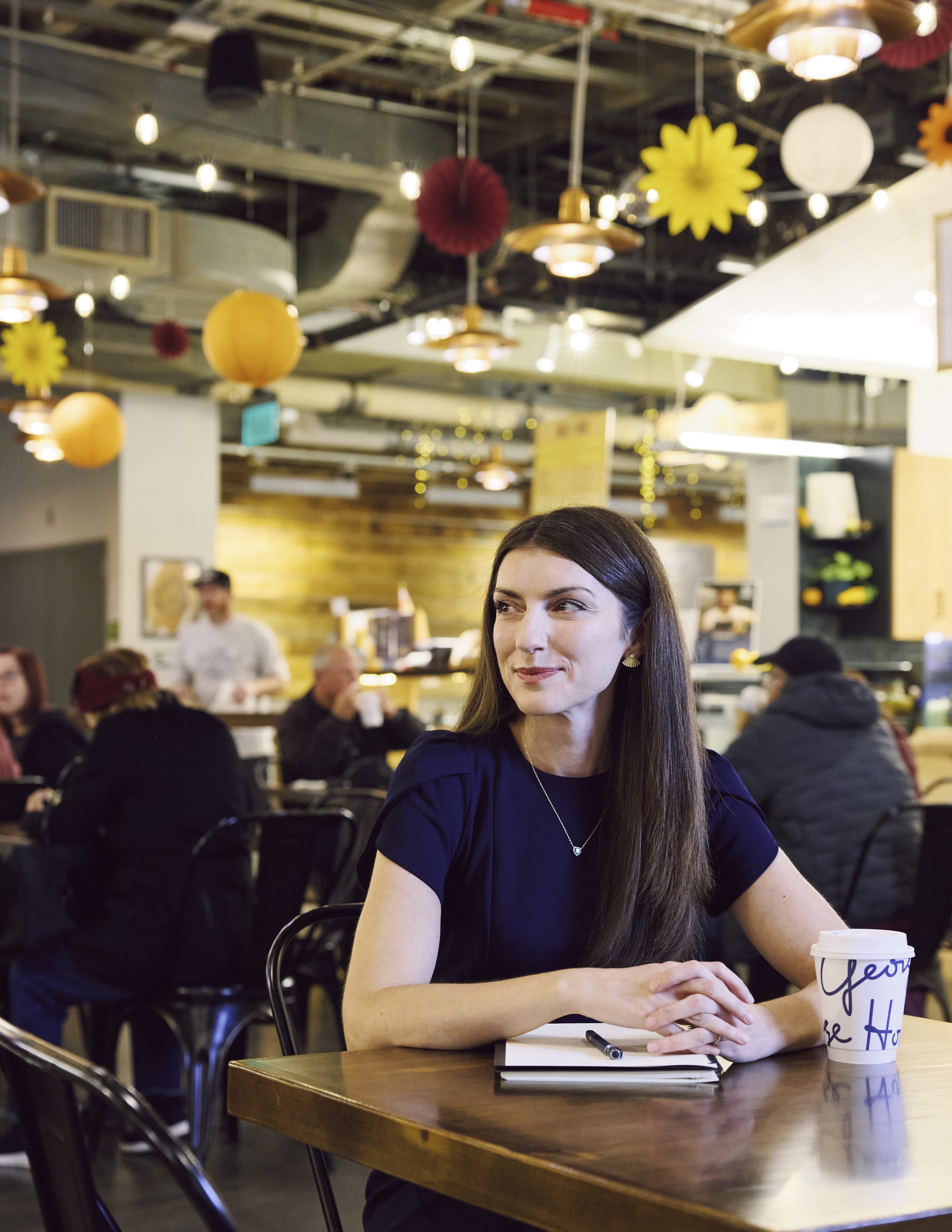
So maybe it isn’t such a strange leap that Mayor Michelle Wu’s former political campaign manager is now running the Boston Public Market (BPM) as its third CEO.
From the outside, moving from campaign war rooms to a nonprofit food market might seem like a pretty big career pivot. But Leja sees plenty of overlap with her new job at the year-round indoor marketplace packed with goods from New England farmers, fishers and artisans. Both jobs involve organizing people, solving problems quickly, listening to a lot of opinions and an absolute dedication to the people of Massachusetts.
The difference? Today, her office has a lot more tomatoes.
“This job is interesting every day,” she says of the role that began in March 2026. The most recent highlight? Being a judge at the MDAR Tomato Festival, tasting 34 heirloom tomatoes and grading them on a rubric outside on the BPM patio. “I took my judging duties very seriously,” she laughs.
Taking things seriously (with a smile, of course) is hardworking Leja’s MO. Before working with the BPM, she had spent over a decade orchestrating high-stakes campaigns, from serving as the campaign manager who helped propel Mayor Wu to her historic first City Council win in 2013 to working on Hillary Clinton’s 2016 presidential campaign, then eventually returning to lead Mayor Wu’s political committee through a successful reelection campaign.
“Like this job, campaign management is about synthesizing a lot of information and making quick decisions, listening to a variety of different and very engaged stakeholders, problem solving, relationship management and doing the big and the small,” Leja says. “Listening, open-mindedness, flexibility and staying calm under pressure are also strengths in both jobs. No two days are the same!”
CONNECTING CITY AND COUNTRY
Leja’s appreciation for New England local agriculture and food systems actually began on the campaign trail. Early in her career, while interning at the State House and working on Governor Deval Patrick’s campaign, she found herself traveling to unfamiliar corners of the Commonwealth.
“As someone who came to Massachusetts as a young adult and didn’t grow up here, those experiences introduced me to many parts of the state I’d never been to or heard of and to communities and events I’d never otherwise know, including the rural parts of the state and the diversity of the agricultural economy,” says the Vermont native, who was educated at Boston University after growing up in Colorado.
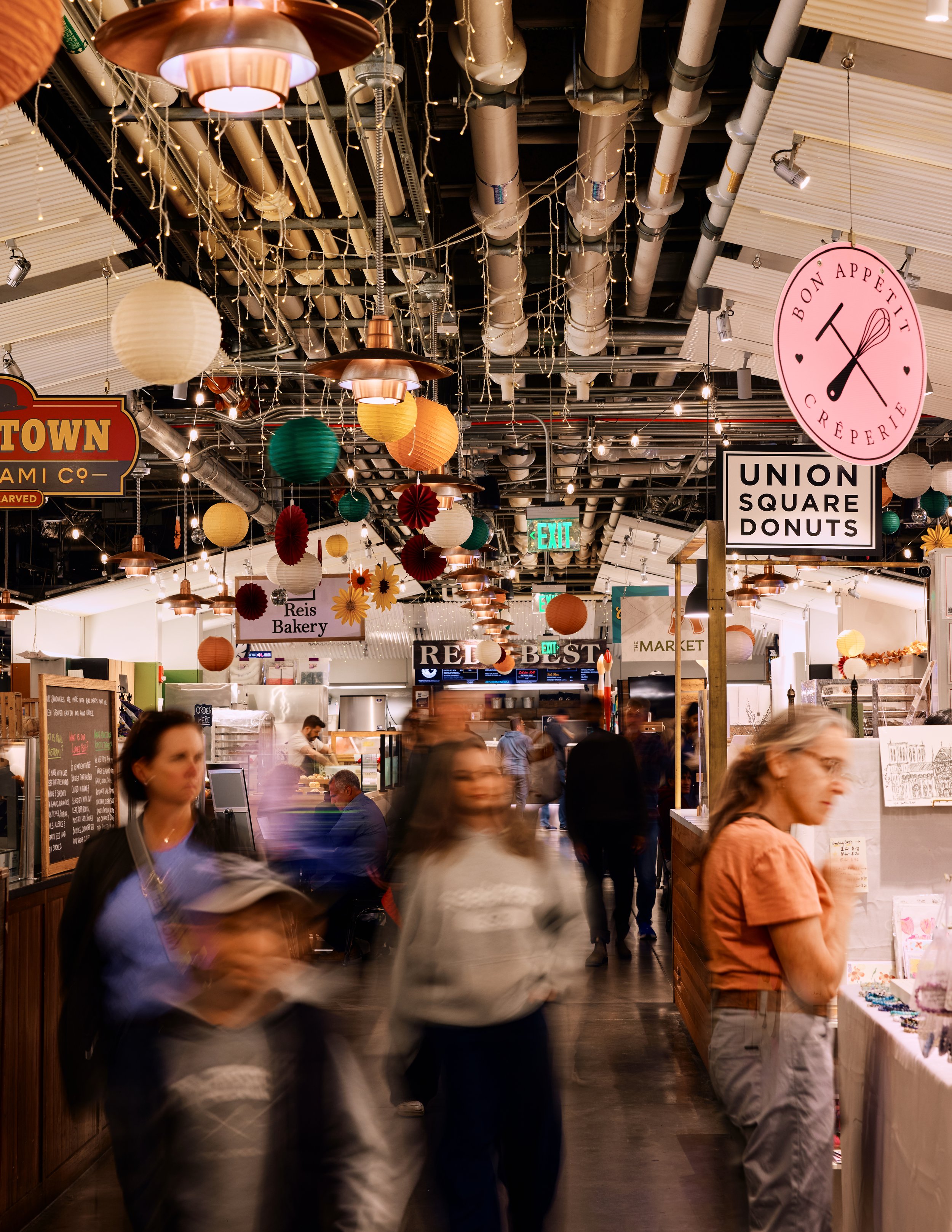
You can see that diversity throughout the 28,000-square-foot BPM. The vendors inside represent the vast geography of New England’s food producers. When a customer buys a piece of fish from Red’s Best, a scoop of ice cream from Crescent Ridge Dairy, a box of heirloom produce from Siena Farms or a carton of Roxmont strawberries, they aren’t just making a grocery store transaction.
As Leja notes, “Every dollar spent at the Boston Public Market supports New England growers, makers, and the extended local economy.”
Its vendors represent more than 48,000 acres of New England farmland and more than 1,500 small-boat fishers. In a time where big name brands dominate the grocery aisles, the BPM acts as an essential bridge between rural producers and urban consumers.
LEJA’S FAMILIAR PLACE
Long before her email signature read CEO, Leja was already treating the market as her unofficial headquarters.
“I’ve been calling BPM ‘my office’ for years now. I was just always here,” she explains. “I've been a loyal customer since it opened, in every way you can be. I have meetings here, host events here, bring my kids here, bring out-of-towners to visit and I holiday shop here. One of my qualifications for this job is that I really understand the customer and the rhythm of the market.”
That familiarity with the market came in handy during Leja’s whirlwind first six months on the job. Summer 2026 brought a surge of energy to downtown Boston, fueled by the nearby visiting Tall Ships and the BPM’s location on the doorstep of City Hall Plaza’s World Cup excitement. To meet the challenge, Leja’s team leaned heavily into the market’s role, welcoming visitors (and bagpipers) from all over the world.
“We [stepped] up to meet the crowds and the excitement by staying open late and activating our space as a community hub,” she explains.
MORE THAN A MARKET
Leja praises the market for its humanity. “There's a lot of talk about AI these days. When I look at the market, I marvel at what only humans can do. Taste, smell, create, plant, grow, roast, design—and, most of all, gather,” she observes.
The marketplace’s roster continues to evolve. Short- and long-term pop-ups keep the mix changing, giving regular shoppers a reason to see what’s new every day. One of the newest permanent additions is Marzae, a natural winery and tasting room that offers casual farm-to-table counter service throughout the day and a seasonal dining experience by Chef Jonathon Kirk in the evenings.
Beyond its role as a vibrant dining spot and grocery destination, the BPM also operates as a selfproclaimed “Market on a Mission.” By providing affordable, subsidized retail space in the high-rent heart of Boston, the nonprofit association gives small, independent businesses a launchpad they otherwise couldn’t afford. Through programs like its Entrepreneurship Forum Competition powered by Citizens, the market actively educates startup owners and awards free retail opportunities.
This past fall, upon completing a six-seminar series and small-business pitch contest, three local businesses were awarded the opportunity to join the market rent-free. Of the three winners, two are women-owned businesses, and all three are minorityowned: Ellevate, a zero-proof prebiotic margarita brand; The Real Chai and its premium loose-leaf blends and ready-to-drink bottled masala chai; and CasiFit Meal Prep, weekly rotating meals authentic, diasporic Afro-Caribbean cuisine.
Fighting food injustice is also baked directly into the market’s pursuit. Through partnerships with the Supplemental Nutrition Assistance Program (SNAP) and the Massachusetts Healthy Incentives Program (HIP), the BPM has facilitated over $6.6 million in healthy food access for low-income residents since 2015. It ensures that fresh, local, nutrient-dense food remains a right, not a luxury.
WHERE COMMERCE MEETS COMMUNITY
For Leja, managing a family of two young boys ages 3 and 5 amplifies her desire to keep the market accessible and family-friendly. It’s a space where parents can bring toddlers to story time or puppet shows, a tourist can sample New England clam chowder or local coffee brews, couples can up their date night ideas with craft classes, and neighborhood residents can grab their weekly groceries, all under one roof.
In 2025 alone, the market hosted 599 events, ranging from children’s activities to neighborhood networking nights, and 77% of them were entirely free to the public. Nightly events have included NFL football trivia, paint-and-sips, spice blending workshops and more. Coming this March is the annual Fiberfest, a festival that brings together New England fiber farmers, producers and crafters to show (and sell) their fiber art and goods and offer activities and workshops.
The BPM Foundation’s annual Harvest Party fundraising event raises critical capital needed to keep the market’s extensive community programming running, while also celebrating the bounty of the New England season with crowd-pleasingly giant pumpkins.
“I appreciate what [the market] is and what it can be,” says Leja. “I am used to organizations that do a lot with tight resources, and the amazing market staff and vendors deliver so much for our community every day. I'm just very proud to be a part of it.”
When it comes to the BPM continuing to be a gathering place for the Boston community, Leja is mostly excited about the programming they have in place to get those unfamiliar with the market to stop by and enjoy it.
“Whether you have a plan or not, there’s always something to do at the market,” says Leja. “Whether you’re alone or with a group, hungry, curious, or not quite sure yet, there will be something to delight you at the BPM.”
100 Hanover St, Boston
bostonpublicmarket.org
