
Edible Food Find: Spoonweather
Photos by Michael Piazza
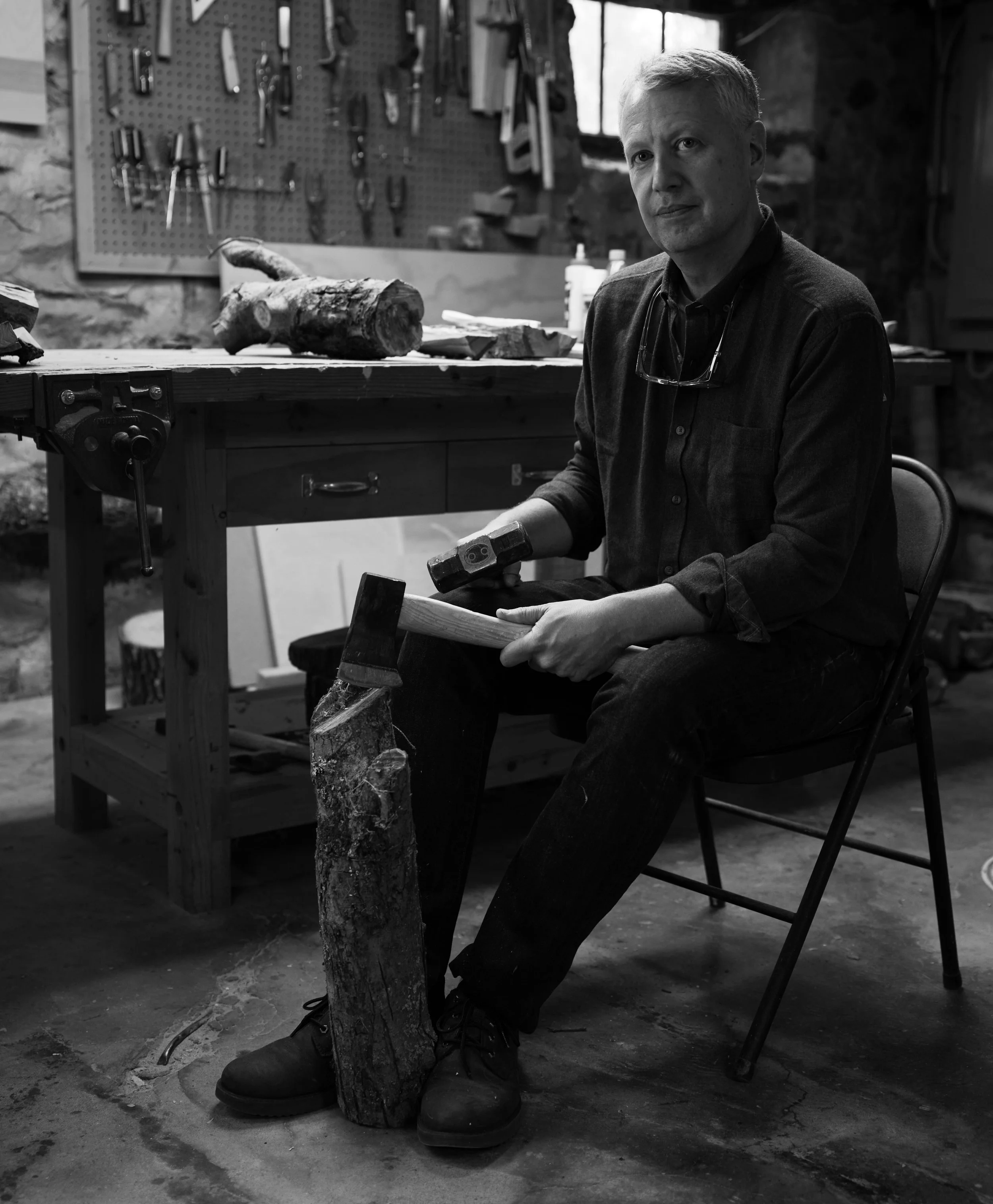
Before Steve Clark even opens the door to the woodshop in the basement of his family home, he rattles off descriptions of logs of all shapes and sizes stored in the back of the garage.
There’s white and black birch, maple, American chestnut, and even remnants of a downed apple tree from a fellow Needham resident’s back yard. The latter, a knee-high log about the circumference of a basketball, will become roughly 40 wooden spoons.
“There’s so much amazing wood around town,” marvels the 49-year-old woodworker.
Clark will soon take those logs downstairs and get to work on carving them into spoons. Born out of a Covid pandemic-era hobby, back in the dark ages of 2020, Clark noticed a pattern when walking his golden retriever. Freshly fallen wood lined the streets—and was then cleared away. He started to gather branches on their walks before they went to waste, and began carving them into spoons.
“It’s like my version of knitting,” Clark says, “doing something with my hands.”
A longtime woodworker trained in the woodshops of Air Force bases while serving the country, Clark’s inspiration to create what is now his Spoonweather business found him the way many people find a new hobby: scrolling social media.
More than a half-decade later, the corporate analytics professional and Chicago native who moved to greater Boston in 2007 has carved more than 2,500 spoons. All come from wood found in Needham or Bridgton, Maine, where Clark’s family owns property. The business’s name itself comes from a joke with his two children, Caroline and William, who are now college students. During a good thunderstorm, Steve will describe the weather as “spoon weather,” because he knows that usable wood will soon fall.
Sales are split roughly in thirds between website orders, craft markets and inbound requests. Those custom orders range from a grandmother commissioning spoons for the six women in her family, to homeowners transitioning a dying walnut tree into spoons with their address engraved, or—in a humorous twist—when someone’s dog ate a carefully crafted wooden spoon brought back from an overseas trip and they wanted a re-creation.
Those personal stories alongside locally sourced wood make up Spoonweather’s two key tenets:
“It’s like the food movement: Know where the things you’re using are coming from, and tell the local story of trees,” says Clark. “The other part of it is the connection with people.”
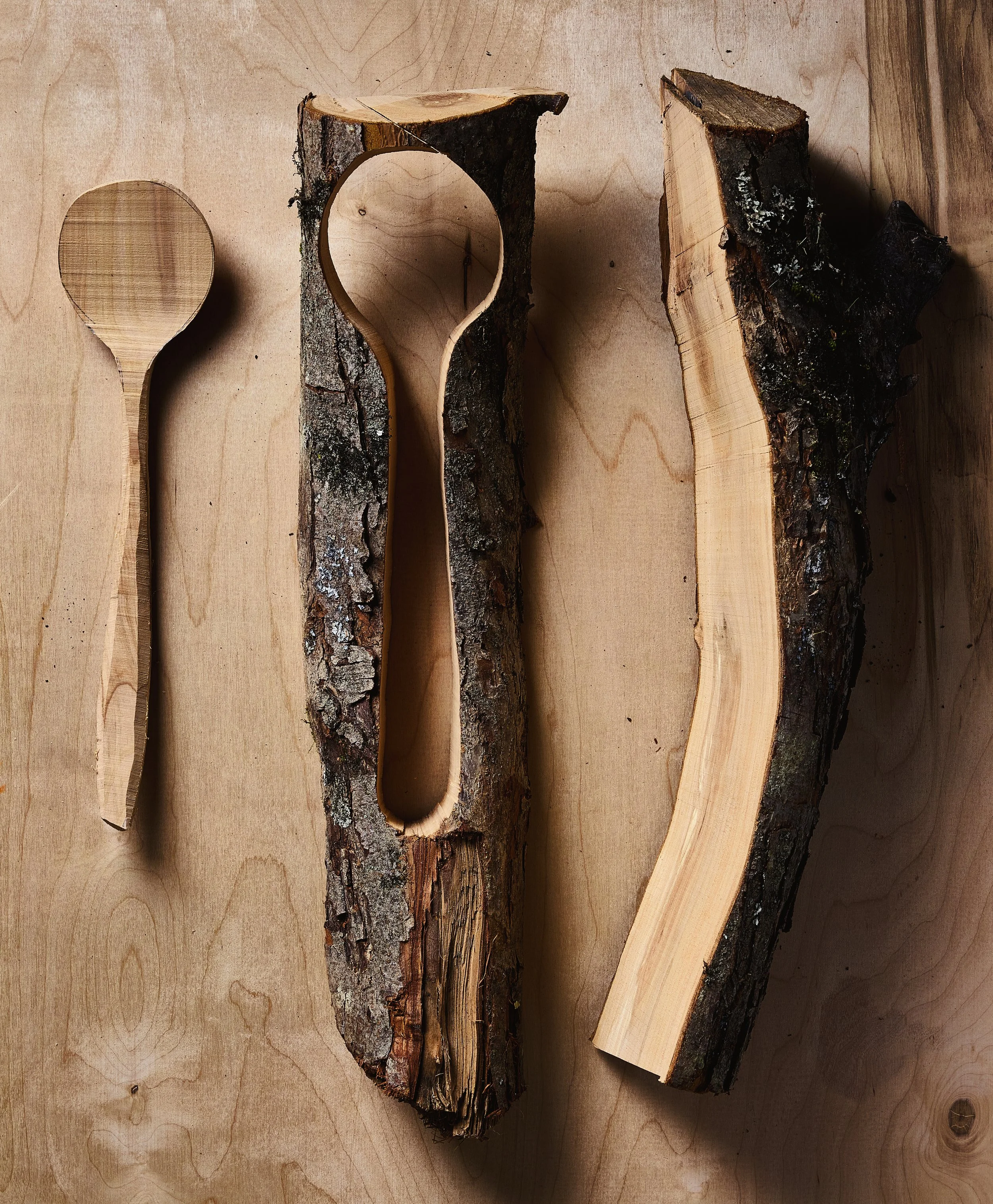
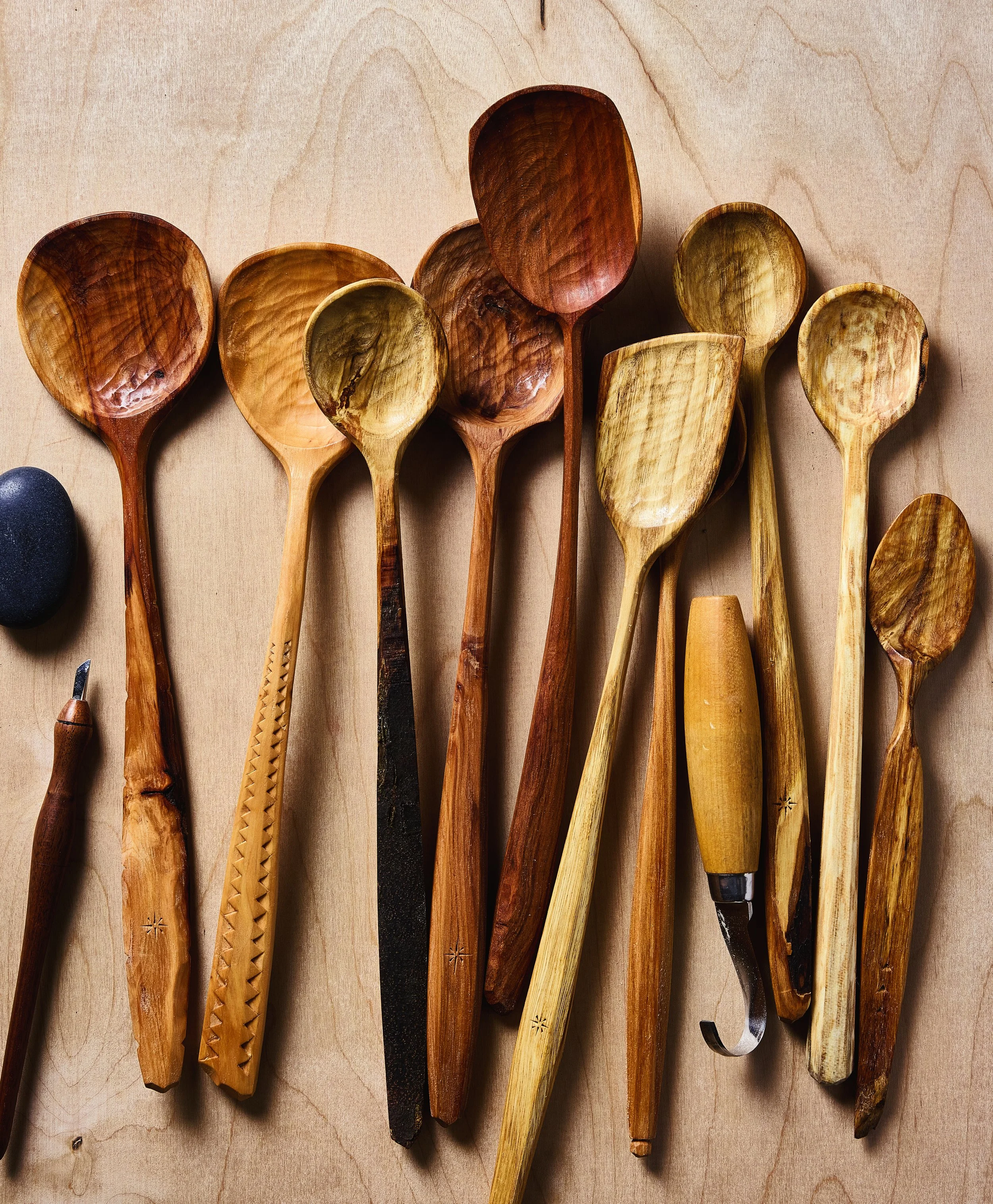
Going from log to spoon is a multi-step process. The wood starts in the freezer to stay damp. It gets split like firewood, then Clark uses a band saw and template to cut a rough spoon shape. He then picks up a carving axe, uses a vise, and then a manual cutting tool called a spokeshave for sculptural cuts. The spoon then sits for a few days to dry, then gets burnished with a river rock for durability and delicately decorated with patterns using precise knives. After all of that, the spoon is oiled with food-safe oil to seal it and make it “hearty” for use. He also sometimes makes spurtles, a well-loved sourdough starter mixing tool.
Clark endeavors to carve one spoon a day, approximately 300 a year. Outside of the spoons itself, he’s enjoyed learning how to operate a small business. He writes a blog on Spoonweather’s website, touching on the carving process, background and history, as well as community topics. The website also doubles as an online store and home for product care material. His @spoonweather_carvings Instagram chronicles business tales, and Clark funnels proceeds back to local nonprofits.
“It’s been this fun, quirky offshoot where it’s so much more than a spoon,” he says. But for Clark, the spoons aren’t collector’s items.
“They’re definitely made to be used. They’re functional art. They last forever.”
This story appeared in the Winter 2027 issue.
