
How The Harvest Keeps Its Cool
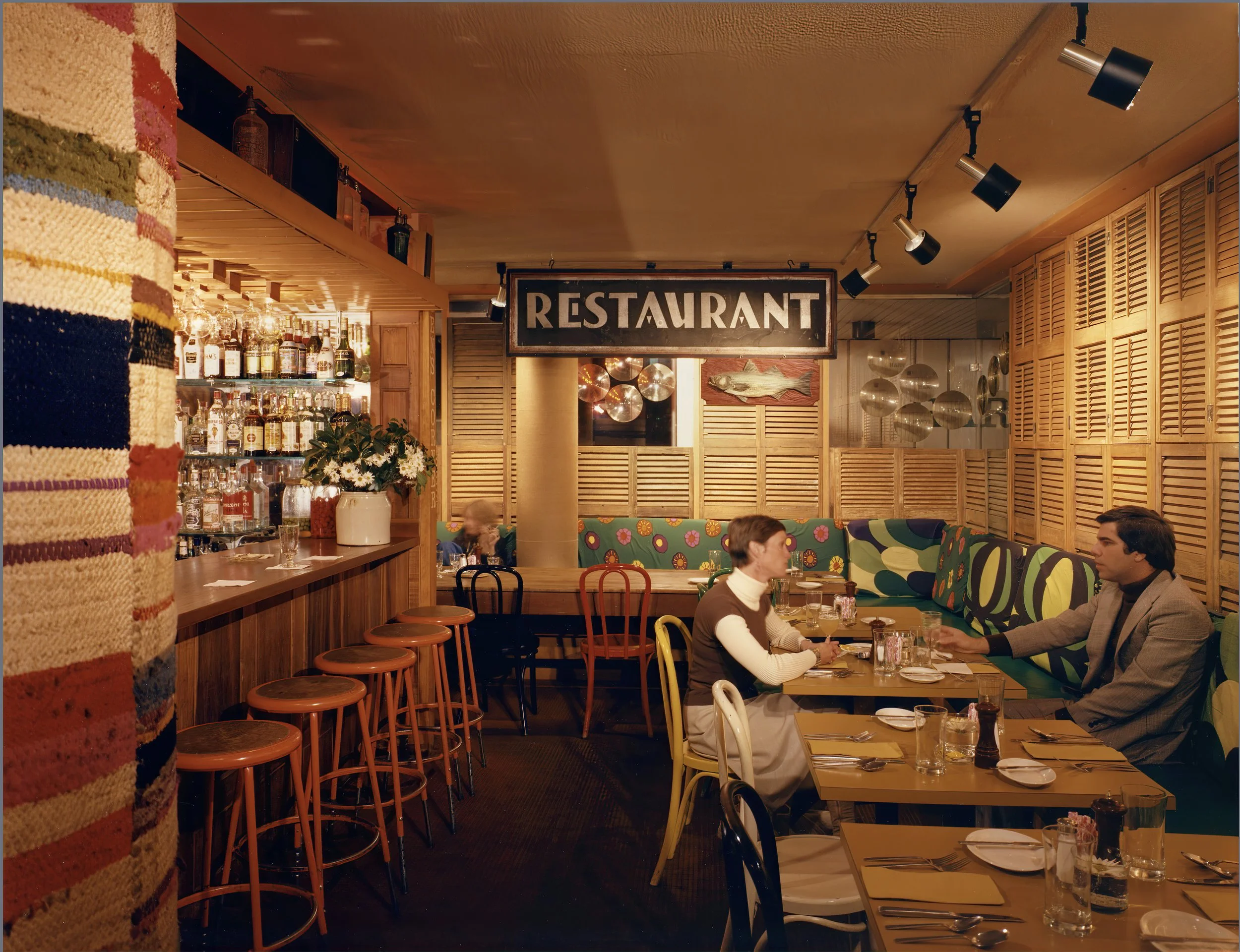
© Historic New England, from the Steve Rosenthal Collection of Commissioned Work at Historic New England
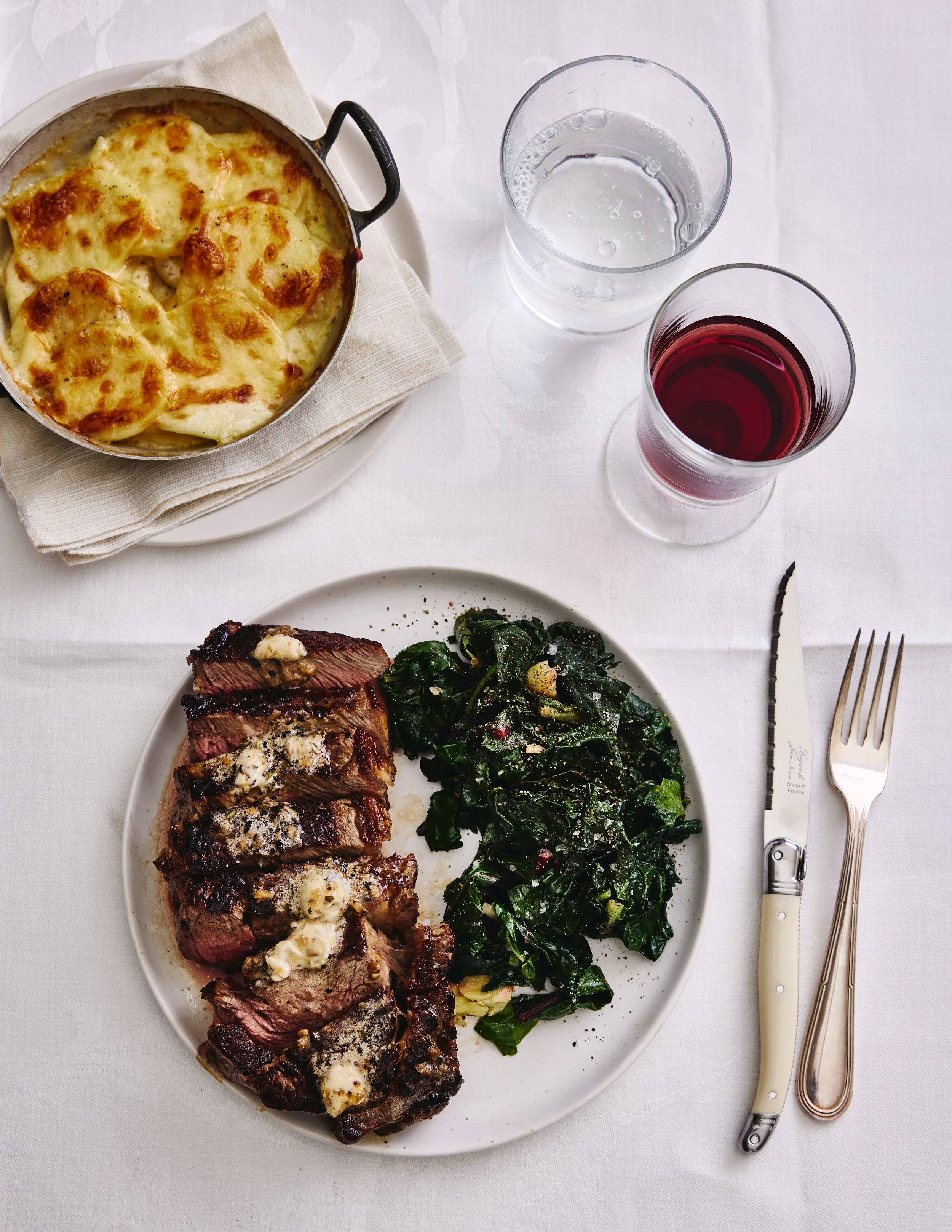
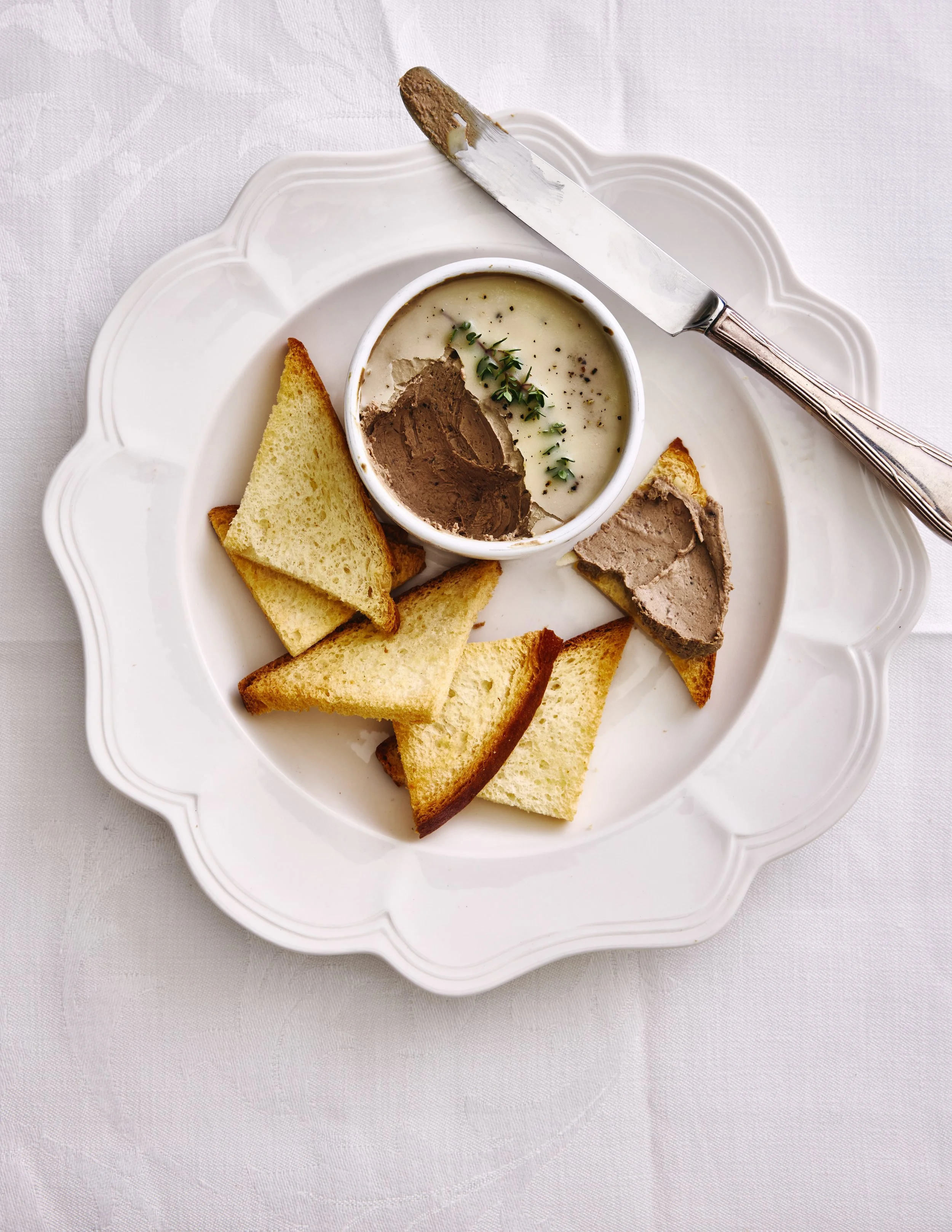
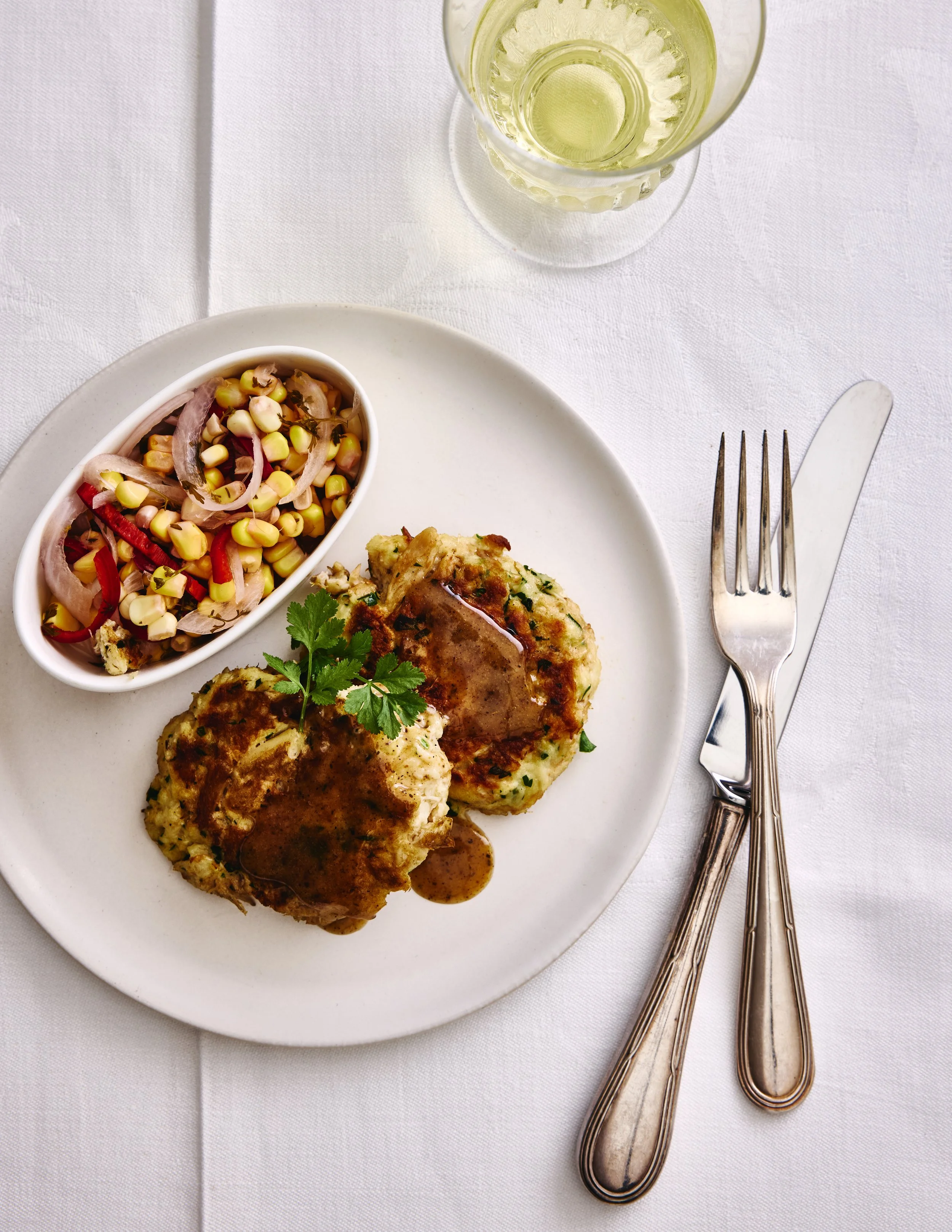
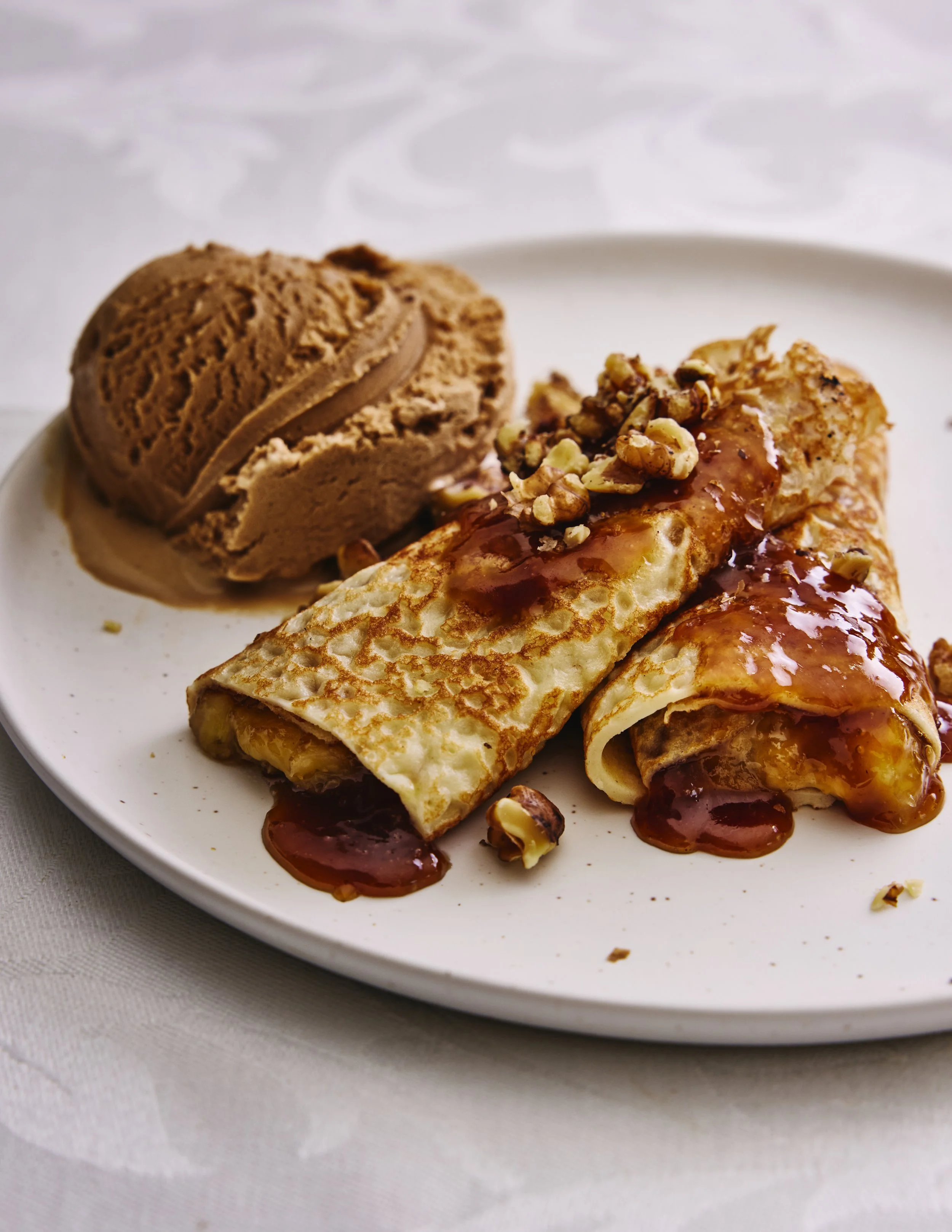
Recipe photos by Michael Piazza / Styled by Catrine Kelty
Hats off to the Harvest, keeping its cool at 50. The bar still packed. The dining room still full. Still the same mix of boho-Ivy-chic guests wearing everything from shorts and Birkenstocks (with socks!) to bow ties and Hermès scarves. While there are iconic restaurants that succeed with a run of 50 years or more, most don’t. And if they do survive, it’s often with a nostalgic nod for a bygone era that emits a certain whiff of stodginess.
Not Harvest. As vibrant and welcoming now as it was during its high-energy birth in 1975. Still a menu that is accessible and fresh, leaning French but also showing off the best of edgy contemporary classics.
I remember going to the Harvest in the ’70s. The excitement of farm-to-table was new. The servers wore Marimekko vests in bright Harvest green, Julia Child was often at her “special table” and the scrawled graffiti on the doors of the women’s room was pure ’70s. “A woman without a man is like a fish without a bicycle,” I read, thinking how clever and imaginative. The graffiti is long gone, and Julia’s memory clings courtesy of the classic Julia Burger. But the extraordinary parade of talented chefs who have passed through its kitchens, most green as grass and barely out of culinary school, represent the spine and summit of Boston’s culinary achievement.
Jimmy Burke. Chris Schlesinger, Frank McClelland. Lydia Shire, Sara Moulton, Barbara Lynch, Laura Brennan, Eric Brennan, Mary Dumont and many more. Nobody stayed too long at the Harvest, a few years at most. It was a perfect jumping-off point for chefs who wanted to be owners.
“It was a lab of sorts for food and talent,” says former Executive Chef Jimmy Burke. Schlesinger observes, “In the ’70s, coming through the Harvest or The Bostonian was like gold on your resume.” Current Harvest Chef Nick Deutmeyer inherits the mantle of culinary history and wears it with ease.
What is the Harvest’s special sauce? Why is it still the place to go for a civilized but not stuffy dinner, lunch, brunch—or drink? Harvest somehow maintains the perfect harmony of restaurant and neighborhood. It is perhaps the distilled essence, the soul center, of Harvard Square.
Founded by architect Ben Thompson and his wife, Jane Thompson, the Harvest was an expression of their zest for European food and style. They also owned Design Research, introducing Marimekko to the American style vocabulary. Among his many other projects, Ben Thompson revisioned Faneuil Hall from a sawdusty down-at-the-heels marketplace to a slick tourism hub that became a global model. His firm, The Architects Collaborative, was influenced by the architecture of the Bauhaus and Walter Gropius. Their offices were upstairs in the building that housed the Harvest, allowing them to be very hands-on owners. Burke remembers that Ben Thompson was fixated on having “good cooking smells,” like burgers’ smoke coming out of the restaurant to the street. But Shire, a one-time Harvest executive chef, says that while both owners were omni-present, she credits Jane Thompson for the Harvest’s success.
“She was a Renaissance woman, ahead of her time,” Shire says. Jane Thompson was a prolific gardener and would always bring vegetables from her garden in Barnstable to the chefs at Harvest. “I’m not sure she was given her due. She was a little shy, awkward socially, but a savant. What she gave to the Harvest— and to all the chefs and the diners—was vast.”
For Shire, it was the first time she had charge of an entire restaurant, and she was just a few years out of cooking school in London. And she was a woman, still norm-rocking for the ‘70s. “It was a heady experience.”
Schlesinger (East Coast Grill) was 22 when he was first hired at the Harvest in 1977. “I’d graduated from the CIA and was trained but had yet to find my passion,” he says. “I found it at the Harvest.”
McClelland (L’Espalier), then the restaurant’s executive chef, hired Schlesinger at $4.25 an hour. When McClelland left, Bob Kincade (21 Federal in Nantucket) kept him on as the sous-chef. “We had unbelievable fun. Working hard and staying up late. We were such kids.”
It was a formative experience for Schlesinger as a chef. “I saw the nuts and bolts of how a chef develops a cuisine.” He recalls that Kincade morphed the Harvest from classical French to a very avant-garde menu, putting lots of wild game like rhinoceros and giraffe on the menu. Soon, Harvest was named by Playboy as the Best Pick-Up Bar in the U.S. “It was a total scene. Harvard co-eds. Professors. All sorts of people. The bar was always hopping,” Schlesinger remembers fondly.
The Thompsons unleashed this group of young people on the public. “We caught it right at the cusp of the fine-dining era. Cooking wasn’t yet professional. It wasn’t a big deal to be a chef. It was like being a truck driver: a good job but not high prestige. So many of the people I still have at the center of my friendship group came from my time at the Harvest,” Schlesinger says.
Burke (Allegro etc.) was 25 when someone told him there was a restaurant in Cambridge that needed a chef. “I didn’t think I could do it. The Harvest was already well-known, and I was to replace its first chef, who was French trained, but I chose to jump right in and was easily working 100 hours a week. I loved it.”
The Thompsons sent Burke to Paris to absorb French food at its finest. He worked in a butcher shop and ate at 3-star restaurants; he says he “tasted, watched and learned so much and brought it all back to the Harvest.” Nouvelle Cuisine hadn’t yet made it to America, “so I was able to bring that back to Cambridge, too. Plus great recipes for charcuterie. Julia Child was always dropping in for lunch. She noticed everything. She would say the meal was fabulous, but the green beans were undercooked. The Thompsons always brought me out at the end of the meals—amazing famous people dined there, like Jackie Onassis. It motivated me. I was so proud to be a chef.”
Moulton was at the CIA in 1976 and needed to find an externship in Boston. She wrote to many restaurants but only the Harvest responded and offered a slot. By the time she arrived at the Harvest, that chef had been fired and she was working for Lydia Shire, who put her on as garde manger.
“I had a one-on-one tutorial with Lydia nightly. She showed how to balance the flavors in a pan sauce. The sound meat should make when it hits the pan,” she says. “It was so busy. We served a daily omelet for lunch, and we always had two pans going.”
In the early days the Harvest kitchen was a revolving door of culinary talent. “By the time I finished the CIA, I came back to the Harvest and Laura Brennan was now the chef.”
One thing Moulton remembers about the Harvest was the level of respect and appreciation Jane and Ben Thompson had for their staff. “They threw a dinner party for the whole kitchen, and they did all the cooking.”
The Thompsons ultimately sold Harvest to another owner, and in 1997 it was acquired by the Himmel Hospitality Group. And somehow, 50 years on it still works brilliantly. Chef Deutmeyer says he knows why.
“We are the cornerstone of the neighborhood. We cook seasonally, and source locally and continue to follow the philosophy of Chez Panisse and Julia Child.”
In my mind’s eye, I see Julia, at Table 102, chomping on her burger.
44 Brattle St., Cambridge
harvestcambridge.com
This story appeared in the Winter 2026 issue.
