
Edible Food Find: Little Wolf Coffee
Photos by Linda Campos
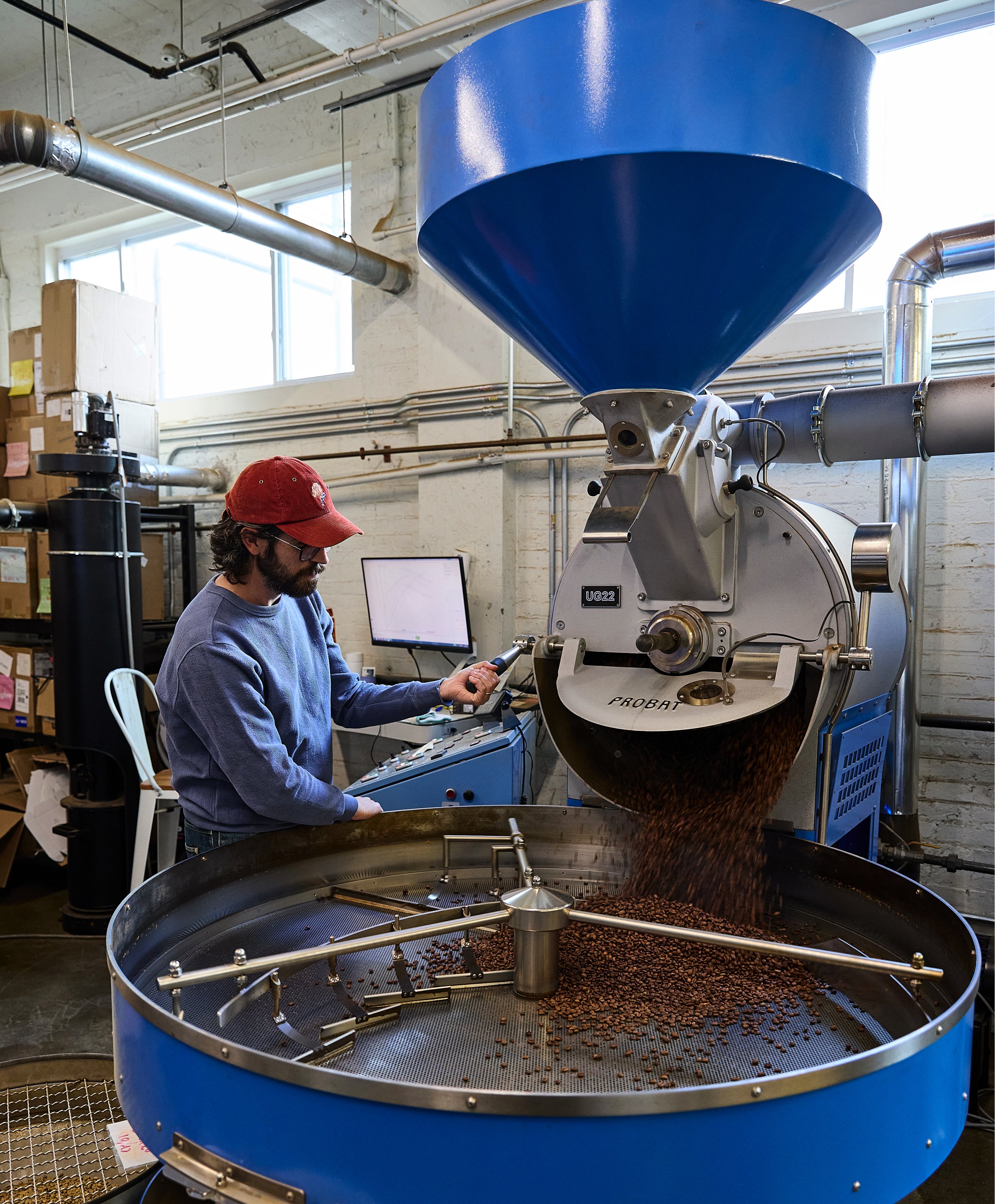
Tucked behind garage doors next to an inviting sky-blue building housing Little Wolf Coffee’s Ipswich café sits a huge Probat UG22 coffee roaster. Husband-and-wife duo Chris Gatti and Melissa Bartz’s journey to opening Little Wolf (named after their husky, whose likeness playfully decorates the café’s windows and merchandise) began when they spotted a similar roaster in a Seattle café. It was, Bartz notes, eye-opening.
The couple lived in Seattle for a year in 2014 while Bartz completed an internship in the area as a Northeastern University student and Gatti (a Boston University graduate) worked remotely for his family’s business. During that time, they enjoyed exploring the city’s welcoming coffee shops and Gatti dove fully into learning about roasting coffee.
“I’m somebody who, if I get interested in something,” he says, “I need to know everything about it. We bought a grinder and started brewing coffee at home. Soon after, we bought a cheap espresso machine then almost immediately bought a better one. It was a rapid fire progression of diving into and learning. Ultimately we bought a home coffee roaster and dreamed about starting a specialty coffee company.”
The couple returned to Boston after Bartz’s internship ended. She finished school and started a finance and accounting job (which she kept for the first year of Little Wolf) and Gatti continued working. When Gatti’s family moved on from their business, the couple decided to make their specialty coffee shop dream a reality.
The original plan was to roast coffee, sell the beans wholesale and have a small tasting area. The practical aspects of the roastery (including appropriate space for the Probat UG22) required the couple to look for space outside the city. They had always loved the North Shore and fell in love with Ipswich after seeing the space itself and learning more about it. The Ipswich location, they decided, would help them re-create the warm and slower-paced environment that they enjoyed in Seattle. When they opened in 2016, Gatti says, “the idea was always to be a roastery first, but with the expectation that we’d add things down the line. We were confident in our product but day to day there was so much that we just didn’t know in the beginning.”
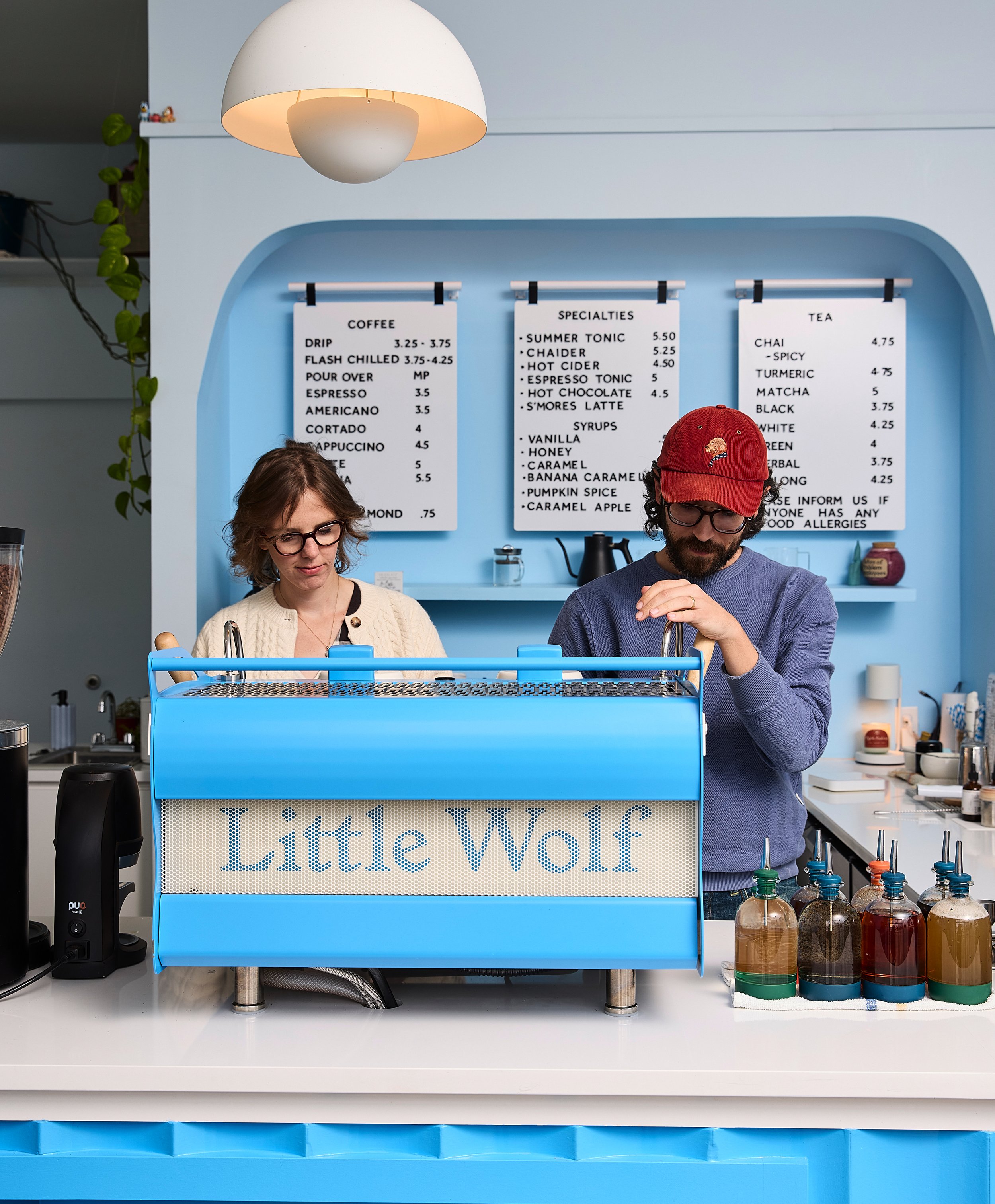
Customer demand quickly led to expanded hours. They gradually added more seating, pastries, tea and a bigger espresso maker. “We were very realistic about adding things as we grew and figured out what we needed,” Bartz emphasizes, “versus trying to do things all at once.”
For the first four years, the couple worked six days a week at Little Wolf. During much of that time they were the only employees. “We were here all the time and we did every single thing. We knew it in and out so we could adjust as needed. That’s what made our business special. People knew that we were invested in what we were doing,” Bartz says. The couple emphasize that it was important for them early on to have clearly delineated responsibilities. “We had very good boundaries from day one,” she says, “and that really helped.” Bartz handles finances, accounting and payroll; Gatti concentrates on everything related to roasting (thoughtfully sourcing from all over Africa as well as Colombia, Honduras, Guatemala, Ecuador and Brazil) and keeping focused on the company’s vision.
As they got busier, Little Wolf slowly added employees. They now employ about 20 people. Handing off what needed to be done initially was challenging because they put so much time and effort into running the business on their own for so long. “It took years, but we realized that we needed to be able to focus on other things that are not day-to-day operations to keep our business running and growing.”
In 2022, they moved the café to the building next door, so that both it and the roastery had much needed room to grow. This year they met a goal of having a Boston location by opening a café in Seaport. The next step likely is more space for the roastery, where beans are roasted to order then shipped directly to customers and wholesale accounts across the country as well as some cafés in Canada and the UK.
“We thoughtfully source a small, intentional selection of the highest-quality green coffee and roast it with care to bring forth the unique qualities of each one,” the couple says. “We believe that a cup can only be as good as the company (furry or not) you share it with and encourage our customers to brew it just the way they like it.”
129 High St., Ipswich
1 Sleeper St., Boston
littlewolf.coffee
This story appeared in the Winter 2026 issue.
