
Edible Food Find: Boston Honey Company
Photos by Linda Campos
As the first buds of spring appear on the branches of apple trees and blueberry bushes in Massachusetts, it’s like a green light for bees. Millions of these hardworking pollinators go to work, flying between flowers, spreading pollen and collecting nectar to produce precious honey.
It seems so bucolic and natural. And it is—but it’s also big business. These particular honeybees have already journeyed thousands of miles across the country and back as an integral part of Boston Honey Company’s 3,500-hive pollination operation, contributing to the country’s economies in honey ($371 million) and food ($20 billion).
The hills and fields of MetroWest Boston, where Boston Honey Company is located in Holliston, are not immune to this economic value. In fact, their prime foraging grounds for these insects in the summertime, when blooms spread like wildfire, are a pollination destination of their own. These bees stay here spring through fall to pollinate fruit trees at farms across the state, and the result of that cross-country endeavor appears on shelves—in local honey, fruits, vegetables and flowers.
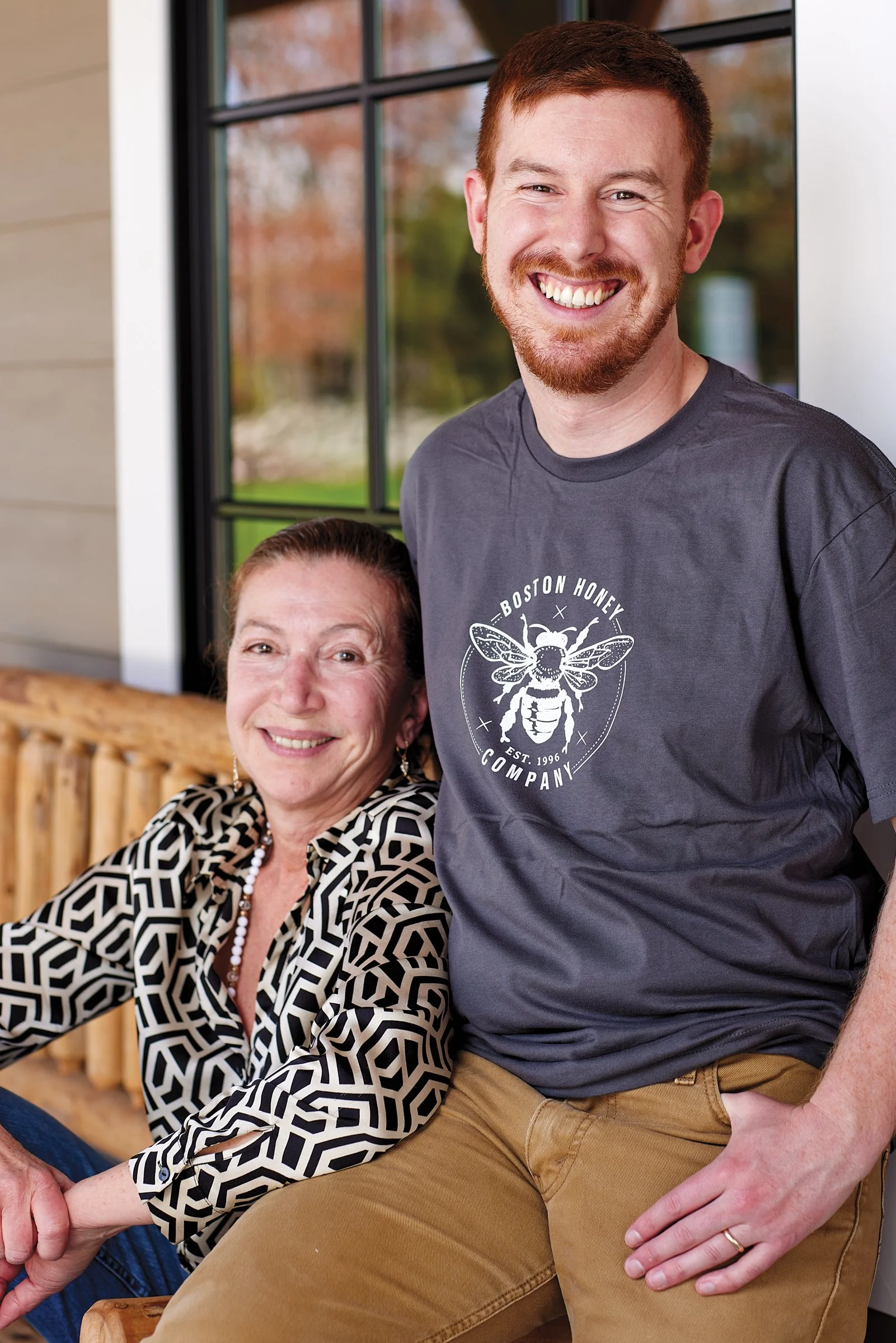
But in the winter, Boston Honey, a family farm and apiary founded in 1996 by Andy Reseska, sends 100% of its bees to Georgia, and then about 830 colonies go on from there to California January through March, where it’s warmer and the bees help pollinate fruit and almond trees. Reseska’s son, second-generation apiarist Evan Reseska, says it’s vital for the hives’ health, their family business and the symbiosis of nature.
“Our winters now are not the same as they were years ago. That was a steadily cold winter; now we have very mild winters where bees are still active, and therefore, they’re either starving or dying,” says Evan Reseska. “A honeybee queen needs multiple weeks of steady warm weather to start laying eggs again, but that’s not always the case here. We need that to maintain the health of our hives because we’re dependent upon them for everything we do.”
Transporting millions and millions of bees to their winter feasting grounds is a complicated orchestration of technology, science and manual labor. A Bee Hero GPS tracker accompanies the colonies via flatbed truck to document the bees’ exact location and temperature. This includes alerts when hive temperatures drop or spike and each time a group of hives is delivered, as well as phone calls from California bee wardens (from the CA State Beekeepers Association) in the middle of the night when hives are delivered to the wrong destination or have been stolen.
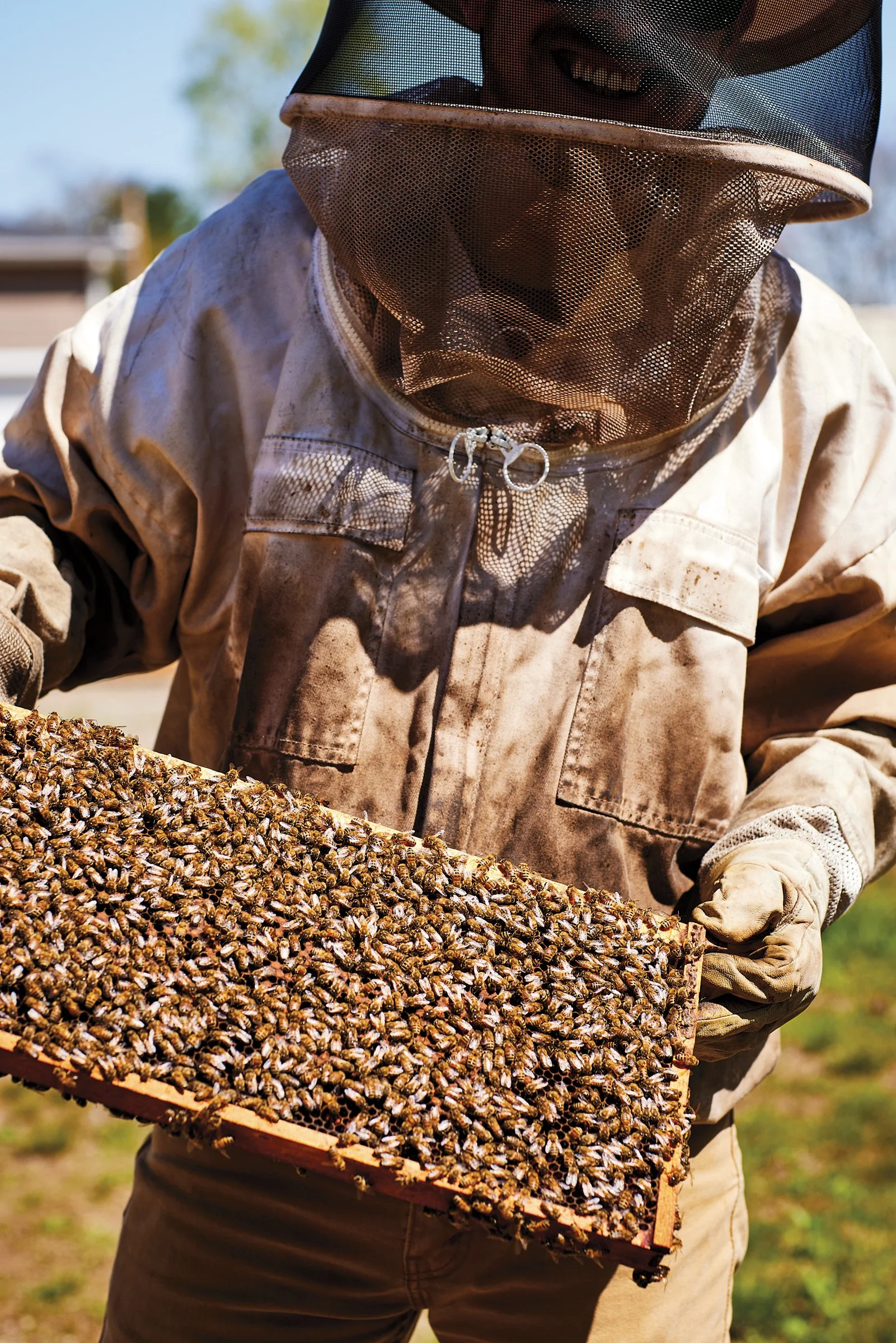
Homecoming requires no less attention to detail. Reseska and his small team offload the hives into a quiet corner of their five-acre property, where they settle in after their long journey. The team diligently checks for loss, temperature (hives should be between 94 to 96 degrees F) and diseases like varroa mite parasites, which could cause colony collapse. A week or so later, they deliver groups of hives to farms around the state, and collect honey there through the season. Reseska keeps 80 to 100 hives on their own property.
When a dozen pallets carrying around 48 colonies arrive at Sunshine Farm in Sherborn, as they have done for about two decades, owner Jim Geoghegan welcomes them wholeheartedly, then leaves them alone.
“We have fruit trees—strawberries, blueberries, peaches and apples. Especially for the tree fruit, [the bees] make a big difference on pollination. Production goes way up,” Geoghegan says. “It’s a secluded space, near water and shade, away from powerlines and wetlands, so there's lots of natural [flower] species.”
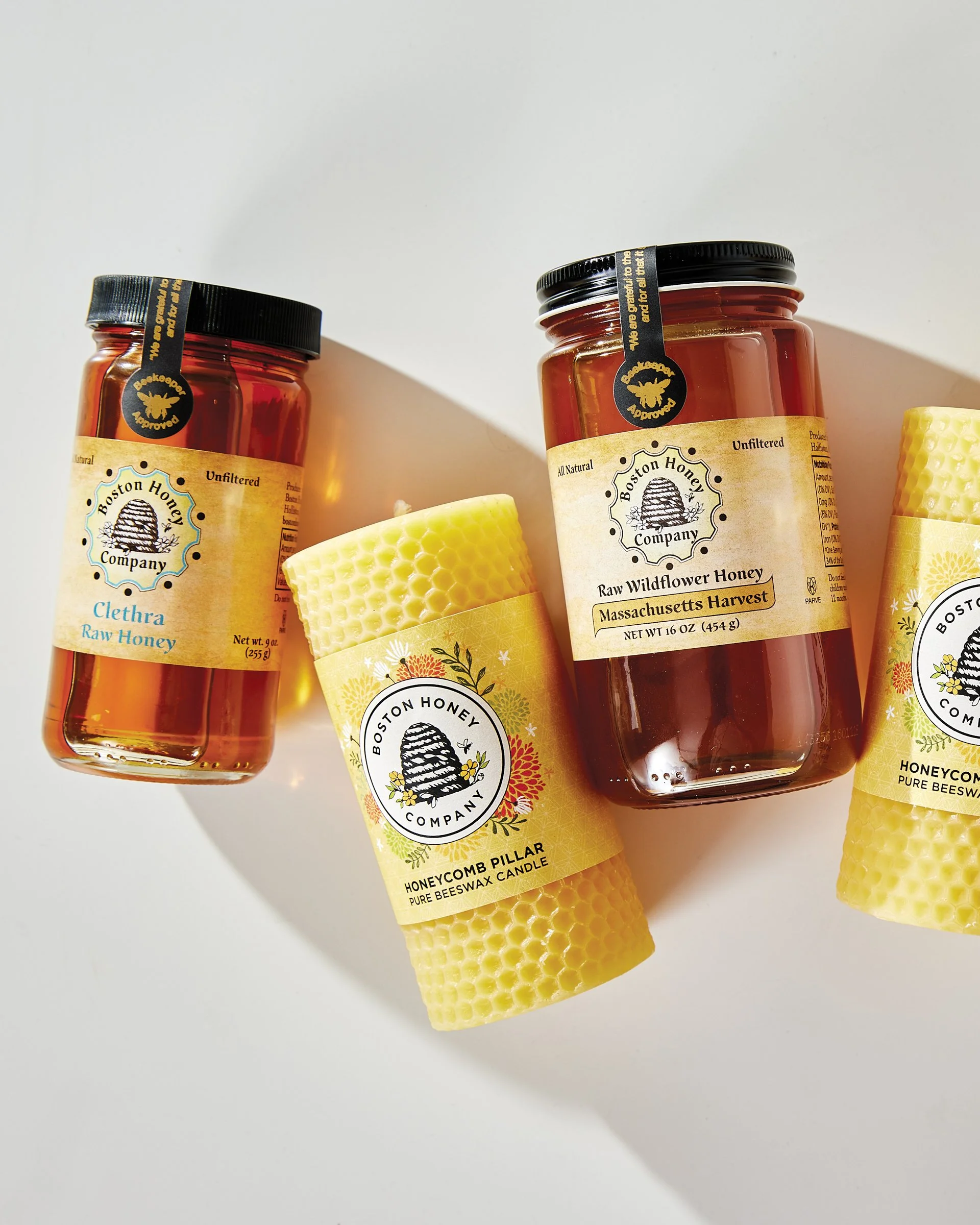
Amid this seemingly constant shuffle, Reseska says their top priority is bee health and making honey, which the farm sells in its farmstand and uses in handmade body creams, soaps and candles. He says losses are part of the process, but, “We take time to manage the health of the colonies, prevent diseases, keep up maintenance, treat for any issues. We are focused on maintaining the health of the hives, while also producing honey, which kind of goes hand in hand.”
