
More Than a Meal: How Community Cooks Nourishes Bodies While Strengthening Communities
Photos by Michael Piazza
When neighbors gathered in Lucy Leu’s Somerville home in 1990 to discuss their community’s growing homelessness, launching a nonprofit wasn’t on the table. They simply wanted to do something tangible to help their community.
“There was an increase in homelessness, and they wanted to do something concrete to support folks,” recalls Community Cooks Executive Director Daniele Levine of this fortuitous meet-up on Westwood Road.
The handful of residents landed on a simple solution: utilize their own kitchens to prepare home-cooked meals each month and deliver them to a local homeless shelter. Those dishes came together as family-style dinners to feed their neighbors, and an unexpected result of this generosity was more than just nourishment: It reminded people that someone in their community cared.
The charitable neighborhood “potluck” soon evolved into the Greater Boston nonprofit Community Cooks. With headquarters now located in Somerville’s Union Square, the organization has expanded dramatically throughout its 36 years. Amassing more than 900 volunteers serving 37 partner agencies, its mission has remained remarkably unchanged.
“We keep [the original model] to this day,” Levine says. “It’s a family-style meal. It’s very personal and exactly the way you would cook if you were having your family over.”
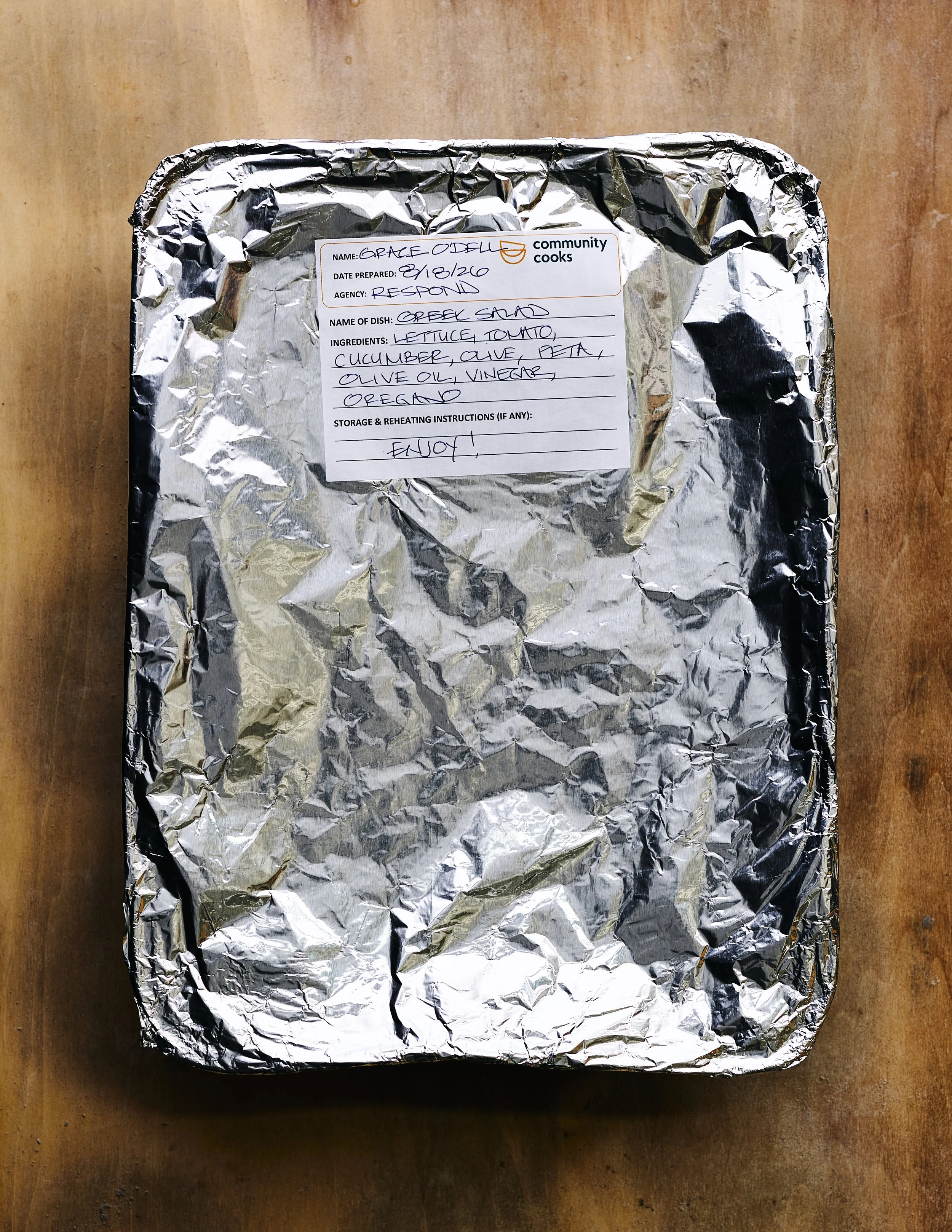
Community Cooks’ volunteers prepare complete, nutritious meals and deliver them once a month to agencies who partner with the organization, feeding more than 2,400 neighbors across the region each month. Each delivery typically includes an entrée, vegetables, salad, fruit, grains and dessert, and menus are adapted to accommodate dietary restrictions, cultural preferences and allergies.
It’s this attention to even the most minute detail that shows those facing food insecurity and life challenges that they matter and can be cared for by their community with grace. Community Cooks partners with shelters, youth organizations, domestic violence programs, elder services and educational initiatives throughout the area, such as Boston GLASS, Cambridge Women’s Center, On the Rise and Christopher’s Haven. Somerville Homeless Coalition is the longest-running partner at 36 years, while the most recent partnership is with Tufts University Prison Initiative (TUPIT).
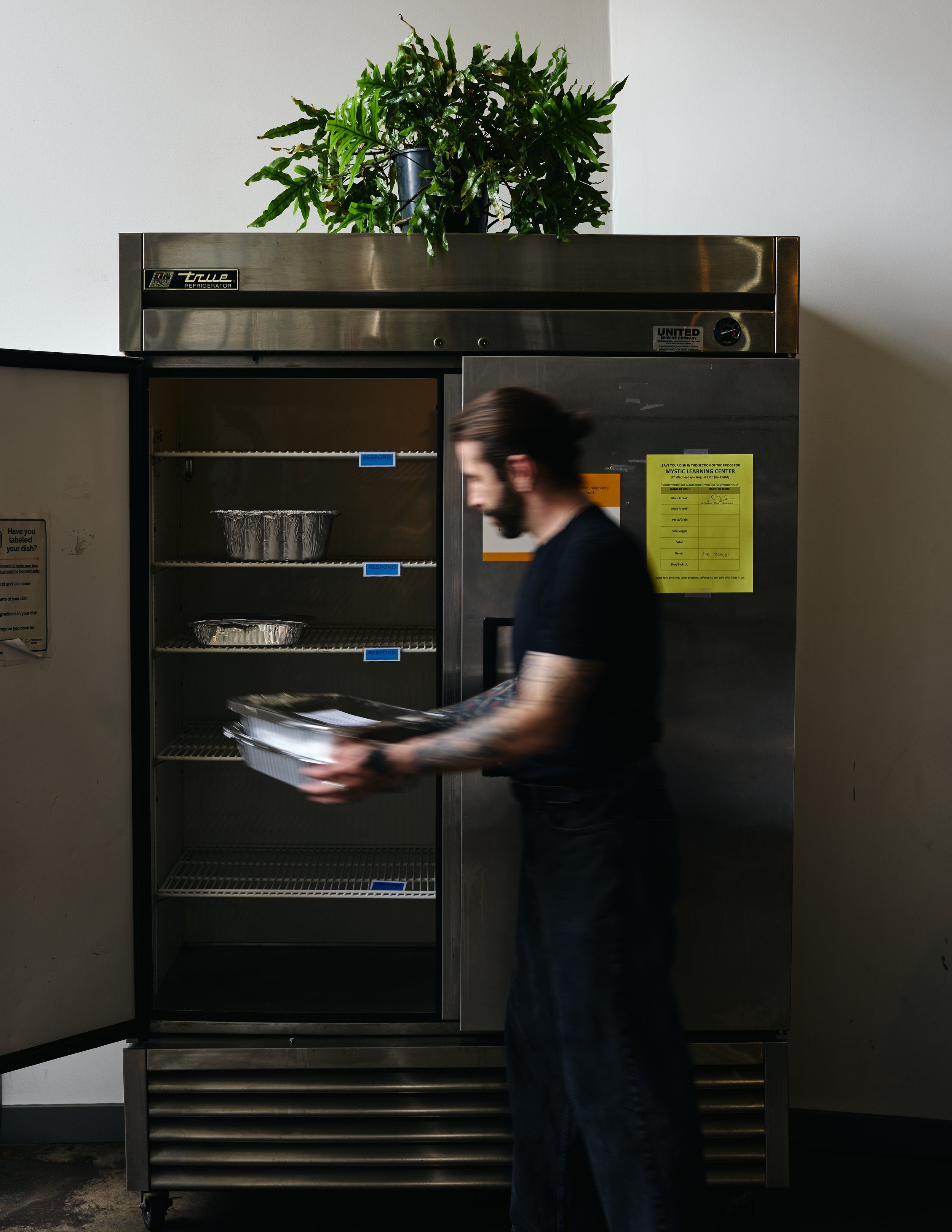
Rather than asking already-stretched nonprofits to recruit and manage volunteers, Community Cooks coordinates every step, from organizing cooking teams to scheduling deliveries within the requested timeframe. If the location of the partnered organization is confidential, deliveries are made to local commercial refrigerators, like the designated ones inside Somerville’s Forge Baking Co., and Community Cooks takes it from there.
COOKING WITH COMPASSION
While Community Cooks’ roots trace back to co-founder Leu’s pivotal neighborhood meeting, the idea was embraced not long after by her lifelong friend, Vicky I. She spent more than two decades leading Community Cooks entirely as a volunteer effort before it officially became a nonprofit in 2012. Levine, who had experienced the program’s impact while working at a partnered domestic violence shelter, became the organization’s first executive director after Vicky I personally recruited her.
It was at the shelter that Levine saw how the promise of a homemade meal can create a safe introduction to a person utilizing an agency’s resources comfortably. One partner agency summed up this equalizer in four words: “Meals are the magnet.”
“It’s hard for people to show up for services a lot of time. There are a lot of barriers,” Levine explains. “Food is a universal connector. It makes people feel a sense of home belonging and welcome.”
During the time Levine’s domestic violence program partnered with Community Cooks, she noticed people showing up more for their services once word got out that there was a home-cooked meal attached.
“Having food helps encourage more people to access services, providing clients with physical nourishment and adding an element of connectivity,” she says. “Communal dining gives a reason to gather, take a breath and decrease isolation. [It] sends a message that people in the community care enough to prepare food as though they’re preparing it for their family.”
FOOD FIRST
Few organizations understand what benefits a Community Cooks partnership brings to the table better than Youth On Fire, a drop-in center for unhoused youth ages 14 to 24 and operated by The Home for Little Wanderers. The program has been providing meals there since 2011, delivering four complete meals every month that feed approximately 40 young people during each service.
Youth On Fire Assistant Program Director Katharine Sloss-Hartman calls food foundational to everything her organization hopes to accomplish. The center provides showers, laundry, hygiene supplies, case management, healthcare referrals and leadership opportunities, but none of that matters if young people are hungry.
“Our partnership literally means that people have access to food when they otherwise wouldn’t,” Sloss-Hartman says of the lack of a dedicated food budget that Community Cooks fills. “No other work can happen before people have access to food. They need to be fed first.”
Over the past 15 years, the relationship has grown far beyond monthly meal deliveries. Community Cooks volunteers have attended Youth On Fire talent shows, invited staff to speak at community events and built lasting relationships.
“Our partnership has truly become woven into the fabric of our drop-in space,” says Sloss-Hartman. She remembers one of the most gratifying compliments recently given by a young person of their work with Community Cooks. “One of our members was eating American chop suey we had donated that day and said, ‘Eating this makes me feel like I’m at home.’”
THE VOLUNTEER EXPERIENCE
Community Cooks succeeds because its volunteer model removes barriers to participation. Translation: Anyone can join.
“The first thing people often say is, ‘Well, I’m not a cook,’” says Levine. “But you don’t have to be a professional or have any training. You just have to want to support your neighbors.”
Volunteers are asked to prepare just one dish each month in their own kitchens. Individuals are placed on teams in their neighborhood, although businesses, schools, faith communities, restaurants and friend groups can also cook together.
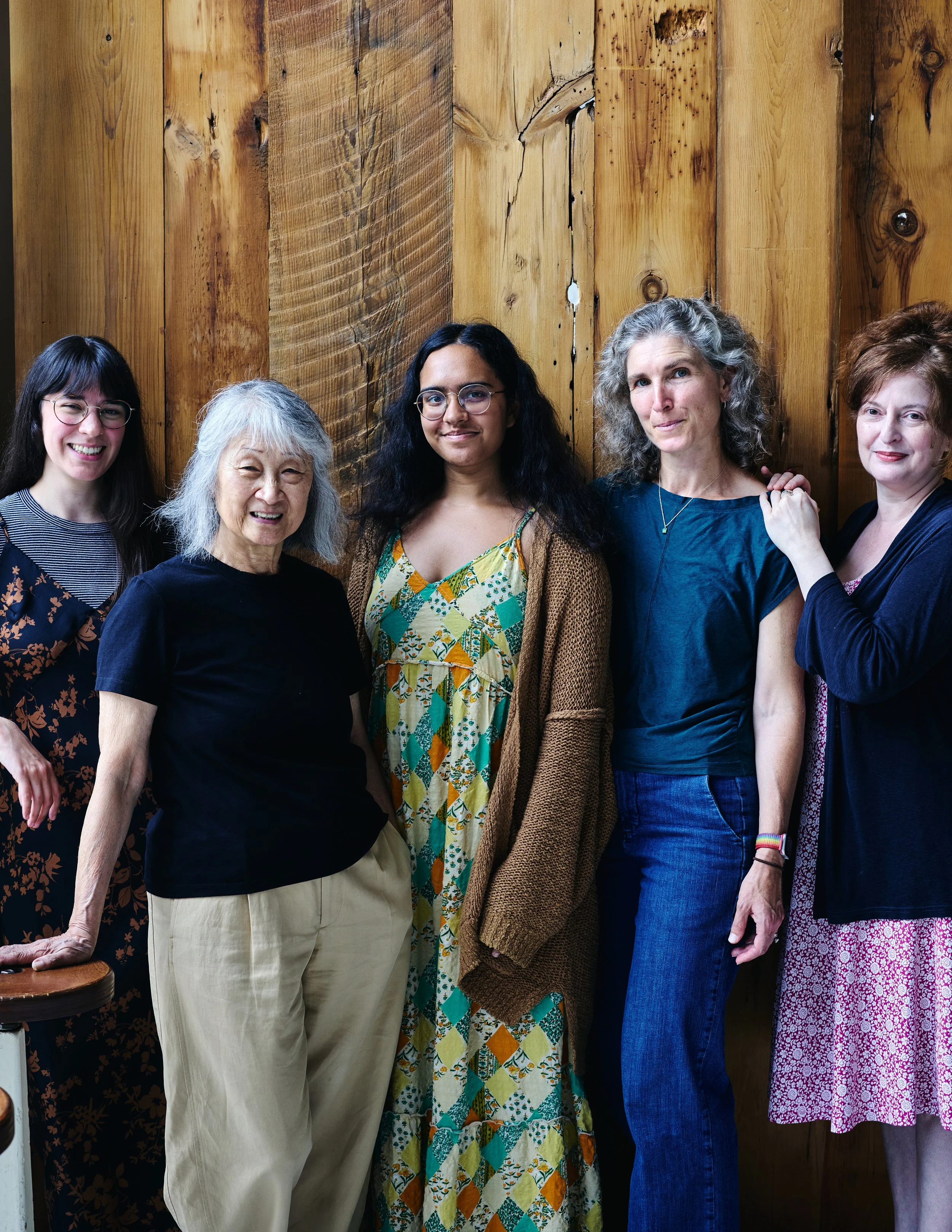
More than 250 volunteers have remained with Community Cooks for at least five years because of how special the organization and its mission are. Levine recalls one volunteer who insisted on dropping off her assigned dish before heading to the hospital to give birth. “She delivered before she actually delivered,” Levine notes with a laugh.
For many volunteers, Community Cooks becomes much more than another service project. Courtney Hakanson of South Boston first joined Community Cooks as an individual volunteer in 2024, cooking for Casa Myrna, Boston’s largest provider of shelter and supportive services to survivors of domestic violence. Two years later, she became a team leader serving Bridge Over Troubled Waters, coordinating volunteers while continuing to prepare a monthly dish herself for the organization dedicated to serving homeless, runaway and at-risk youth.
Her past training in culinary school and at a Parisian patisserie allowed her to go above and beyond the basic nourishing dish. When one group requested gluten-free desserts, she baked a gluten-free chocolate cake with whipped chocolate ganache frosting. Another asked to reduce red meat, so she prepared grilled chicken sausages with charred peppers and onions. Summertime typically finds her preparing a tropical fruit mix of pineapple, mango, papaya and toasted coconut finished off with a lime juice spritz.
For Hakanson, these meals represent something much larger than recipes. After she herself participated in mutual aid efforts during the pandemic, she now believes that meaningful change begins within local communities.
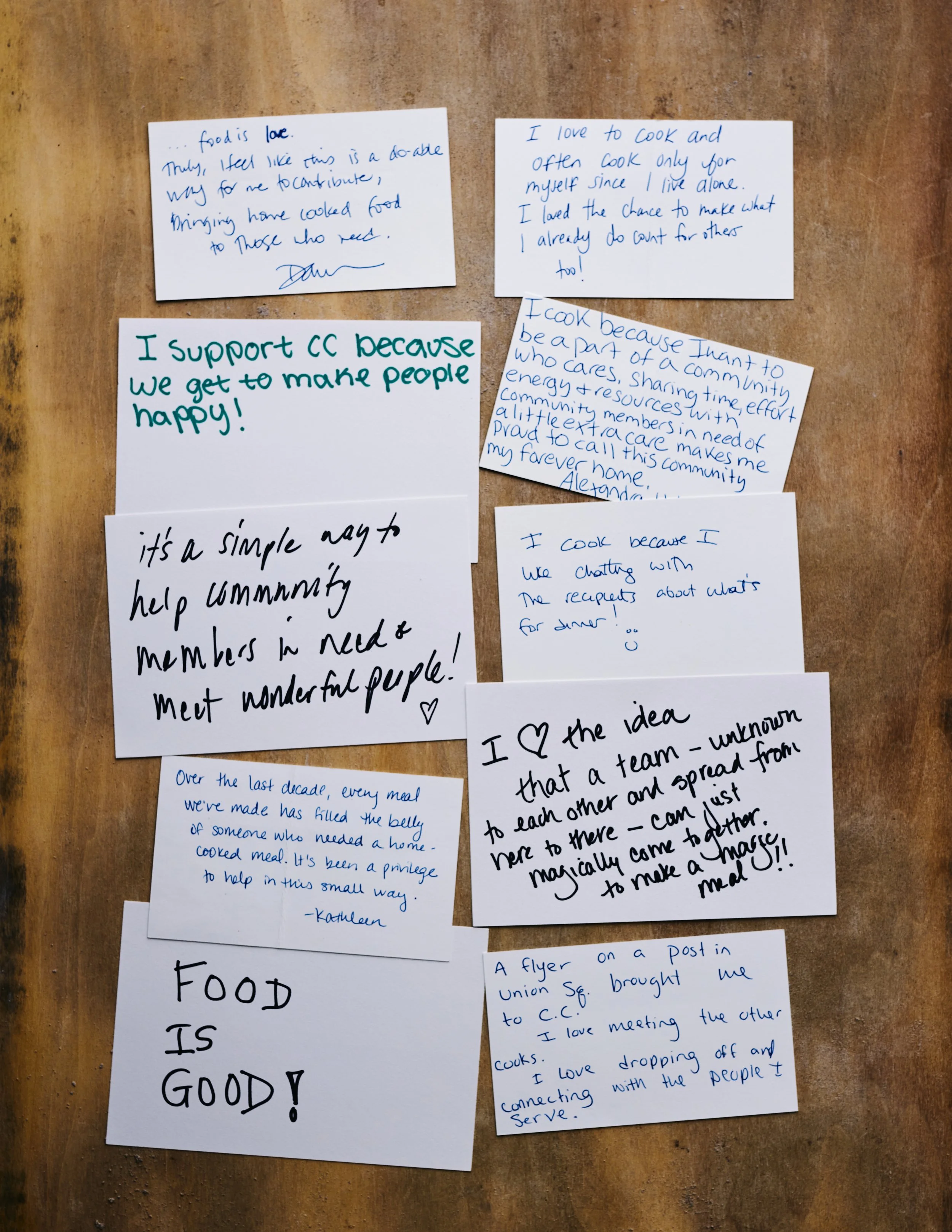
“Solidarity, not charity, is what creates lasting change,” she says. “Cooking with Community Cooks is a way to show respect for and solidarity with my community.” She describes every monthly meal as “an expression of hope for the Boston I believe we all deserve. In 2026, hope can feel like a radical act. I feel privileged to practice hope through the act of feeding fellow Bostonians.”
SERVING UP HOPE
The impact Community Cooks has had continues to resonate throughout Greater Boston agencies and has pivoted with need. Following recent cuts to food assistance programs, they experienced a significant increase in volunteer interest during 2025, a response that Levine believes reflects people’s desire to make a meaningful difference in their own communities.
“With everything going on with SNAP cuts and harsh policy changes, we onboarded 70% more volunteers than the prior year. They knew that we had to start taking care of each other because other people are not doing it for us,” says Levine.
“I think so many people right now are looking for something concrete that they can do,” she continues. “It’s the thing that balances out the horror of the injustices that are going on, to see that there are so many people who want to do something to help.”
For Community Cooks, hundreds of volunteers shop, chop, bake and cook meals every month for people they may never meet. While the delivery might be stealth, the message of Community Cooks is loud and crystal clear: People matter.
“Our volunteers understand they’re not going to be thanked in person,” she explains. “They can do it under the radar and know the value of it. You drop off your meals and leave. There’s a unique power and dignity in that.”
This story appeared in the Fall 2026 issue.
